
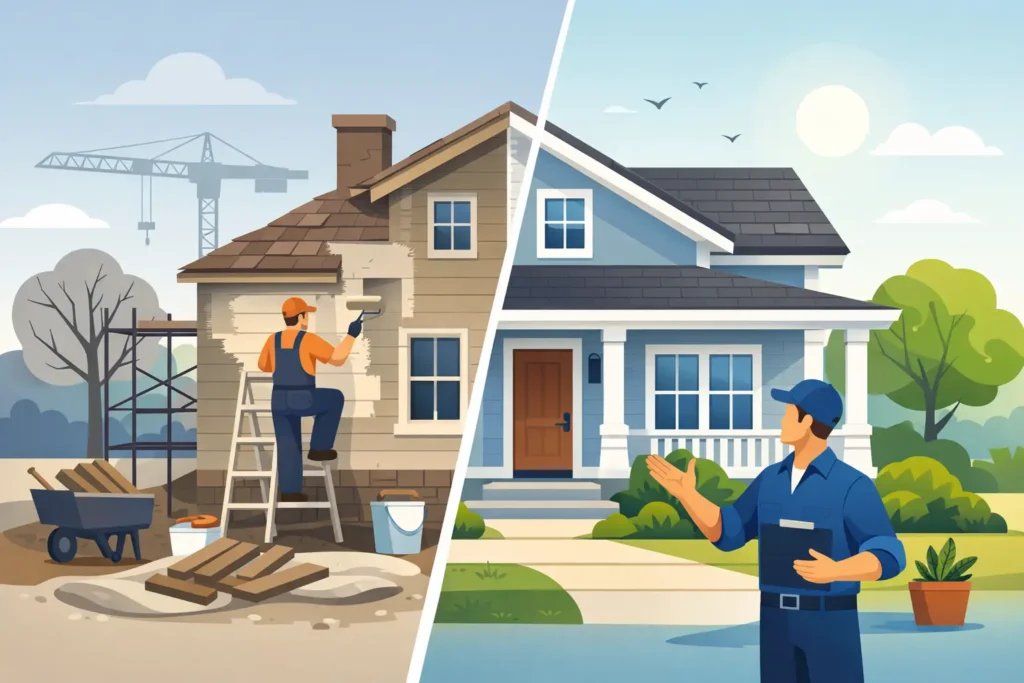
A faded facade, loose railing, drafty windows, or a front entry that no longer feels welcoming can make an otherwise well-loved home feel tired. So, can you renovate the exterior of a house? Absolutely. In many cases, exterior renovation is one of the smartest ways to protect your investment, improve daily comfort, and make your home feel like it truly reflects the people living inside it.
The key is not treating every exterior project as a cosmetic update. Your roof, siding, trim, windows, doors, drainage, and outdoor living areas work together to keep water out and maintain the home’s structure. A well-planned project solves the pressing problems first, then builds in the upgrades that give the home a finished, personal look.
Can You Renovate the Exterior of a House in Stages?
Yes, and for many Long Island homeowners, a phased exterior renovation is the practical choice. You do not need to replace every surface at once to make meaningful progress. The right order depends on the home’s condition, your budget, and whether one project could affect another.
Start with anything that allows water into the house or creates a safety issue. Damaged roofing, failing flashing, rotted fascia, cracked siding, leaking gutters, unstable steps, and deteriorated deck boards should take priority over decorative changes. Water damage rarely stays small, especially through a New York winter. What appears to be a little peeling paint around a window can point to a larger trim or flashing issue behind it.
Once the exterior is weather-tight, you can move into improvements that add comfort and curb appeal. New siding, a more efficient front door, updated windows, fresh paint, custom porch details, or a rebuilt deck can all make a major difference. Completing the work in stages also gives you time to make design choices carefully instead of rushing through a full renovation under pressure.
That said, some projects are more cost-effective when combined. If siding is coming off, it may be the right time to inspect the sheathing, add insulation where appropriate, update house wrap, and replace old windows. If a new deck is planned, repairing the door, landing, or exterior trim around it at the same time can prevent duplicated labor later.
Start With the Condition of the House
A good exterior renovation begins with an honest assessment, not a paint color. Walk around the property after a hard rain if possible. Look for gutters that overflow, soil that slopes toward the foundation, puddling near walkways, soft or cracked wood, gaps around windows and doors, and areas where paint repeatedly fails.
Pay close attention to transitions. Rooflines, chimneys, window openings, doors, deck connections, and exterior light fixtures are common places for water to find its way behind finished surfaces. These details are where careful craftsmanship matters most. A new surface may look good on day one, but it will not hold up if the preparation underneath is rushed.
Older homes may also have surprises hidden behind siding or trim. Rot, insect damage, inadequate flashing, and outdated construction details are not reasons to avoid the project. They are reasons to choose a contractor who can identify the issue, explain the options plainly, and make the repair correctly before moving forward.
Choose Upgrades That Work Together
The best exterior renovations have a clear plan. That does not mean every element must match perfectly or that your home needs to follow a trend. It means the materials, colors, and proportions should feel intentional from the street to the backyard.
For example, a new front door can make a strong statement, but it will look even better when the surrounding trim, house numbers, lighting, and steps support the same style. Replacing worn siding may be the opportunity to update shutters, repair decorative millwork, and choose a gutter color that blends rather than distracts. Custom carpentry can be especially valuable on porches, entryways, soffits, columns, and railings, where small details have an outsized impact.
Material selection should balance appearance, maintenance, and durability. Wood can offer warmth and character, particularly for custom trim and outdoor details, but it needs proper installation, finishing, and ongoing care. Composite decking can reduce maintenance, while natural wood may better suit a specific look or budget. Vinyl, fiber cement, engineered wood, and other siding options each have benefits and limitations. The best choice depends on the home, exposure to weather, desired maintenance level, and long-term plans.
A contractor should help you understand those trade-offs without steering you toward a one-size-fits-all answer. Honest recommendations are more useful than the most expensive recommendation.
Plan the Budget Around Priorities
Exterior projects can range from a focused repair to a full transformation. The cost is shaped by the scope of demolition, condition of the existing structure, material choices, access around the home, permits, and the amount of finish work required. A simple replacement is rarely simple if hidden damage is uncovered once old materials come off.
Before requesting estimates, decide what matters most to your household. Is the priority stopping leaks before winter? Improving the entry for better curb appeal? Building a deck where the family can actually gather? Reducing drafts around aging windows? A clear priority helps shape a realistic scope and prevents the budget from being spread too thin across too many cosmetic items.
It is also wise to leave room for repairs that cannot be fully seen at the start. A detailed estimate should explain what is included, what assumptions are being made, and how unexpected conditions will be handled. Homeowners deserve straightforward communication before work begins, not vague numbers that change without explanation.
Permits, Design Rules, and Local Conditions
Many exterior renovations require permits, particularly when the work involves structural changes, decks, roofing, window or door openings, electrical work, or substantial alterations to the home’s exterior. Requirements vary by town, village, and project type across Long Island. Properties in historic areas, communities with homeowner associations, or locations with specific zoning restrictions may have added design or approval considerations.
This is not a reason to put off needed work. It is simply part of planning it correctly. A professional contractor can help determine what approvals may apply and build the necessary steps into the schedule. Rushing ahead without checking can create expensive delays, especially when a project involves setbacks, height limits, railings, or structural components.
Season also matters. Roofing, siding, painting, masonry, and exterior carpentry all depend on weather conditions. Some work can be completed throughout much of the year, but temperature, moisture, and daylight affect scheduling and finish quality. Planning early gives you more flexibility and helps avoid making a major decision only because a problem became urgent.
What a Coordinated Exterior Renovation Looks Like
Exterior work often involves several skills: carpentry, painting, roofing, siding, window and door installation, deck construction, and finish details. Coordinating separate trades can be stressful for a homeowner, particularly when one task depends on another being completed correctly first.
A coordinated team can simplify the process. For example, replacing a damaged exterior door may involve framing adjustments, weatherproofing, trim work, siding repairs, painting, and possibly a new landing or steps. When those pieces are planned together, the finished result looks complete rather than patched together.
That Guy Carpentry approaches exterior renovations with that full-picture mindset. The goal is to listen to how you use your home, identify the work that protects it, and build a result that fits your style and budget. Whether the project is a repair, a new deck, updated siding, or a more welcoming entry, detail-driven preparation is what gives the finished work lasting value.
When to Repair and When to Replace
Not every worn exterior feature needs replacement. Sound wood trim with localized damage can often be repaired, primed, and repainted. A deck may need new boards and railings rather than a full rebuild if the framing remains solid. A door that sticks may need adjustment, new weatherstripping, or repairs around the frame.
Replacement becomes the better choice when failures are widespread, structural components are compromised, repairs would only be temporary, or the existing product no longer meets your needs. Replacing a single failed window may be sensible. Replacing all windows at once may make more sense when many are drafty, difficult to operate, or nearing the end of their service life.
The right answer comes from examining the condition, not from assuming that newer is always better. Quality work respects the parts of a home worth preserving while addressing the parts that are no longer doing their job.
A thoughtful exterior renovation gives your home more than a better first impression. It creates a drier, safer, more usable place for the years ahead. Start with the problems you can see, ask questions about the ones you cannot, and choose a plan that lets every improvement support the next one.