
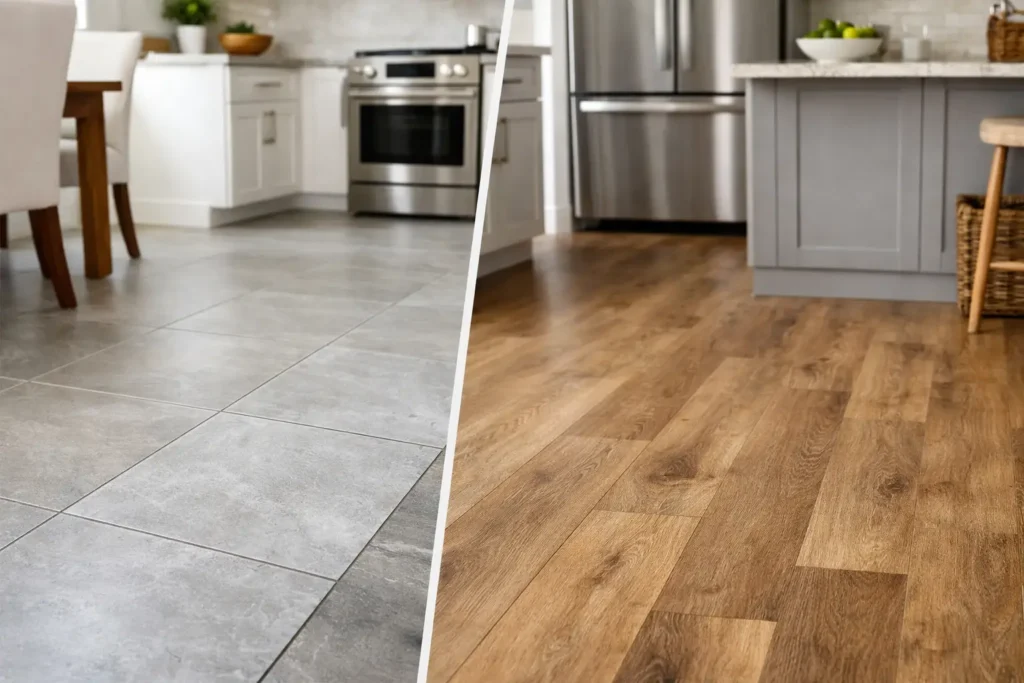
A flooring sample can look perfect under showroom lights and feel completely wrong once it meets a busy kitchen, wet boots by the entry, or bare feet on a January morning. When homeowners weigh tile versus vinyl flooring, the better choice is rarely about appearance alone. It comes down to how the room is used, what the subfloor can support, how long you plan to stay, and where you want to put your renovation budget.
Both materials can be attractive, durable, and practical. But they get there in very different ways. Tile is a hard, permanent surface with a premium feel and excellent moisture protection. Vinyl is warmer, quieter, and often easier to install or replace. A good flooring decision starts with the real demands of your home, not just the color of the sample.
Tile Versus Vinyl Flooring at a Glance
Tile is made from materials such as porcelain, ceramic, or natural stone. It is installed with mortar and grout over a properly prepared, rigid surface. Vinyl flooring comes in sheets, tiles, or planks, with luxury vinyl plank and luxury vinyl tile being popular choices for homes that want a realistic wood or stone look without the maintenance of the original material.
For a bathroom, laundry room, or mudroom that sees regular water exposure, either option can work. Tile has the edge for long-term durability when installed correctly. Vinyl has the edge for comfort and a faster, less disruptive installation. In a kitchen, the decision often comes down to whether you prioritize a timeless hard surface or a floor that is easier on feet, dishes, and family life.
Cost Is More Than the Price per Square Foot
Vinyl usually costs less to buy and install than tile, especially when choosing a click-lock floating floor. It can often go over an existing, smooth floor, which may reduce demolition and labor. That can make vinyl a smart option when refreshing several rooms, working within a firm budget, or completing a project on a tight timeline.
Tile can have a wider price range. Basic ceramic tile may be affordable, while large-format porcelain, handmade tile, natural stone, detailed layouts, and specialty trim can raise the total quickly. The installation process also requires more preparation. Tile needs a stable, level base to prevent cracked grout or tile later on. In older homes, correcting an uneven subfloor is not an optional extra – it is part of doing the job right.
The lower initial price does not automatically make vinyl the better value. A quality vinyl floor can last many years, but it may eventually show wear, fade in direct sun, or need replacement after damage. Well-installed porcelain tile can last for decades. If you are remodeling a forever home or building a high-use bathroom, tile may justify its upfront cost.
Comfort, Sound, and Daily Living
This is where vinyl makes a strong case. It has more give underfoot than tile, so it feels warmer and more forgiving when standing at the counter, packing lunches, or cooking a holiday meal. It also reduces the impact when a glass or dish falls. In homes with young children, pets, or anyone who spends long stretches in the kitchen, that comfort can matter every day.
Tile is naturally cool and hard. That is appealing in a sunny room or during hot weather, but it can feel chilly during a Long Island winter. Area rugs help, but radiant floor heating is the most comfortable solution when tile is going into a bathroom or kitchen renovation. It adds to the project cost, yet it creates a finished result that homeowners appreciate for years.
Vinyl is generally quieter, too. Tile reflects more sound and can create a sharper echo in open kitchens, hallways, and finished basement spaces. Rugs, window treatments, and furnishings soften that effect, but vinyl begins with a quieter surface.
Water Resistance Is Not the Same as Waterproofing
Porcelain and ceramic tile handle water exceptionally well. The weak point is not typically the tile itself but the grout lines, perimeter edges, and the structure underneath. A bathroom floor needs proper waterproofing details, especially around showers, tubs, and toilets. Tile can protect a room beautifully, but only when it is installed as part of a complete system.
Many vinyl products are marketed as waterproof, and the material itself can stand up to spills, pet accidents, and routine mopping. That makes it an excellent choice for busy kitchens, powder rooms, and entryways. Still, water can find its way through unsealed edges, gaps, or floor penetrations and become trapped beneath the flooring. A major toilet overflow or a leaking appliance can require sections of vinyl to be removed so the subfloor can dry.
For a full bathroom remodel, tile is often the more dependable long-term choice because it works naturally with professional waterproofing methods. For a quick update to a half bath or laundry area, vinyl can deliver a clean, practical result with less construction involved.
Looks, Layout, and Resale Appeal
Modern vinyl has come a long way. High-quality luxury vinyl can have convincing grain patterns, textured finishes, and wide-plank formats that give a room a finished, updated look. It is especially useful when you want one continuous floor through a kitchen, dining area, hallway, or basement without the visual interruption of grout lines.
Tile offers more design flexibility in a different direction. You can use a clean large-format porcelain for a calm, modern bathroom, a patterned tile for a powder room floor, or a classic mosaic for a shower. It can make a small space feel intentional rather than simply updated. Details such as grout color, tile direction, transitions, and edge finishes have a major effect on the final look.
When resale is part of the conversation, tile generally carries a stronger perception of permanence in bathrooms and entryways. That does not mean vinyl hurts a home’s value. A well-chosen vinyl floor that is neatly installed will usually appeal more than dated, cracked, or poorly maintained tile. Buyers notice condition and workmanship first.
Installation Demands Matter More Than Most Homeowners Expect
Tile installation is not forgiving of shortcuts. The subfloor must be flat, solid, and suitable for tile. The layout needs to be planned before anything is set so narrow cuts do not land in obvious places and patterns stay balanced. Mortar coverage, expansion gaps, grout selection, and curing time all matter. A beautiful tile can fail early if the work below it is not done carefully.
Vinyl installation may be simpler, but it still needs a properly prepared surface. Floating planks can telegraph unevenness, flex at weak spots, or separate if the floor is not within the manufacturer’s tolerances. Glue-down vinyl requires a very smooth base because imperfections can show through. Sheet vinyl also takes skill to cut and fit cleanly around door jambs, cabinets, and plumbing.
This is one reason flooring works best when it is planned alongside the larger renovation. Cabinet height, appliance clearances, interior doors, baseboards, transitions into adjacent rooms, and bathroom fixtures all affect the final installation. Coordinating those details early prevents last-minute compromises.
How to Choose the Right Floor for Each Room
Choose tile when you want a long-lasting surface in a primary bathroom, a custom shower area, a formal entry, or a space where a premium, permanent finish is worth the investment. It is also a strong choice if radiant heat is part of the plan or if you want a specific pattern that gives the room character.
Choose vinyl when comfort, budget control, quick installation, and easy upkeep are at the top of the list. It performs well in family kitchens, finished basements, laundry rooms, and whole-home updates where continuity between rooms matters. It can also be a practical choice for a rental property or a home renovation where replacing every surface is not necessary.
There is no rule saying one material has to cover the entire house. Many of the best renovations use tile where water protection and design detail matter most, then use vinyl in living areas where warmth and resilience better suit the household. The key is selecting materials that work together visually and fit the way your family actually lives.
A floor should support the life happening on top of it, from rushed weekday mornings to the gatherings that fill a home. If you are deciding between tile and vinyl for a renovation in Nassau or Suffolk County, That Guy Carpentry can help you look beyond the sample board, plan the details, and build a result that feels right from the first step.