
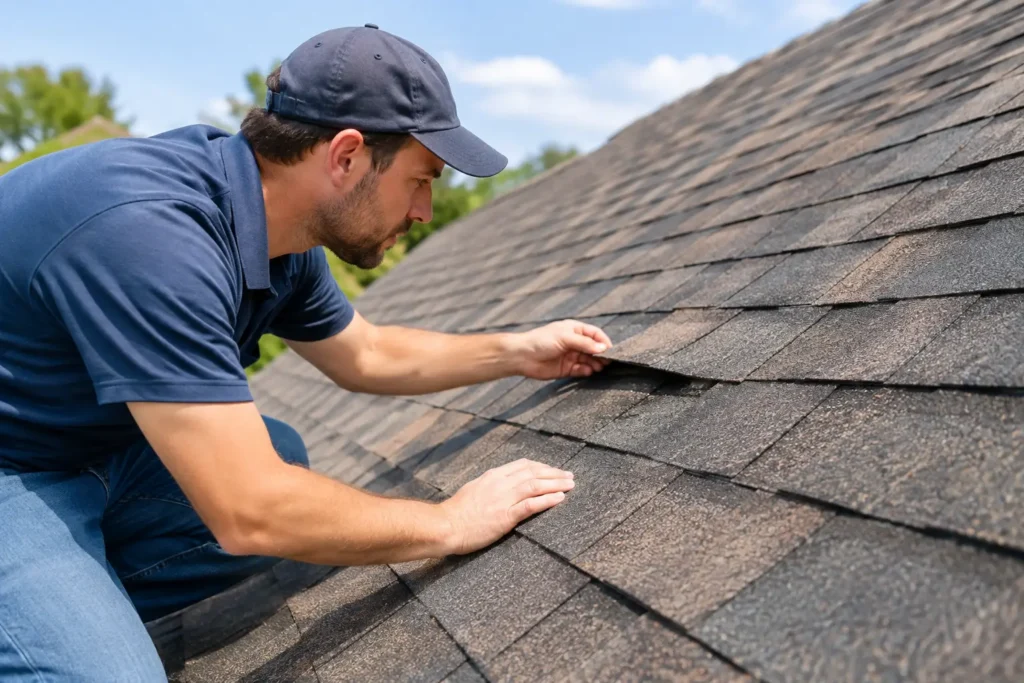
A roof rarely fails all at once. More often, a few missing granules, a lifted shingle, or a faint water stain in the attic signals that trouble has started. Knowing when to replace shingles gives you time to make a smart decision before a small repair becomes interior water damage, mold, or a more expensive roof replacement.
For Long Island homeowners, timing matters. Our roofs handle humid summers, wind-driven rain, winter freeze-thaw cycles, and coastal storms. A shingle roof can look acceptable from the driveway while its protective layer is already wearing out. The key is to look at the roof’s age, condition, and performance together.
When to Replace Shingles Instead of Repairing Them
A single damaged shingle does not automatically mean you need a new roof. A qualified contractor can often replace isolated shingles, reseal flashing, or correct a small leak if the surrounding roof is still in good condition. Repair is usually the practical choice when damage is limited, the shingles are readily available, and the roof has plenty of useful life left.
Replacement becomes the better investment when damage is widespread, repairs keep recurring, or the roof is approaching the end of its expected service life. Installing a few new shingles on a worn-out roof may temporarily solve a visible problem, but it will not restore the aging materials underneath.
Here are the clearest signs that it is time to take replacement seriously.
1. Your shingles are curling, cupping, or cracking
Shingles should lie flat and create a consistent protective surface. When edges curl upward, centers cup, or surfaces crack, the material is drying out and losing its ability to shed water properly. Sun exposure, age, poor attic ventilation, and repeated temperature changes can all contribute.
A few affected shingles in one area may be repairable. Curling or cracking across multiple slopes is different. At that point, the problem is usually roof-wide rather than isolated.
2. Granules are collecting in gutters or near downspouts
Asphalt shingles are coated with mineral granules that protect them from ultraviolet rays and help manage weather exposure. Some granule loss is normal, especially after a new roof is installed. Heavy buildup in gutters, however, is a warning sign that older shingles are breaking down.
Look closely at the roof as well. Dark, smooth-looking patches where granules have worn away leave the asphalt layer exposed. Those areas can age quickly under summer heat and may become more vulnerable to leaks.
3. You see missing, loose, or lifted shingles
Wind can loosen shingles even when it does not tear them completely off. If shingles are lifted, bent back, or missing after a storm, water can work its way beneath the roofing system. This is particularly important around roof edges, ridges, valleys, chimneys, and skylights.
One or two missing shingles after a storm may call for prompt repair. If you find widespread lifting, repeated wind damage, or brittle shingles that crack during repair, replacement may be the more dependable path.
4. The roof is nearing its expected age
Many asphalt shingle roofs last roughly 20 to 30 years, but that range is not a guarantee. Installation quality, ventilation, weather exposure, shingle grade, and previous repairs all affect lifespan. A roof installed 20 years ago may have several good years remaining, while another may be ready for replacement much sooner.
If you do not know the roof’s age, check closing documents, permits, or records from the previous owner. An inspection can also reveal whether the shingles are aging normally or showing signs of early failure.
Water Stains Mean You Should Act Quickly
A brown ceiling stain, peeling paint near an exterior wall, damp insulation, or a musty attic smell should never be ignored. Water does not always appear directly below the source of a roof leak. It can travel along framing, underlayment, or insulation before becoming visible inside your home.
Not every leak means the entire roof must be replaced. Flashing around a chimney or vent pipe may be the actual issue. But if leaks appear in several places, return after previous repairs, or accompany worn shingles, the roof system may no longer be protecting the house as it should.
Check the attic after heavy rain
You do not need to climb onto the roof to spot early warning signs. On a rainy day, inspect the attic with a flashlight. Look for damp sheathing, active drips, dark streaks on wood, wet insulation, or daylight coming through the roof deck.
Be careful not to step between ceiling joists, and avoid disturbing wet insulation. The goal is not to diagnose every detail yourself. It is to catch evidence early enough to schedule a professional evaluation before the damage spreads.
A Sagging Roof Deck Is Not a Cosmetic Issue
A roofline should look straight and even. If you notice sagging between rafters, a dip near the ridge, or a section that appears uneven from the street, the issue may involve more than shingles. Moisture-damaged decking, structural movement, or long-term leaks can weaken the materials beneath the roofing surface.
This situation calls for a professional inspection as soon as possible. Covering a sagging area with new shingles without addressing the underlying deck is not a real repair. Quality roof work starts with a sound surface beneath the shingles.
Why Matching Shingles Can Affect the Repair Decision
Homeowners often prefer a repair when the damage seems limited, and that makes sense. The challenge is that older shingle colors fade over time, and discontinued product lines can make a close match difficult. A new patch may be structurally sound but noticeably different from the rest of the roof.
Appearance alone should not force a replacement if the roof is otherwise healthy. Still, when shingles are old, brittle, and no longer available in a close match, repeated patching can leave a roof looking pieced together while delaying a necessary larger project.
Do Not Wait for a Major Leak
The best time to plan roof replacement is before water enters your living space. Waiting for a major leak puts ceilings, insulation, trim, flooring, and personal belongings at risk. It can also limit your options during a busy storm season, when emergency repairs may be needed right away.
A planned project gives you time to review material choices, understand the scope of work, and budget for any needed repairs to decking, flashing, gutters, or ventilation. It also allows the contractor to protect landscaping and keep the work area organized, which matters when your home is occupied throughout the project.
What a Proper Roof Assessment Should Include
A dependable evaluation should look beyond the visible shingles. The condition of flashing, ridge caps, roof valleys, penetrations, gutters, and attic ventilation all matter. So does the roof deck beneath the shingles.
Ask for a clear explanation of what is damaged, what can be repaired, and what should be replaced. Honest recommendations should account for your home’s condition and budget, not push a full replacement when a targeted repair will truly do the job.
At That Guy Carpentry, we believe homeowners deserve straightforward guidance and workmanship that holds up. Whether your roof needs a small repair or a full replacement plan, the right next step is an inspection before the next storm turns an unanswered question into a larger home repair.