
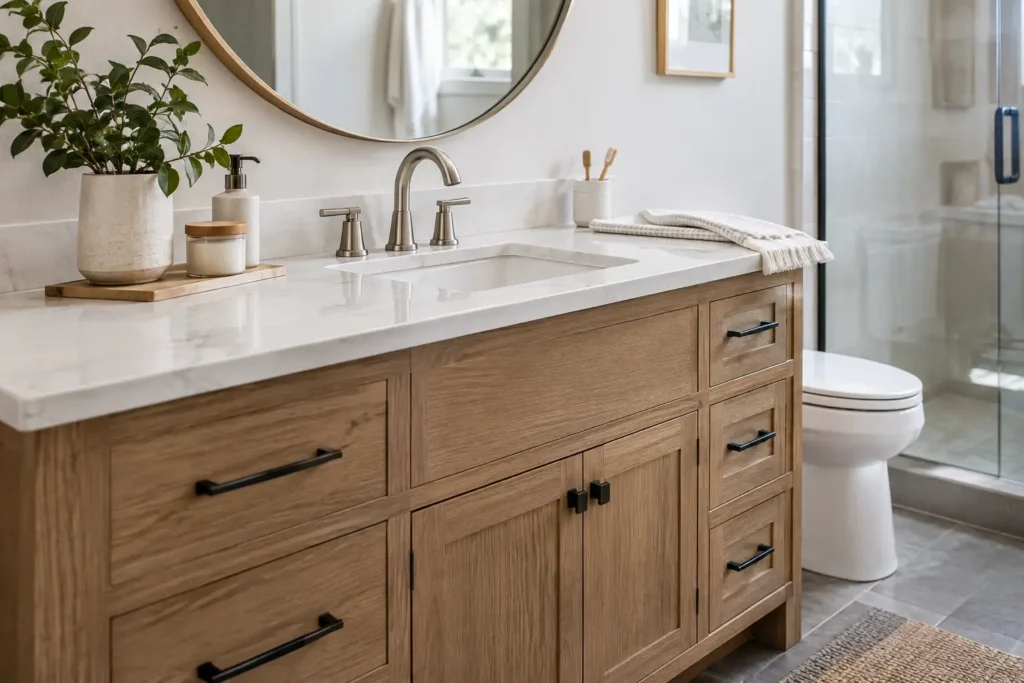
A bathroom vanity can look great in a showroom and still be the wrong choice for a busy home. Steam, splashing water, wet towels, cleaning products, and daily use all test the cabinet beneath the sink. The best bathroom vanity materials are not simply the most expensive ones. They are the materials that fit your bathroom’s moisture level, your household routine, your style, and the way you want the room to perform years from now.
For Long Island homeowners planning a bathroom renovation, this decision deserves more attention than the color of the doors or the shape of the hardware. The vanity is a working piece of furniture, but it is also part of the room’s storage, layout, and finished character. Choosing the right material from the start helps prevent swelling, peeling, warping, and costly replacement down the road.
What Makes a Vanity Material a Good Choice?
Bathroom cabinetry lives in a tougher environment than kitchen cabinetry or built-ins in a living room. Even a well-ventilated bathroom experiences humidity swings. A shower used every morning can leave moisture in the air, while a dripping faucet or an overflowing sink can send water directly onto the cabinet base.
A good vanity material should resist moisture, hold hardware securely, support a countertop and sink properly, and continue looking finished after years of use. It also needs to work with the project budget. Some materials offer excellent durability at a reasonable price, while others earn their higher cost through custom sizing, repairability, and a more distinctive finished look.
The construction method matters as much as the material itself. A well-built vanity has sealed edges, sturdy joinery, quality drawer boxes, properly installed plumbing openings, and a finish suited for damp conditions. Even the best cabinet material can fail early if water can reach an exposed raw edge.
Best Bathroom Vanity Materials Compared
Solid Wood: Best for Custom Work and Long-Term Value
Solid wood remains a top choice for homeowners who want a vanity with warmth, strength, and a custom appearance. Maple, oak, birch, cherry, and walnut are common options, each with its own grain pattern and price point. Painted maple or birch can create a clean, tailored look, while white oak and walnut are popular for natural, furniture-style vanities.
The main advantage of solid wood is that it is strong and can be repaired or refinished more easily than most manufactured materials. It is especially well suited to custom vanities, where a carpenter can build around an unusual wall, existing window, tight alcove, or specific storage need.
Wood does react to humidity, however. Without a high-quality finish and proper ventilation, it can expand and contract over time. Solid wood is not automatically waterproof, so it is best for bathrooms where moisture is managed and spills are cleaned up promptly. For a primary bathroom or powder room with a carefully planned custom design, it is often worth the investment.
Plywood: Best All-Around Choice for Moisture Resistance
For many bathroom renovations, furniture-grade plywood is one of the smartest cabinet materials available. It is made from layers of wood veneer bonded together with alternating grain direction, which gives it excellent strength and stability. Quality plywood handles humidity better than particleboard and is less likely to swell when exposed to occasional moisture.
Plywood can be painted, covered with wood veneer, or used as the structural core of a custom vanity. It holds screws well, making it a reliable choice for drawer slides, hinges, and heavy stone countertops. When properly sealed, especially along cut edges and around plumbing openings, plywood provides a durable foundation for a bathroom cabinet.
Not all plywood is equal. Lower-grade sheets may contain voids or thin veneers that do not hold up as well. A quality renovation should use cabinet-grade material rather than treating plywood as a shortcut. It is often the best balance of performance, appearance, and cost for a hardworking family bathroom.
MDF: Best for a Smooth Painted Finish
Medium-density fiberboard, commonly called MDF, is made from compressed wood fibers and resin. Its smooth, consistent surface makes it an excellent base for painted vanity doors, drawer fronts, and decorative panels. If you want a crisp white, navy, black, or soft gray vanity without visible wood grain, MDF can deliver a clean finish.
The trade-off is moisture. Standard MDF absorbs water quickly if the finish is damaged or an edge is left exposed. Once it swells, it usually cannot be restored to its original shape. Moisture-resistant MDF performs better, but it still needs careful sealing and should not be treated as waterproof.
MDF works well in a bathroom with good ventilation and a professional-grade painted finish. It is most reliable when used for door and panel components rather than for every structural part of the vanity. Combining MDF doors with a plywood cabinet box is often a practical way to get the painted look homeowners want while adding better moisture resistance where it matters most.
Particleboard: Best Only for Tight Budgets and Low-Moisture Baths
Particleboard is made from wood particles pressed together with resin. It is inexpensive and widely used in stock, ready-to-assemble vanities. It can look perfectly acceptable when covered with laminate or thermofoil, but it is generally the least forgiving material when water gets past the surface layer.
A small leak at the sink drain, a damp bath mat pressed against the toe kick, or repeated splashing near an exposed edge can cause particleboard to swell and crumble. This does not mean every particleboard vanity will fail quickly. In a lightly used powder room, a well-finished stock unit can be a sensible budget choice.
For a full bathroom used by children, guests, or a busy family every day, it is usually worth stepping up to plywood or solid wood construction. The upfront savings can disappear if the vanity needs replacement after a few years.
Laminate and Thermofoil: Best for Easy-Care Style on a Budget
Laminate and thermofoil describe surface finishes rather than the cabinet core. Laminate is a durable decorative layer bonded to a substrate, while thermofoil is a vinyl-like coating heat-fused over MDF. Both are available in many colors and wood-look patterns, and both are easy to wipe clean.
A quality laminate vanity can be a strong value, especially for modern or contemporary bathroom designs. It resists routine stains and does not require the ongoing care of natural wood. Thermofoil can create a smooth, affordable painted-cabinet appearance, often with seamless-looking door faces.
The weak points are edges, seams, and heat exposure. If laminate chips or thermofoil begins to peel, moisture can reach the material underneath. These finishes are best selected from a reputable manufacturer and installed with enough clearance from showers, radiators, and other high-heat areas.
Match the Material to the Bathroom
There is no single right vanity material for every room. A powder room sees less moisture and can support more decorative choices. A hall bathroom used by kids needs durable surfaces, easy-clean finishes, and a cabinet base that can handle a little abuse. A primary bathroom may call for a custom wood vanity, especially when the layout requires precise sizing or specialized storage.
Also consider ventilation before finalizing your selection. A properly sized exhaust fan, good air movement, and attention to leaks will extend the life of any vanity. Material choice should never be used as a substitute for fixing a plumbing issue or controlling constant humidity.
Countertop selection also affects the cabinet below. Natural stone, quartz, concrete, and large double-sink tops can be heavy. Your vanity box, mounting method, and wall support need to be designed for that load. This is one reason a coordinated remodeling team can make a real difference: cabinetry, plumbing, countertop dimensions, flooring, and trim all need to work together.
Details That Protect Your Vanity Investment
The best bathroom vanity materials perform even better when the small construction details are handled correctly. Ask about sealed cabinet interiors, finished end panels, moisture-protected toe kicks, and edge treatment around sink cutouts. Make sure plumbing access does not leave large unsealed openings in the back or bottom of the cabinet.
Soft-close hardware is not just a luxury feature. Quality hinges and drawer slides reduce slamming and help doors stay aligned. Full-extension drawers can also make better use of storage, especially in a smaller bathroom where every inch counts.
If you are investing in a custom vanity, think beyond the exterior. Deep drawers for styling tools, pullout storage for cleaning supplies, built-in outlets, and a dedicated spot for hampers can make the room easier to use every day. That is where thoughtful carpentry turns a nice-looking bathroom into a practical one.
A vanity should feel like it belongs in your home, not like a cabinet that was forced into the space. Choose a material that can handle how your family actually lives, then protect it with good ventilation, careful installation, and craftsmanship that pays attention to the edges nobody sees.