
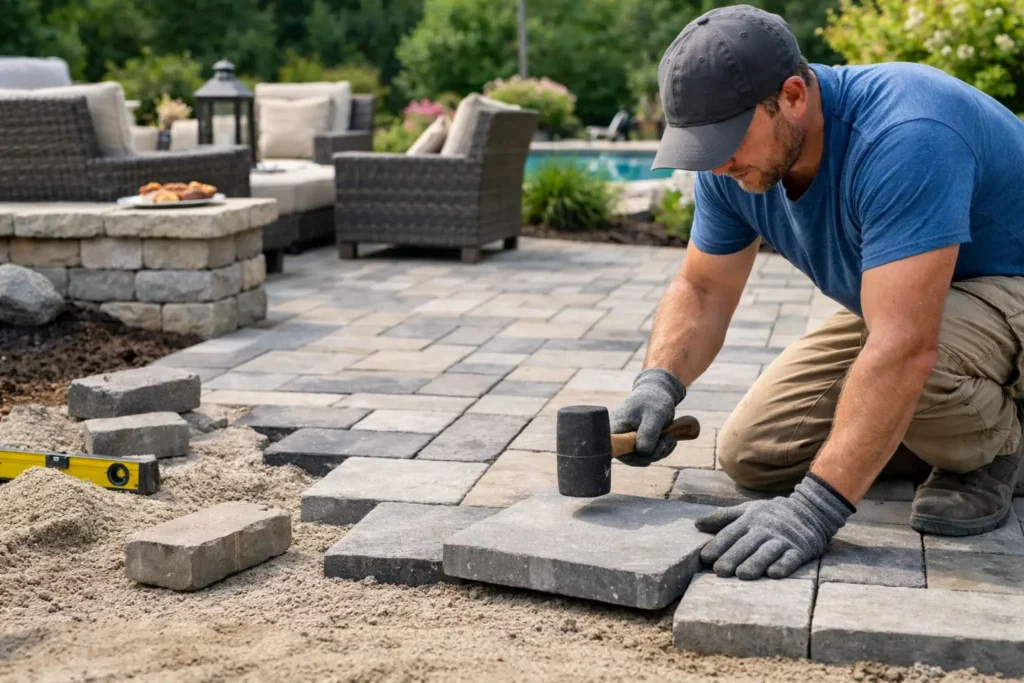
A patio is where Long Island homes earn their extra square footage. It becomes the place for weeknight dinners, birthday parties, quiet coffee, and fresh air without leaving home. Choosing the right patio installation contractor Long Island homeowners can rely on is what turns that idea into an outdoor space that drains correctly, feels solid underfoot, and holds up season after season.
The right project is not just about selecting attractive pavers or pouring a clean slab. It starts with how you use your yard, how water moves across the property, what the existing grade allows, and how the patio should connect to your home. Good planning prevents the common frustrations that show up later: puddles by the foundation, shifting pavers, awkward steps, or a patio that looks good but does not fit the way your family lives.
What a Patio Installation Contractor on Long Island Should Consider First
Long Island properties come with a wide range of conditions. One yard may be mostly level with easy access from the driveway, while another may have a tight side yard, changing grades, mature trees, or drainage concerns after heavy rain. A dependable contractor looks at those details before recommending a material or providing a final scope of work.
The conversation should begin with your goals. Do you want a simple, durable landing outside a back door? Are you planning a full outdoor living area with room for a dining set, grill, lounge seating, and a fire feature? Will the patio connect to a deck, new doors, a walkway, siding work, or landscaping? These answers shape the layout, base preparation, access plan, and budget.
Drainage deserves special attention. A patio should be graded to guide water away from the house, not toward it. This sounds straightforward, but it affects elevations at doors, transitions to lawn areas, step locations, and the finished height of the entire installation. A contractor who takes time to evaluate the site can identify whether simple grading is enough or whether the project may need a more thoughtful drainage solution.
A patio should fit the house, not compete with it
The best patios feel like they belong to the property. Material color, edge details, pattern, and scale should work with the home’s exterior rather than follow a trend that may feel dated in a few years. A modest colonial, a ranch, and a more contemporary home can all have beautiful patios, but the design choices should be different.
This is also where working with a contractor who understands broader home improvement can help. The patio may need to meet existing trim, siding, masonry, stairs, railings, or doors cleanly. Looking at the whole exterior helps create a finished result instead of a collection of disconnected upgrades.
Choosing the Right Patio Material for Your Yard
There is no single best patio material for every Long Island home. The right choice depends on your budget, preferred appearance, maintenance expectations, and site conditions. An honest recommendation explains the trade-offs instead of pushing one option for every job.
Concrete is a practical choice for homeowners who want a clean, straightforward surface and a wide range of finish options. It can be cost-effective for certain layouts, but it needs proper preparation and control joints to help manage normal movement over time. Cracking can still occur, especially in a climate with freezing and thawing cycles, so expectations should be realistic from the start.
Pavers offer flexibility in color, texture, pattern, and repairability. When installed on a properly prepared base with secure edging, they can create a polished, durable surface that suits many home styles. If a section ever needs to be accessed or repaired, individual pavers can often be lifted and reset. The quality of the base matters greatly here. Attractive pavers cannot make up for poor excavation or weak compaction beneath them.
Natural stone brings a distinctive look that many homeowners love, particularly for traditional homes, garden settings, and custom outdoor spaces. Stone varies in color and texture, which is part of its character. It can also require more careful material selection and installation, and costs may be higher depending on the stone, pattern, and amount of cutting involved.
For some projects, a combination works best. Pavers may form the main patio while natural stone is used for steps or accents. Concrete may provide a strong, practical foundation for a covered area. The goal is not to choose the fanciest material. It is to choose the one that gives you the look, performance, and upkeep level you actually want.
The Work Below the Surface Determines the Result
A patio’s long-term performance is largely decided before the finished surface is installed. Proper excavation, base material, compaction, grading, and edge restraint are the details homeowners may not see once the work is complete, but they are the details that keep the patio stable.
A qualified contractor should explain what needs to be removed, how the base will be built, and how the finished patio will shed water. If your project includes steps, a retaining edge, or a transition from patio to lawn, those elements need to be planned as part of the installation rather than treated as last-minute additions.
This is especially important with paver patios. The pavers themselves are only the visible top layer. A stable, well-compacted base and properly installed borders help prevent settling, spreading, and uneven areas. Skipping preparation to lower the initial price can lead to repairs that cost more and disrupt your yard later.
Access and site protection matter, too
Patio work involves excavation, material deliveries, cutting, and equipment. Before work begins, ask how the contractor plans to access the yard and protect nearby areas. A thoughtful crew considers existing landscaping, fences, irrigation lines, driveway surfaces, and the path materials will take from the street to the work area.
No construction project is completely disruption-free, but good communication makes a major difference. You should know what work is planned, when decisions are needed, and what conditions could affect the schedule. Weather can influence exterior work, particularly excavation, concrete, and jointing materials. A dependable contractor will be direct about those realities rather than making promises that ignore the forecast.
Questions to Ask Before Hiring a Patio Installer
A patio estimate should give you confidence, not leave you guessing what is included. Ask whether the proposal covers demolition, excavation, base preparation, drainage considerations, material quantities, edging, steps, cleanup, and restoration of disturbed areas. If something is not included, it should be clear before work starts.
It also helps to ask who will manage the project and how changes are handled. Homeowners sometimes adjust the patio size, choose a different material, or add a walkway once they can see the layout taking shape. Those changes are possible, but they should be discussed clearly so cost and schedule stay transparent.
You should also ask about permits when the project involves structural features, drainage changes, retaining walls, electrical work, or other additions that may require local review. Requirements vary by municipality and by project scope. A professional contractor can help identify what needs to be considered instead of treating approvals as an afterthought.
Price matters, but the lowest estimate is not always the best value. Compare the scope of work, materials, preparation, communication, and craftsmanship behind each number. A lower quote may leave out essential site work, use a thinner base, or provide less clarity about the finished details. The better choice is the contractor who offers honest pricing and a plan you understand.
Build a Patio Around How You Actually Live
Before settling on dimensions, think beyond the open area itself. A patio needs enough room for furniture to be used comfortably, not simply placed there. A dining table needs circulation space. A grill needs a safe, practical location. If you picture hosting family and friends, include room for people to move without stepping into planting beds or squeezing past chairs.
Consider the view from inside the house as well. A patio often becomes part of the everyday sightline from a kitchen, family room, or bedroom. The shape, elevation, and materials should improve that view in every season, including the months when outdoor furniture is stored away.
At That Guy Carpentry, the approach starts with listening to the way you want to use your home. Whether your project calls for a simple backyard patio or an outdoor area coordinated with carpentry, doors, steps, and other exterior improvements, the goal is the same: quality work, clear communication, and a result built around your vision.
A well-built patio should make it easier to enjoy the home you already love. Start with the space you need, ask practical questions about the work below the surface, and choose a contractor who treats your yard with the same care they bring to the finished surface.