
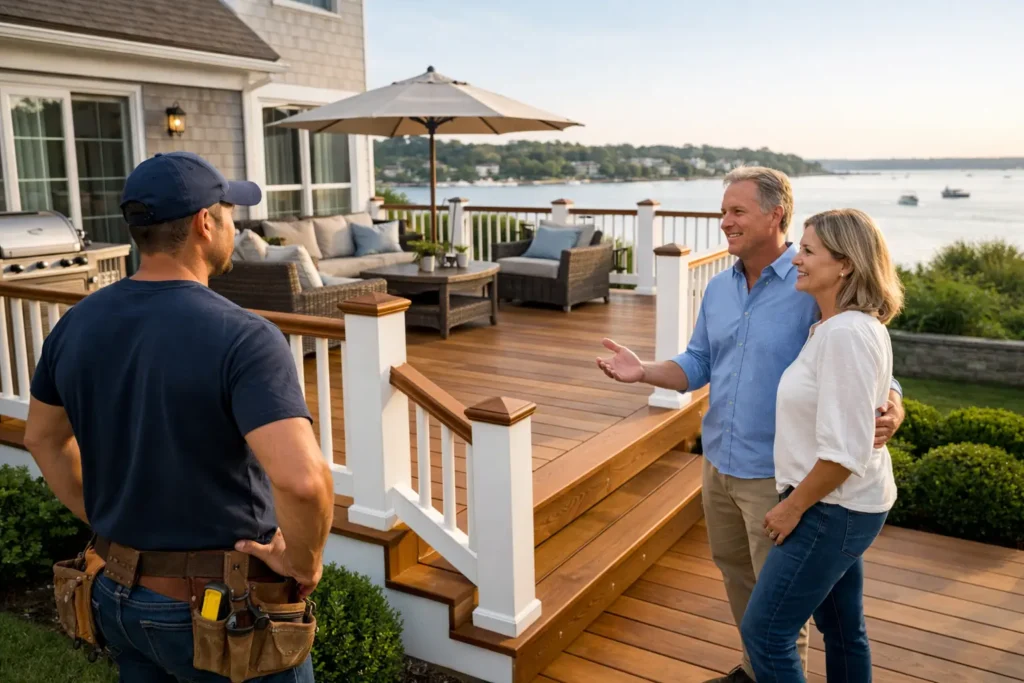
A new deck should make it easier to enjoy the home you already love. It should give your family room for summer dinners, weekend gatherings, quiet morning coffee, and the everyday time outside that Long Island homeowners wait all winter to enjoy. Choosing the right deck builder Long Island residents can rely on is about more than finding someone who can install boards. It is about finding a contractor who listens to how you live, plans carefully around your property, and builds a space that feels like it was always meant to be there.
A deck is exposed to sun, rain, coastal air, temperature swings, and plenty of foot traffic. The details behind the finished look matter: framing, drainage, railings, fasteners, stairs, material selection, and how the deck connects to your home. A well-built deck looks inviting on day one and continues to perform season after season.
Start With How You Want to Use the Space
Before comparing materials or requesting estimates, think about what the deck needs to do for your household. A small landing outside a back door has very different requirements than a multi-level space designed for entertaining. Knowing your priorities helps a contractor recommend a layout that fits your property and your budget.
Consider where the sun hits throughout the day, how people will move in and out of the house, and whether you need room for a grill, dining table, lounge seating, or a play area. If you have a pool, a raised yard, or an uneven grade, those conditions should shape the plan from the beginning. The goal is not simply to build the largest deck possible. It is to build the right deck for the way your family spends time outdoors.
A thoughtful builder will also ask about the inside of your home. A deck off the kitchen may need generous space for meals and easy access from the door. A deck outside a family room may be better suited to comfortable seating and a view of the yard. When the indoor and outdoor spaces work together, the addition feels more useful every day.
What a Deck Builder Long Island Homeowners Need Should Provide
The best deck projects begin with a real conversation, not a one-size-fits-all quote. Your contractor should walk the property, ask questions, explain practical options, and give you clear expectations about the work ahead. That includes discussing the condition of the house connection, the yard, existing structures, and any work needed before construction begins.
Look for a builder who is comfortable handling the full picture. A deck project may involve replacing a door, repairing exterior trim, adjusting siding, adding lighting, building custom steps, or improving the patio area below. When one experienced team can coordinate those details, you avoid the stress of juggling separate trades and wondering who is responsible for what.
Clear communication matters just as much as carpentry skill. You should understand the proposed layout, the materials being used, the expected timeline, and the cost before work starts. Honest pricing does not always mean choosing the lowest estimate. It means receiving a recommendation that makes sense for your goals, with no pressure to pay for features you do not need.
Choose Materials for Your Home, Not Just the Showroom
Decking materials affect the appearance, maintenance needs, upfront cost, and long-term value of your project. There is no single best choice for every Long Island home. The right option depends on your style, how much maintenance you want to take on, and how heavily the deck will be used.
Pressure-treated wood remains a practical choice for many homeowners. It offers a traditional look and can be an excellent value when properly installed, sealed, and maintained. Wood does require periodic attention, including cleaning and staining or sealing, but some homeowners prefer its natural character and the flexibility it offers for custom details.
Composite decking is often appealing for families who want lower maintenance and consistent color. It resists many of the issues that affect natural wood, and it can be a strong choice for a busy outdoor space. The trade-off is typically a higher material cost. It is also important to choose quality products and correct installation methods, since composite boards expand, contract, and need proper support.
Railings deserve the same careful consideration. Wood railings can complement a traditional home, while composite, metal, cable, or vinyl options can create a cleaner, more contemporary look. Your builder should help you balance appearance with safety, maintenance, and the view from the deck.
The Structure Is Where Quality Shows
Beautiful deck boards cannot make up for poor framing. The structure below the surface carries the load, keeps the deck level, and protects your investment over time. This is where experienced craftsmanship becomes especially valuable.
A properly built deck needs secure footings, correctly sized framing, strong connections, and thoughtful water management. It also needs careful attention where the deck meets the house. Improper flashing or attachment can allow water into areas where homeowners cannot easily see the damage until it becomes a much larger repair.
Stairs should feel solid underfoot and be comfortable to use. Railings should be secure, evenly finished, and built with safety in mind. If the deck includes built-in benches, privacy screens, planters, or storage, those features should be designed as part of the structure instead of added as an afterthought.
This is why reviewing a contractor’s approach matters. Ask how they handle the framing, how they protect the home from water intrusion, and how they plan for drainage around the deck. A dependable answer should be straightforward, not filled with confusing jargon.
Plan for the Details That Make a Deck Feel Finished
The details are what turn a platform outside the house into a favorite part of the home. A picture-frame border can give the deck boards a more tailored appearance. Skirting can conceal the area below a raised deck. Built-in seating can solve a layout challenge without filling the space with extra furniture.
Lighting is another worthwhile consideration. Step lights, post-cap lights, and subtle deck lighting can make the space safer and more welcoming after sunset. If you are planning a grill area or outdoor kitchen, think early about access, heat protection, storage, and traffic flow. Planning these elements before construction is usually simpler and more cost-effective than trying to add them later.
For homeowners considering a larger exterior update, a deck can also be a smart time to address siding, windows, doors, trim, or a patio transition. That Guy Carpentry can help coordinate those connected improvements so the final result looks intentional from every angle.
Know What to Ask Before You Hire
A good consultation should leave you feeling informed, not rushed. Ask to see how the contractor approaches projects similar to yours and whether they can explain the choices behind their recommendations. Discuss the materials, the estimated schedule, site cleanup, and how changes will be handled if an unexpected condition is found once work begins.
It is also reasonable to ask how the work will affect daily life at home. Families want to know where materials will be stored, how the yard will be protected, and what the work area will look like at the end of each day. Professional crews respect the property as well as the project.
Be cautious of an estimate that is dramatically lower than the others without a clear explanation. It may leave out important structural work, use lesser materials, or fail to account for the finishing details that make a deck safe and complete. The right contractor helps you understand the difference so you can make a confident decision.
A deck is not just an exterior upgrade. It is a place where ordinary days can feel a little more useful and a little more enjoyable. Give the planning the attention it deserves, choose craftsmanship that holds up, and build a space your family will be glad to step out into for years to come.