
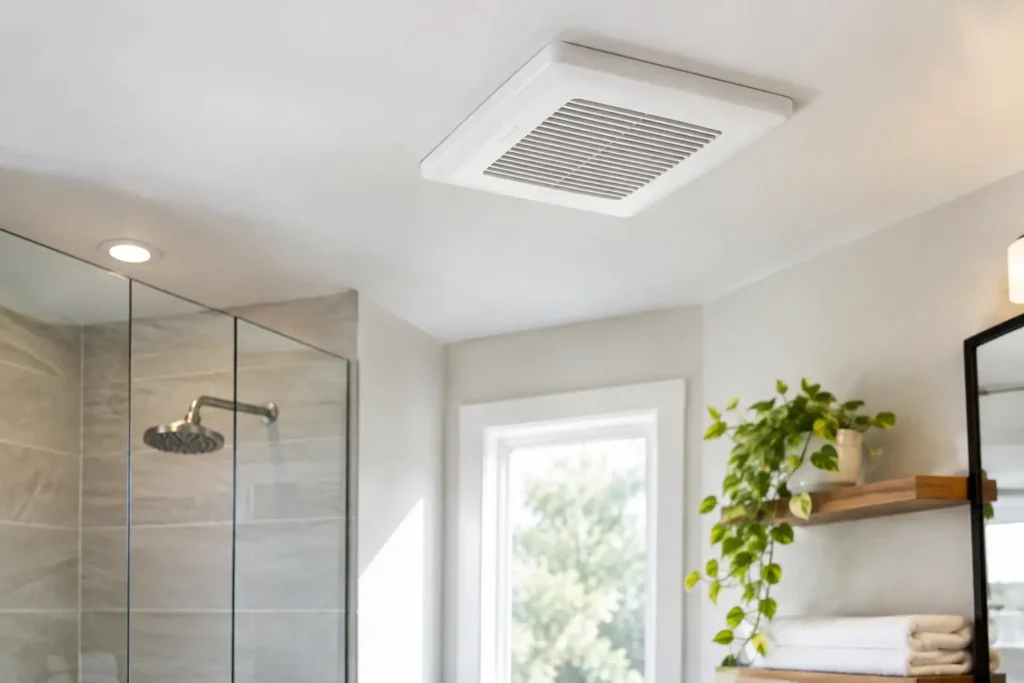
A bathroom can have beautiful tile, a new vanity, and a clean layout, then still feel uncomfortable because moisture has nowhere to go. The best bathroom ventilation upgrades solve the problems homeowners notice every day: fogged mirrors, lingering odors, peeling paint, damp towels, and mildew that keeps returning around the ceiling or shower.
For Long Island homes, ventilation deserves extra attention. Cold winters can create condensation on exterior walls and windows, while hot, humid summer days make a weak fan work even harder. A good upgrade is not simply buying the loudest fan on the shelf. It is about moving the right amount of air, getting it outside efficiently, and making the system easy enough to use that it actually protects your bathroom.
Start With the Fan Size, Not the Old Opening
Many bathrooms have undersized exhaust fans that were installed years ago, often with little thought given to room size, shower type, or duct length. If the fan cannot keep up with steam, replacing the grille will not fix the underlying problem.
Fan capacity is measured in CFM, or cubic feet per minute. A small powder room may need only modest airflow, but a primary bathroom with a large shower, soaking tub, toilet room, or double vanity may need substantially more. As a general starting point, bathrooms under 100 square feet are commonly sized at about 1 CFM per square foot. Larger or more complicated spaces should be evaluated based on their fixtures and layout.
There is a trade-off here. Bigger is not always better if the fan is paired with a narrow duct, a long route to the exterior, or poor installation. A properly sized fan with a clear duct path will outperform an oversized unit that is choked by restrictions. During a bathroom renovation, this is the right time to look beyond the fan housing and consider the entire ventilation route.
Think About Where Steam Actually Collects
A fan works best when it is positioned near the shower or tub, where moisture is produced. In a large bathroom, a fan placed over the toilet on the opposite side of the room may run for 20 minutes and still leave the shower area damp.
Sometimes the best answer is relocating the fan during a remodel. In other bathrooms, especially large primary suites or rooms with separate shower enclosures, adding a second fan may make more sense than relying on one oversized unit. The goal is practical: remove damp air before it settles into drywall, trim, paint, and framing.
Choose a Quieter Fan People Will Use
If a bathroom fan sounds like a rattling attic vent, most people turn it off as quickly as possible. That defeats the purpose. One of the most worthwhile upgrades is moving to a quiet fan rated at a low sone level.
Sones measure perceived sound. Lower numbers mean quieter operation. A fan in the low-sone range can run during and after a shower without interrupting a conversation, waking a sleeping child, or making a relaxing bath feel less relaxing. Quiet operation is not just a luxury feature. It encourages consistent use, which is what keeps humidity under control.
Higher-quality fans also tend to run more smoothly and reliably when they are installed correctly. That said, even a premium fan can become noisy if the housing is loose, the ductwork is kinked, or the backdraft damper is not operating properly. Good workmanship matters as much as the equipment itself.
Add Humidity Controls for Better Everyday Results
A standard wall switch relies on someone remembering to turn on the fan, then remembering to leave it running after the shower. That is easy to forget during a busy morning. Humidity-sensing controls take that decision out of the routine.
A humidity sensor can activate the fan when moisture rises and keep it running until the room dries out. This is especially useful in family bathrooms, guest bathrooms, and bathrooms used by teenagers, where ventilation habits can be inconsistent. Some controls also include a timer, allowing the fan to run for a set period after the light is switched off.
There are a few options worth considering:
- A countdown timer gives homeowners a simple way to run the fan for 10, 20, or 30 minutes after a shower.
- A humidity sensor responds to moisture levels automatically and is ideal for frequent shower use.
- A motion sensor can turn on ventilation when someone enters the room, though it may not keep the fan running long enough by itself.
- A combination control can manage the fan, light, and humidity setting from one clean wall location.
Automatic controls should be adjusted carefully. If the sensitivity is set too high, the fan may cycle unnecessarily on humid summer days. If it is set too low, it may not respond quickly enough after a shower. A professional installation includes testing the settings so the system works for the way your household uses the room.
Improve the Ductwork Before It Becomes a Hidden Problem
The fan is only one part of the system. Moist air needs a direct, properly sized path to the exterior of the home. Exhausting into an attic, crawl space, or enclosed soffit can create hidden moisture damage, mold risk, and insulation problems.
Rigid metal ductwork is generally the strongest choice for many installations because it provides a smoother interior path for airflow. Flexible duct can be useful where access is difficult, but it should be installed taut and supported. Sagging, crushed, or sharply bent ductwork slows air movement and allows moisture to collect inside the line.
Duct routing matters, too. Long runs and repeated turns reduce performance. In a finished home, the shortest path may not always be possible without opening walls or ceilings, so the right plan depends on the structure. During a full bathroom remodel, there is often an opportunity to correct poor ductwork while the room is already opened up.
In colder areas of New York, insulating ductwork that passes through unconditioned attic space can help reduce condensation inside the duct. The exterior termination should also include a working damper to limit cold air, pests, and outdoor moisture from coming back into the home when the fan is off.
Do Not Forget Fresh Air and Door Clearance
An exhaust fan cannot remove air effectively unless replacement air can enter the bathroom. A tightly closed door with no undercut or transfer path can make the fan struggle. You may hear the door pull inward when the fan starts, but airflow through the room can still be limited.
A small gap beneath the bathroom door is often enough to improve makeup airflow. In some renovations, a different door configuration or transfer grille may be considered, but that depends on privacy needs and the layout of the home. This is a small detail that can make a noticeable difference in how quickly mirrors clear and surfaces dry.
Opening a window can help on mild days, but it should not be the primary ventilation plan. Windows are often closed in winter, during storms, and when privacy is needed most. Mechanical ventilation gives the bathroom consistent protection in every season.
Pair Ventilation With Moisture-Resistant Finishes
Ventilation protects finishes, but choosing the right finishes gives your bathroom another layer of defense. Quality bathroom paint, properly installed tile, well-sealed grout, and moisture-resistant drywall in appropriate areas all help the room hold up over time.
Still, no finish can compensate for trapped steam. Peeling paint above a shower or mildew on the ceiling is often a ventilation warning, not simply a cleaning issue. Before repainting or replacing damaged trim, find out why the moisture is lingering. Otherwise, the same damage can return after a fresh renovation.
This is where coordinated remodeling makes a difference. A bathroom project may involve carpentry, drywall, tile, electrical work, plumbing fixtures, and ventilation. Planning those pieces together prevents a new fan from being treated as an afterthought once the ceiling is already finished.
When an Upgrade Is Worth the Investment
Consider upgrading bathroom ventilation if mirrors stay fogged long after showers, the room smells musty, paint is bubbling, mildew returns after cleaning, or the existing fan is loud and barely moves air. It is also smart to evaluate ventilation before installing a larger shower, enclosing a formerly open shower area, or remodeling a bathroom with premium finishes.
The right solution might be a quiet replacement fan and timer. It might be new ductwork and a properly located fan as part of a complete renovation. Every home is different, and an honest assessment should match the upgrade to the bathroom, the structure, and your budget.
A dry bathroom is easier to clean, more comfortable to use, and kinder to the finishes you invested in. When planning your next bathroom project, give the air behind the walls the same attention you give the tile in front of them.