
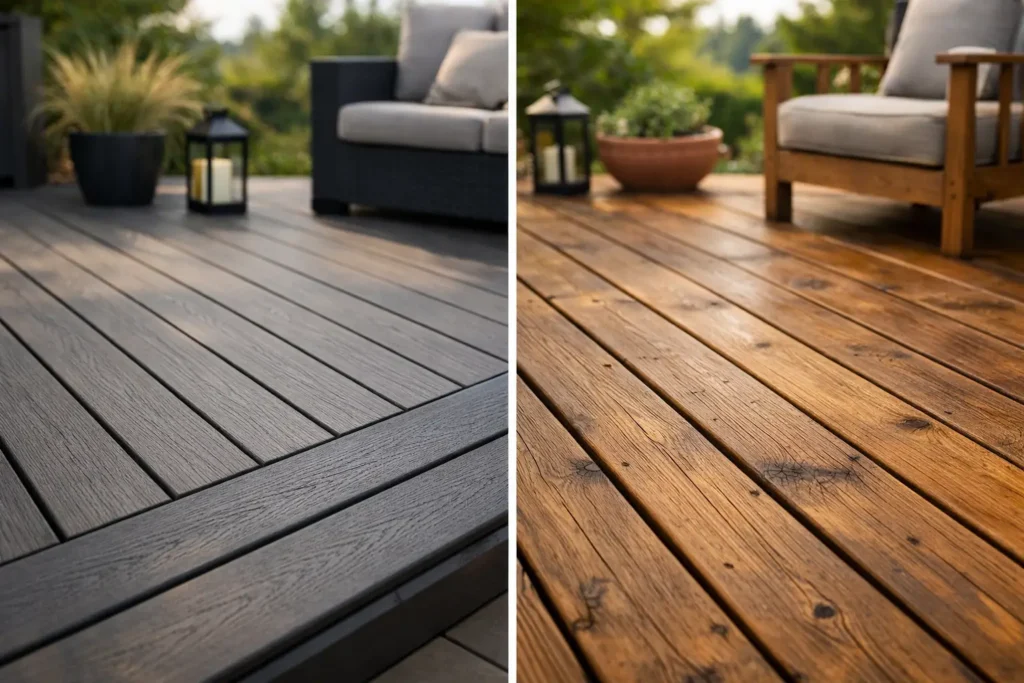
A deck has to handle more than weekend cookouts. On Long Island, it faces humid summers, freeze-thaw cycles, salty air in many neighborhoods, falling leaves, and plenty of foot traffic from family and guests. When homeowners ask about composite versus wood decking, the right answer is rarely a simple matter of which material is “better.” It comes down to how you want the deck to look, how much maintenance you are willing to take on, and what makes sense for your home and budget.
A well-built deck should feel like a natural extension of your home. The material matters, but so do the framing, drainage, fasteners, railings, stairs, and finishing details that make the space safe and long-lasting.
Composite Versus Wood Decking: The Real Difference
Composite decking is made from a blend of recycled wood fibers and plastic, usually finished with a protective outer cap. It is designed to resist moisture, fading, stains, splintering, and insect damage with very little routine maintenance. Boards are available in consistent colors and wood-grain patterns, from light coastal tones to deeper brown and gray finishes.
Wood decking is the traditional choice, and for good reason. Pressure-treated lumber remains an affordable, practical option for many homes. Cedar, redwood, ipe, and other hardwoods can provide a richer, more natural appearance, though they come with different price points and maintenance requirements.
The biggest distinction is not appearance alone. Composite asks for a larger investment at the start and less work over time. Wood typically costs less to install initially, but it needs regular cleaning, sealing, staining, and occasional board replacement to remain in good condition.
Upfront Cost Versus Long-Term Value
For homeowners watching the initial project budget, pressure-treated wood is usually the least expensive decking material. It can be a smart fit for a straightforward platform deck, a rental property, or a project where keeping the first cost down is the priority.
Composite decking costs more per square foot, and the installation may also require specialized fasteners, picture-frame borders, or a carefully planned layout. That higher starting cost can be worthwhile if you plan to stay in your home for many years and prefer not to spend time staining the deck every few seasons.
Wood’s long-term cost is often underestimated. Cleaning products, stain or sealer, tools, labor, and replacement boards all add up. A neglected wood deck can also develop issues that go beyond surface appearance, including cupping, splitting, loose fasteners, and moisture damage around stairs or railings.
That does not mean composite is automatically the better value. If you enjoy maintaining your outdoor space and love the character of real wood, the ongoing care may be part of the appeal. The best choice is the one that fits both your budget now and the level of upkeep you can realistically commit to later.
Maintenance: How Much Work Do You Want?
This is where composite has its clearest advantage. Most composite decks need a seasonal wash with soap, water, and a soft brush to remove dirt, pollen, and mildew. Spills should be cleaned promptly, especially under a grill, but there is no routine sanding, staining, or sealing involved.
Wood requires more attention. At a minimum, it should be washed and inspected annually. Depending on exposure and the product used, it may need to be stained or sealed every two to three years. Areas under trees, near sprinklers, or exposed to steady shade may need extra care because trapped moisture encourages mildew and surface deterioration.
Maintenance is not only about looks. When wood is regularly protected, it can last for years and continue to look excellent. When it is ignored, a deck can go from weathered to unsafe faster than many homeowners expect. Checking for soft boards, popped nails, cracked railings, and loose stairs should be part of every spring inspection.
Appearance and the Feel of the Finished Space
Real wood has variation that manufactured boards cannot fully duplicate. Grain patterns, natural color shifts, and the way wood changes over time give it warmth and character. For a classic porch, a traditional home, or a custom outdoor design with detailed trim and built-in seating, wood can be especially appealing.
Composite offers a cleaner, more consistent finish. Modern boards have come a long way from the flat, artificial-looking products many people remember. High-quality options can create a polished outdoor living area, particularly when paired with coordinated railings, skirting, lighting, and steps.
There is also the matter of comfort. Some composite boards can become quite warm in direct sun, especially darker colors. This is worth considering for a south-facing deck, a pool area, or a yard where children and pets go barefoot. Lighter composite colors generally stay more comfortable, while wood may feel cooler underfoot but can develop splinters if it is not maintained.
If color matching matters, composite is more predictable. A wood deck can be stained to complement siding, shutters, or interior finishes, but its final color will vary with the species, condition of the boards, and stain application. That natural variation is either a benefit or a drawback, depending on the look you want.
Weather, Moisture, and Coastal Conditions
Local conditions should influence the decision. In Nassau and Suffolk County, decks can see snow, standing water, humidity, and, in some areas, salt exposure. Good construction practices matter just as much as the decking surface.
Composite handles moisture well and does not rot like untreated wood. Still, it needs proper spacing between boards and adequate airflow beneath the deck. Water needs a path to drain away from the house, and the framing should not trap debris and damp leaves.
Pressure-treated lumber is made for exterior use, but cut ends and fastener locations need thoughtful treatment. The framing should be built with corrosion-resistant connectors and fasteners rated for treated lumber. On any deck, the ledger connection to the home, footings, flashing, railing strength, and stair construction deserve close attention. Those are not finishing details. They are the parts that protect your family and the investment you are making.
When Wood Is the Better Choice
Wood is often the right fit when a homeowner wants a natural material, a lower upfront cost, or a deck with a custom, traditional feel. It also works well when the project includes features that benefit from on-site carpentry, such as custom benches, privacy screens, pergolas, planter boxes, or detailed trim.
A wood deck can be repaired board by board, and its finish can be changed later with a new stain color. That flexibility matters if you expect to update your exterior paint, siding, or landscaping over time.
Choose wood with clear expectations. It will weather. It will need care. And it should be built with quality lumber, correct spacing, secure connections, and a maintenance plan from the beginning.
When Composite Is the Better Choice
Composite is a strong choice for homeowners who want a refined outdoor area without making deck maintenance another recurring project. It is particularly practical for busy families, homes with heavy outdoor use, and decks exposed to moisture, shade, or frequent spills.
It can also make sense when you want a consistent color and a finished look that stays close to the original design for years. Hidden fastening systems and matching trim pieces can give composite decks a clean, polished appearance with fewer visible screw heads.
The trade-off is the investment. Rather than selecting composite simply because it is marketed as maintenance-free, consider it low-maintenance. It still needs cleaning, inspection, and proper installation. No decking material can compensate for weak framing or poor water management.
Plan the Deck Around How You Live
Before choosing a board, think about the deck’s job. Is it a small landing outside the back door, a quiet place for morning coffee, or the main gathering space for summer meals? Will it connect to a patio, support a grill station, include a shade structure, or need room for large family gatherings?
Those answers affect more than material selection. They help determine the right size, traffic flow, railing style, stair layout, lighting, and storage options. A thoughtful plan prevents a deck from becoming an expensive rectangle that does not quite serve the way your family uses the yard.
The best deck material is the one that supports your priorities without creating regrets a few years from now. Whether you choose the natural character of wood or the low-maintenance consistency of composite, start with a clear plan, quality materials, and craftsmanship that gives every board a purpose.
1 Comment
[262461]supplies professional anti-violence equipments and solutions for the whole world with strong and perfect production capacity. anti-violence.org