
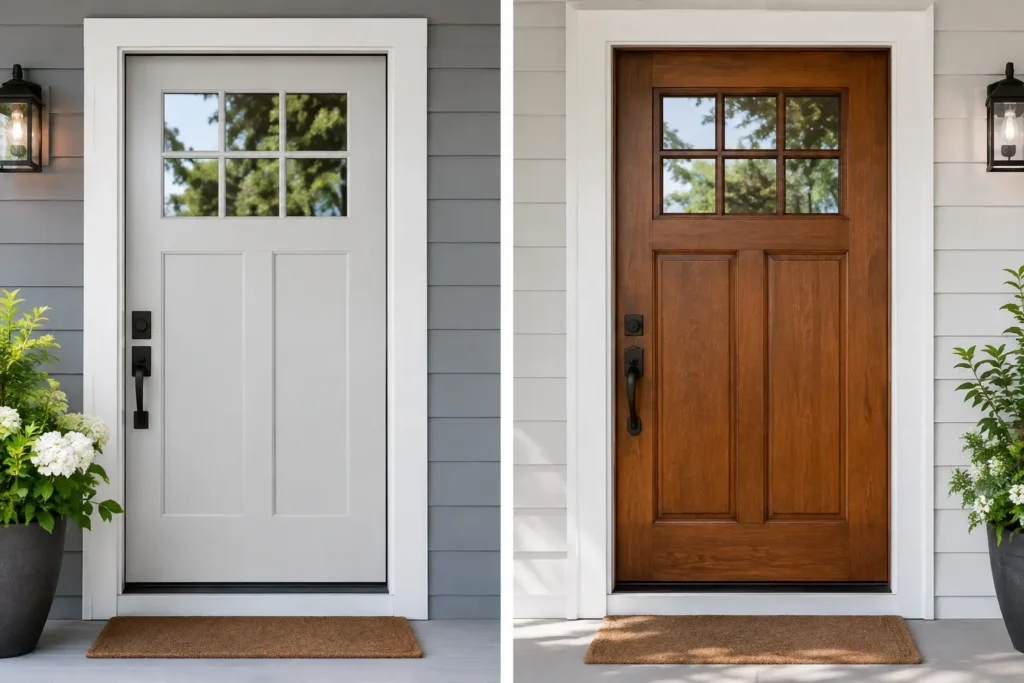
Your front door has a harder job than almost any other finish in your home. It needs to look right from the curb, close securely every day, stand up to rain and summer sun, and help keep conditioned air where it belongs. When homeowners compare fiberglass versus wood entry doors, the best answer is rarely about which material is universally better. It is about which door suits the home, exposure, budget, and amount of upkeep you are comfortable taking on.
For homes in Nassau and Suffolk County, that decision deserves a close look. Coastal moisture, wind-driven rain, winter temperature swings, and strong sun can all affect a door over time. A well-selected and properly installed entry door can improve comfort, security, curb appeal, and the way you feel when you come home.
Fiberglass Versus Wood Entry Doors at a Glance
Fiberglass and wood doors can both deliver an attractive, durable entrance, but they get there in different ways. Fiberglass is a manufactured material commonly built around an insulated core. It is valued for its low maintenance, energy efficiency, and ability to imitate real wood grain. Wood is the traditional choice, prized for its natural depth, custom detailing, and lasting architectural character.
The real comparison is not simply appearance versus performance. Quality matters in both categories. A well-built fiberglass door installed with the right weatherstripping and flashing will outperform a bargain door of any material. The same is true of wood: a properly finished, protected, and maintained wood door can serve a home beautifully for many years.
Appearance and architectural fit
Wood has a look that fiberglass can closely imitate but not fully duplicate. Natural grain, subtle color variation, and the feel of a solid wood surface give it a depth that works especially well on historic homes, traditional Colonials, cottages, and custom-designed entrances. Wood also gives homeowners more flexibility for unusual sizes, panel layouts, decorative glass, carvings, and custom stain colors.
That said, modern fiberglass doors have come a long way. High-quality models can have convincing oak, mahogany, fir, or knotty alder textures, and they can be painted or stained to complement shutters, siding, trim, and interior finishes. For a home with a clean, updated exterior or a more straightforward opening, fiberglass often provides a polished result without demanding the maintenance schedule of natural wood.
If the door is a major design feature viewed up close every day, wood may be worth the investment. If you want a dependable door that looks sharp from the street and coordinates with the home without becoming another seasonal project, fiberglass is often the practical choice.
Weather Resistance and Long-Term Maintenance
Exposure is one of the biggest deciding factors. A covered entry with a deep porch protects almost any door. An unprotected south- or west-facing entry takes far more punishment from ultraviolet rays, heat, rain, and changing humidity.
Fiberglass handles those conditions exceptionally well. It does not rot, and it is less likely than wood to swell, shrink, warp, or crack as the weather changes. Its finish can still fade or wear over time, particularly in direct sun, but routine cleaning and occasional touch-ups are usually all it needs. For busy households, that lower maintenance requirement is a meaningful advantage.
Wood needs more attention because it responds naturally to moisture and temperature. Without a strong finish and proper sealing on all sides, including the top and bottom edges, wood can absorb moisture. That may lead to movement, finish failure, or deterioration around joints and panels. A painted wood door generally needs periodic inspection and repainting. A stained wood door may need refinishing more often, depending on its sun exposure.
This does not make wood a poor choice. It means wood should be selected with realistic expectations. A protected entry, quality exterior-grade finish, and regular care go a long way. Homeowners who appreciate the material and are prepared to maintain it can enjoy results fiberglass cannot quite replicate.
A door is only as good as its installation
Even the right door will disappoint if the frame is out of square, the sill is not sealed, or gaps are left around the jamb. Drafts, water intrusion, sticking, and premature wear often point to installation issues rather than the door material itself.
A professional installation starts with measuring the opening carefully and checking the surrounding framing for damage. The installer should address flashing, insulation, threshold support, exterior trim, and weatherstripping so the entire opening works as a system. This is especially important when replacing an older door, where hidden rot or long-standing water problems may be present behind the casing.
Cost: Upfront Price Versus Ownership Cost
Fiberglass doors generally offer a broad middle ground in price. Basic styles can be fairly budget-friendly, while premium doors with realistic grain textures, sidelights, decorative glass, and upgraded hardware can approach or exceed the cost of some wood doors. Their low maintenance can make the overall cost easier to manage over the years.
Wood entry doors often carry a higher initial price, particularly when they are solid wood, custom-sized, or built with detailed millwork. The finish work and ongoing maintenance should also be part of the budget. Still, a wood door can be a smart investment when it is central to the home’s character or when a custom configuration is necessary.
It is also worth looking beyond the door slab price. Hardware, locksets, glass, sidelights, trim repairs, painting, and structural adjustments can all affect the final project cost. An honest estimate should account for the condition of the opening, not just the style of door you selected.
Energy Efficiency, Security, and Daily Use
Fiberglass typically has the edge in insulation. Many fiberglass doors use a foam core that helps reduce heat transfer, making them a solid option for entries exposed to winter cold and summer heat. Wood has natural insulating properties too, but solid wood doors are not usually as energy-efficient as a well-made insulated fiberglass system.
Both materials can provide dependable security when paired with a solid frame, quality hinges, reinforced strike plate, and properly installed deadbolt. Material alone does not make a door secure. A premium lock cannot compensate for weak jamb reinforcement, and a strong door slab will not help much if the surrounding frame is deteriorated.
For everyday use, fiberglass tends to be more forgiving. It is less sensitive to seasonal movement, so it is less likely to rub or bind after periods of high humidity. Wood can remain stable when it is properly built, sealed, and protected, but it requires more attention to prevent weather-related changes from affecting operation.
When Fiberglass Is the Better Fit
Fiberglass is often the right call if your priority is lasting performance with minimal upkeep. It makes particular sense for an exposed front entry, a home near the water, a family that wants improved insulation, or a homeowner who likes a wood-look finish without committing to regular refinishing.
Choose fiberglass when you want a door that resists weather well, stays stable through seasonal changes, and gives you plenty of color, glass, and panel options. It is also a strong choice for homeowners planning a larger exterior update, since the door can be coordinated with new siding, windows, trim, or porch work for a finished look.
When a Wood Entry Door Is Worth It
Wood is worth serious consideration when authenticity and customization lead the project. If your home has original millwork, detailed trim, an older architectural style, or a front entrance that needs to feel distinctly one of a kind, wood can provide the right visual weight and character.
It is also a good fit for covered entrances where the door has meaningful protection from sun and rain. With skilled installation, a quality finish, and a realistic maintenance plan, wood remains one of the most beautiful materials available for a front door.
The key is to avoid choosing wood only because it looks good in a showroom. Consider what it will face on your house, from afternoon sun to driving rain, and decide whether you are ready to protect that finish over time.
Make the Choice Around Your Home, Not a Trend
Before selecting a door, look at the full entrance: the roof overhang, direction of sun, existing trim, threshold condition, and whether you want paint or stain. Bring photos of the exterior and any material samples you are considering to the planning conversation. A door that works beautifully with your siding, porch, and interior style will feel like it belongs there, not like an isolated upgrade.
At That Guy Carpentry, we help homeowners weigh those details before installation begins, so the final door suits both the home and the way the family lives in it. The best entry door is the one that welcomes you home, operates smoothly in every season, and still looks like the right choice years from now.