
A new floor changes more than the look of a room. It changes how a kitchen handles muddy shoes, how a family room feels underfoot, and how easily your home stands up to a busy week. The best flooring trends are not just about a color or pattern seen online. They are materials and finishes that make daily life easier while giving your home a finished, personal look.
For Long Island homeowners, the right choice also has to account for real conditions: wet boots at the entry, pets, kids, shifting humidity, sandy feet after the beach, and rooms that need to work hard year-round. A floor should look good on installation day, but it should also still feel like the right decision years later.
Flooring Trends Favoring Warmth Over Gray
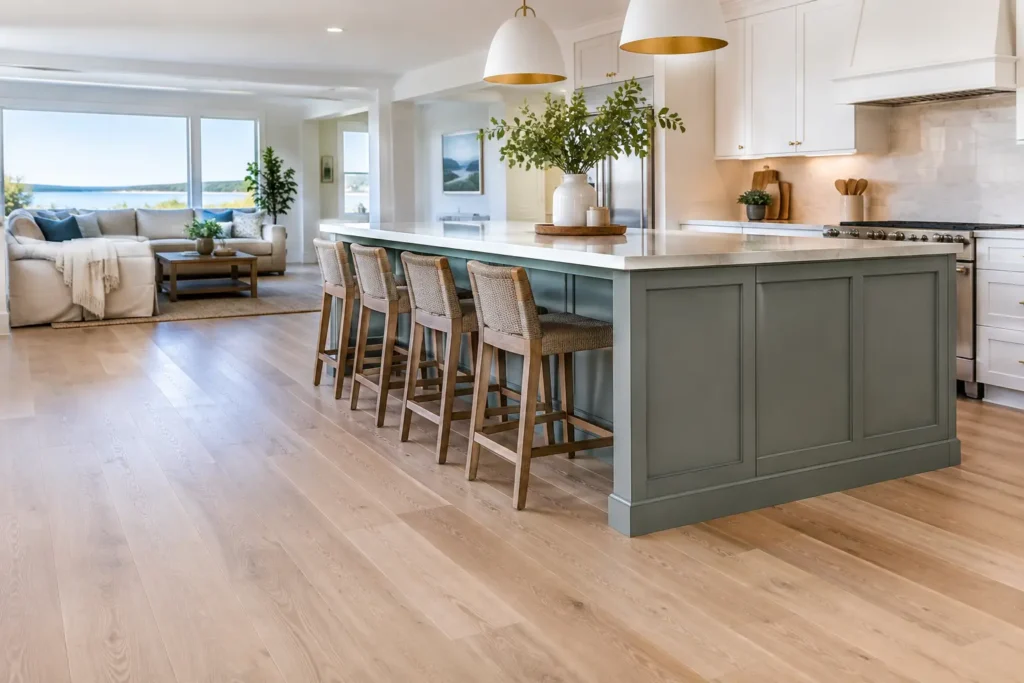
Cool gray flooring had a long run, but homeowners are moving toward warmer, more natural colors. Think honey oak, soft walnut, warm beige, mushroom tones, and natural white oak. These shades make rooms feel more comfortable without locking you into one decorating style.
Warm floors also work well with the updates many homeowners are already making. They complement white or wood-tone cabinetry, painted trim, stone countertops, and custom built-ins without competing for attention. If you plan to refresh furniture or wall colors later, a natural wood-inspired floor gives you more flexibility than a heavily gray or strongly red finish.
That does not mean every room needs the same exact color. A darker floor can still be a smart choice in a formal dining room or a space with plenty of natural light. The goal is to choose an undertone that works with the fixed elements in your home, especially cabinetry, brick, tile, and trim.
Wide Planks With a Natural Look
Wide-plank flooring remains one of the most requested looks because it makes rooms appear calmer and more open. Fewer seams create a cleaner visual line, particularly in open kitchens, living rooms, and hallways. White oak is a popular choice, but the same look is available in engineered hardwood, luxury vinyl plank, and laminate products at different price points.
Real hardwood delivers character that cannot be copied exactly. Every board has its own grain, variation, and texture, and it can be refinished down the road. It is a strong investment for main living spaces when homeowners are prepared for the maintenance and cost.
Engineered hardwood gives you a genuine wood surface over a more stable core. This makes it a practical option where seasonal humidity changes are a concern or where you want the warmth of wood over a properly prepared subfloor. The quality varies widely, so the thickness of the wood layer and the installation method matter.
Luxury vinyl plank is often the better fit for active households. It is comfortable underfoot, highly water-resistant, and available in convincing wood looks. It does not have the same long-term refinishing potential as hardwood, but it can be the more sensible choice for kitchens, finished basements, mudrooms, and homes with pets.
Waterproof Flooring Where Life Gets Messy
One of the most useful flooring trends is not a particular color at all. It is the move toward water-resistant and waterproof options in rooms that see spills, moisture, and constant traffic.
Kitchen floors need to handle dropped ice, leaking water bottles, pet bowls, and the occasional dishwasher problem. Bathrooms need a surface that will not be damaged by routine splashes. In these spaces, porcelain tile, luxury vinyl plank, and certain waterproof laminate products are all worth considering.
Tile is still one of the most durable choices available. Modern porcelain tile can resemble wood, concrete, stone, or soft natural textures while standing up to moisture and wear. It is especially practical in bathrooms, laundry rooms, and entryways. Its trade-off is that it can feel cold and hard underfoot, though radiant heat or well-placed runners can make a major difference.
Vinyl plank provides a warmer, quieter feel and is generally easier to install than tile. It is not indestructible, however. Heavy furniture, sharp objects, and an uneven subfloor can create problems over time. Proper preparation is what keeps a new floor from looking great at first and disappointing later.
Flooring Trends for Better Texture and Character
Perfectly smooth, high-gloss floors are giving way to finishes with more texture. Wire-brushed wood, matte finishes, subtle grain variation, and low-sheen surfaces have become popular because they feel more relaxed and tend to hide everyday dust and small scratches better than glossy floors.
This is a practical trend for families. A matte finish will not eliminate maintenance, but it is more forgiving when the dog runs through the living room or the kids leave a few crumbs after breakfast. Floors should support the way a home is used, not make homeowners afraid to use the room.
Natural variation is also part of the appeal. Boards with slight differences in tone look less manufactured and help a large room feel layered rather than flat. When selecting samples, look at several planks together instead of one small piece. A single sample rarely shows the full range of color and grain that will appear across the finished floor.
Consistent Flooring Through Connected Spaces
Open layouts and first-floor renovations often benefit from one continuous flooring material across the kitchen, dining area, living room, and hallways. It creates visual flow and can make smaller rooms feel larger. It also reduces the number of transition strips and material changes underfoot.
Consistency is not always the right answer. A bathroom may need a more water-friendly material, and an entryway may benefit from durable tile that handles wet weather. The key is making those transitions intentional. Choose materials with complementary undertones and use clean, properly fitted transitions where floors meet.
If you are renovating in stages, plan ahead. Even if you only replace the kitchen floor now, think about how that material will meet the adjoining hallway or family room later. A little coordination early can save you from a patchwork result and unnecessary added cost down the road.
Patterned Tile in Smaller, Defined Areas
Patterned tile is showing up in powder rooms, laundry rooms, entryways, and fireplace surrounds. It is a good way to add personality without committing to a dramatic look across an entire first floor. Soft geometric patterns, classic checkerboard layouts, and subtle tonal designs can give a smaller area a custom feel.
The best patterned tile choices usually have staying power. A design that is too busy or tied to one short-lived trend may feel dated faster than a classic pattern in neutral colors. Consider the surrounding finishes, too. If your kitchen already has a bold backsplash or heavily veined countertop, a quieter floor will often create a better balance.
Choosing the Right Floor for Your Household
The right material depends on where it is going, who uses the room, and what you want from the investment. Before falling in love with a sample, think through your real routine.
A household with large dogs and young children may prioritize water resistance, scratch tolerance, and easy cleaning. A homeowner restoring an older house may place more value on authentic hardwood and traditional detail. Someone finishing a basement should focus first on moisture conditions and subfloor preparation, not just the surface appearance.
Budget matters, but the lowest material price is not always the lowest project cost. Flooring installation often involves removing old material, repairing or leveling the subfloor, adjusting doors, moving appliances, replacing baseboards, or adding new trim. These details are where professional planning and careful workmanship protect the finished result.
It is also worth bringing home samples and viewing them morning, afternoon, and evening. Long Island homes can have very different light from room to room. A floor that looks warm and light in a showroom may read darker in a north-facing family room or more yellow beside existing maple cabinets.
Installation Details That Make the Difference
Even high-quality flooring will not perform well if the surface beneath it is not properly prepared. Subfloor flatness, moisture testing, expansion gaps, adhesive selection, and transitions all affect the life of the floor. These are not the glamorous parts of a renovation, but they are the parts that prevent movement, gaps, squeaks, and premature wear.
Trim work matters, too. Clean baseboard installation, properly finished thresholds, and careful cuts around door casings make a flooring project feel complete. If new floors are part of a larger renovation, coordinating them with painting, cabinetry, doors, and custom carpentry helps the entire space feel planned rather than pieced together.
At That Guy Carpentry, the goal is not to push one material into every home. It is to help homeowners choose a floor that suits their style, their budget, and the way their rooms are actually used. Bring your ideas, a few inspiration photos, and an honest picture of daily life. The right floor should make your home easier to enjoy from the first step through the door.