
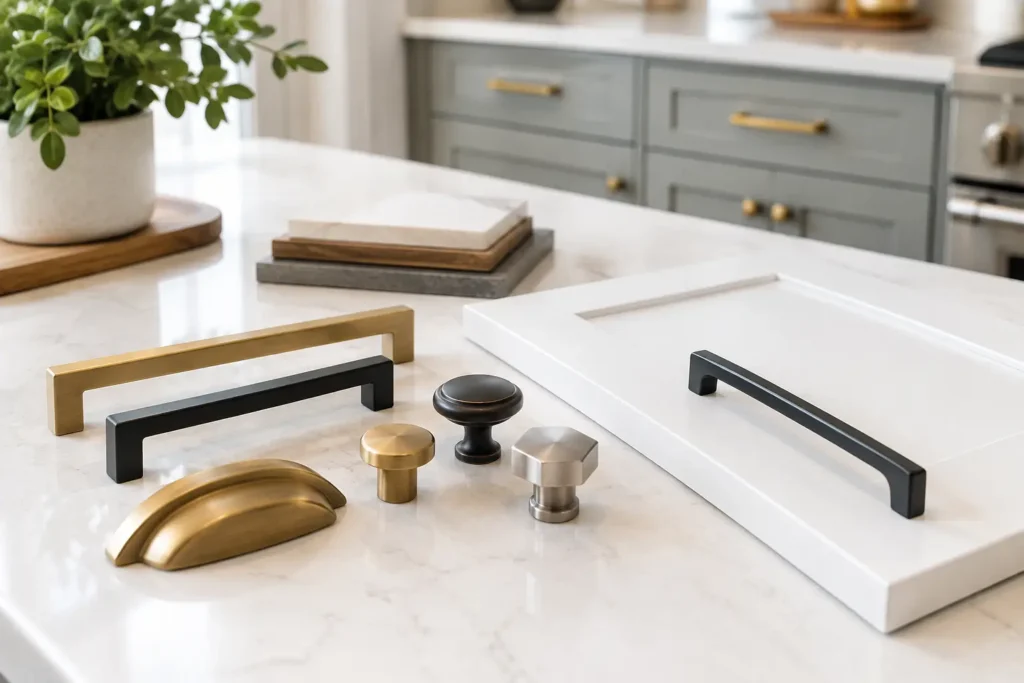
A cabinet door can be beautifully built, perfectly painted, and still feel unfinished with the wrong knob or pull. Hardware is a small detail that gets used every day, so it has to look right, feel comfortable, and hold up to real life. Knowing how to choose cabinet hardware means balancing style with function before the first hole is drilled.
For Long Island homeowners updating a kitchen, bathroom, laundry room, or custom built-in, this is one of the final decisions that can have an outsized effect on the finished room. The best choice does not always come from following a trend. It comes from looking at the cabinet style, the room’s other finishes, and the people who will use the space.
How to Choose Cabinet Hardware That Looks Intentional
Start by looking at the cabinet itself. Simple shaker doors can work with almost any hardware style, from clean bar pulls to more traditional cup pulls. Flat-panel doors often suit streamlined hardware with simple lines, while raised-panel or detailed cabinets can support more decorative knobs and handles.
Hardware should complement the cabinetry rather than compete with it. A sleek, narrow pull can give a painted shaker kitchen a crisp, updated feel. A bin pull or rounded knob can make the same cabinets feel warmer and more classic. Neither choice is automatically better. The right direction depends on the rest of the room.
Look at your faucet, lighting, appliances, and nearby door hardware before selecting a finish. You do not need every metal in the home to match exactly. In fact, a room can feel flat when every surface is the same finish. But the metals should look related on purpose. For example, matte black cabinet pulls can pair well with black light fixtures and a stainless faucet, while warm brass hardware can bring balance to white cabinets and natural wood floors.
If you are renovating only part of a room, pay attention to the finishes already in place. Replacing cabinet hardware is easier than replacing a faucet or lighting fixture, so choose a finish that works with the items you expect to keep.
Choose Knobs, Pulls, or a Combination
Knobs are compact, affordable, and easy to use on smaller doors. They are a natural choice for upper cabinets, bathroom vanities, and traditional cabinet designs. Because they require only one screw, they are also the simplest option when refreshing existing cabinetry without extensive repairs.
Pulls offer more hand clearance and often feel easier to grab, especially on wide drawers, pantry doors, and lower cabinets. They can make a kitchen more comfortable for busy family routines, particularly when hands are wet, messy, or full. Longer pulls also create a strong horizontal line that can make a cabinet run look more tailored.
Many homeowners use both. A common approach is knobs on cabinet doors and pulls on drawers. This creates subtle visual variety while keeping the room organized. Another option is to use pulls everywhere for a clean, contemporary look. The choice comes down to the cabinet design and your preferences, not a hard rule.
Think about who uses the room. A small, rounded knob may look great but be difficult for someone with limited grip strength. A pull with sharp edges may be uncomfortable in a high-traffic kitchen. Hardware should feel good in your hand, not just look good in a photo.
Get the Size Right Before You Order
Scale is where many cabinet hardware choices go wrong. Hardware that is too small can disappear on large drawers. Hardware that is too large can overwhelm narrow cabinet doors or make a room feel busy.
For drawers, a practical starting point is a pull that is roughly one-third of the drawer width. That is a guideline, not a strict requirement. Wide drawers may look better with longer pulls or two pulls placed evenly across the front. Smaller drawers often need a shorter pull or a knob to stay in proportion.
For tall cabinet doors, consider a longer pull that gives the door a balanced look and a comfortable grip. On upper cabinets, shorter pulls or knobs can prevent the room from feeling top-heavy. If you have a mix of door and drawer sizes, choose a hardware collection available in several lengths so every piece feels related.
Pay attention to center-to-center measurement when shopping for pulls. This is the distance from the center of one screw hole to the center of the other. It matters most when replacing existing pulls because choosing the same measurement lets you reuse the holes. Changing sizes may require filling, sanding, touching up, and redrilling cabinet fronts.
Before buying hardware for every cabinet, order a few samples or purchase a small number first. Hold them against the actual cabinets in the room at different times of day. What looks perfect under a showroom display can look very different beside your countertops, wall color, and natural light.
Pick a Finish Built for Daily Use
Kitchen and bathroom hardware gets touched constantly. Finish quality matters, especially near sinks, dishwashers, cooktops, and busy entry areas. Look for solid, well-made hardware with a durable finish rather than choosing solely by appearance or price.
Brushed nickel and satin nickel remain reliable choices because they work with many styles and hide fingerprints reasonably well. Matte black gives cabinets a strong contrast and fits both modern and farmhouse-inspired spaces, though lower-quality black finishes can show wear over time. Polished chrome offers a bright, clean look that works especially well in bathrooms. Brass adds warmth, but shades vary widely, from soft aged brass to brighter polished gold.
If you are mixing metals, repeat each finish at least once in the room so it feels deliberate. For example, brass cabinet hardware may be paired with a brass-accented light fixture, while a stainless faucet remains the practical workhorse at the sink. The goal is a room that feels collected, not random.
Consider Cabinet Color and Wood Tone
Contrast makes hardware noticeable. Black or dark bronze pulls stand out beautifully on white, cream, pale gray, or natural oak cabinets. Brass can add a welcoming accent to deep green, navy, charcoal, and black cabinetry. Brushed nickel is a quieter choice that works well when you want the cabinet color or door profile to take center stage.
With stained wood, consider the undertone before selecting a finish. Warm woods such as cherry, maple, or honey oak often work well with antique brass, bronze, or warm black finishes. Cooler gray-toned woods may pair better with brushed nickel, chrome, or matte black. This is not a rule that should limit you, but it is a helpful way to avoid a finish that clashes with the wood’s natural warmth.
Also consider the visual weight of the room. Dark cabinets, bold countertops, dramatic veining, and statement lighting already create plenty of interest. In that setting, simple hardware may provide the needed restraint. In a clean white kitchen with simple surfaces, hardware can become a more visible design feature.
Plan Placement Carefully
Even high-quality hardware can look off if it is installed inconsistently. On cabinet doors, knobs and pulls are usually placed near the opening edge, centered vertically on the rail or stile depending on the door style. Drawer pulls are typically centered, though wide drawers may call for two pulls.
The exact placement should be established before installation begins. A template helps keep holes level and evenly spaced, but it is still worth checking a sample door and drawer first. Open and close everything. Make sure handles do not hit nearby cabinets, walls, appliances, or each other.
This step is especially important for custom cabinetry, full kitchen remodels, and built-ins with unusual door sizes. A skilled finish carpenter can help you select hardware that suits the design and install it with clean, consistent alignment. That attention to detail is what makes cabinetry feel custom rather than pieced together.
Do Not Let Trends Make the Decision for You
Trends can be useful for inspiration, but cabinet hardware should last longer than a social media moment. If you love a bold finish or oversized pull, use it. Just make sure you would still enjoy seeing it every morning a few years from now.
For homeowners who want flexibility, simple pulls in brushed nickel, soft black, or aged brass tend to age well across changing paint colors and decor. More decorative hardware can be a great fit for a historic home, a traditional kitchen, or a vanity that deserves to feel like furniture. It depends on whether you want hardware to blend in or become part of the room’s personality.
The right cabinet hardware should make daily routines easier while bringing the room together. Take the time to test the feel, check the scale, and view the finish beside your actual materials. Those small decisions are where thoughtful craftsmanship shows, long after the renovation is complete.