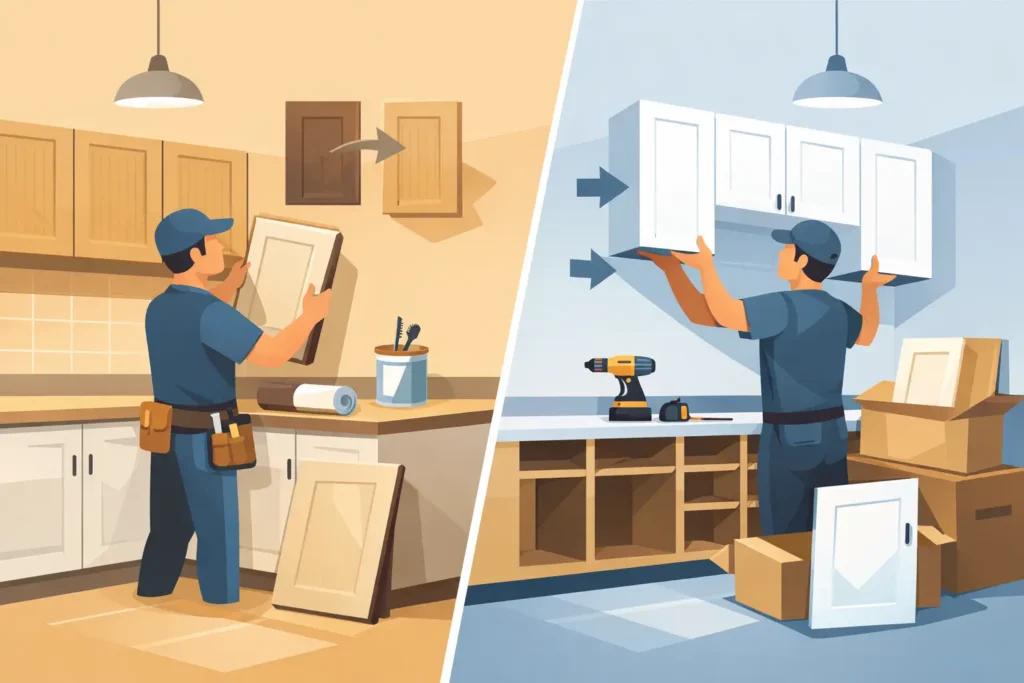
A kitchen can feel dated long before it stops working. Worn doors, faded finishes, awkward storage, and a layout that no longer fits family life all raise the same question: kitchen cabinet refacing vs replacing - which investment will actually give you the result you want?
The right answer is not simply the cheaper option. It depends on what is behind the cabinet doors, how you use the room, and whether your goals are cosmetic or structural. A careful look at the existing cabinets can prevent spending money on a beautiful update that does not solve the real problem.
What Cabinet Refacing Actually Changes
Cabinet refacing keeps the existing cabinet boxes in place. The old doors and drawer fronts are removed, exposed cabinet faces are covered with a new finish material, and new doors, drawer fronts, hardware, and often molding are installed. The visible portions of the kitchen get a major refresh while the cabinet layout remains largely the same.
This can be a smart choice when the cabinet boxes are solid, level, and well-built. If the current layout works for cooking, storage, and traffic flow, refacing lets you update the style without tearing apart the entire kitchen. New Shaker doors, a warmer wood tone, fresh pulls, crown molding, and under-cabinet lighting can make an older kitchen feel entirely different.
Refacing also creates less disruption than a full replacement. Because the boxes stay put, there is typically less demolition, less dust, and less time without a functioning kitchen. For homeowners who want an updated look while keeping a close eye on the project budget, that matters.
Still, refacing is not a cover-up for failing cabinets. Water-damaged particleboard, sagging shelves, loose joints, warped boxes, or cabinets that have pulled away from the wall should be addressed rather than concealed. Quality work starts with a sound foundation.
When Replacing Cabinets Is Worth It
Cabinet replacement means removing the existing cabinets and installing new ones. It is a larger project, but it gives you freedom to change the layout, improve storage, and build the kitchen around how your household actually lives.
Replacement is usually the better path when the existing cabinet boxes are in poor condition or when the layout creates daily frustration. Perhaps the refrigerator blocks a walkway, the pantry is too shallow, the sink area feels cramped, or there is no practical place for small appliances. Refacing will not fix those issues because the cabinet footprint stays the same.
A full replacement also gives you more choices in cabinet construction and customization. You can add deep drawers for pots and pans, a pull-out trash cabinet, a pantry with adjustable storage, a dedicated spice pull-out, or cabinetry designed around an island. For a Long Island home with an older, compact kitchen, better organization can often add as much value as a new finish.
Replacement may also be necessary when plumbing, electrical, flooring, or wall changes are part of the plan. If you are moving the sink, opening a wall, adding an island, or replacing flooring throughout the kitchen, starting with new cabinetry often provides a cleaner and more coordinated result.
Kitchen Cabinet Refacing vs Replacing: The Key Differences
The biggest difference is scope. Refacing changes the look of a kitchen. Replacing can change both the look and the way the kitchen works.
Refacing generally costs less because it uses the existing cabinet boxes and requires less demolition and installation labor. It can also be completed more quickly. That does not mean it is automatically a bargain, though. High-quality doors, specialty finishes, detailed trim, upgraded hardware, and modifications to existing boxes all affect the final investment.
Replacement usually requires a larger budget, especially if it includes custom cabinetry, countertop work, new appliances, electrical updates, plumbing changes, or tile. It can also take longer because several parts of the project need to happen in the right order. The advantage is that every decision can support a better layout and long-term performance.
There is also a difference in design flexibility. With refacing, you can make strong style changes but are limited by the size and arrangement of the current boxes. With replacement, cabinet sizes, heights, depths, and configurations can be tailored to the room. That matters when you want to gain usable storage or create a more open, comfortable workspace.
Start With the Cabinet Boxes, Not the Door Style
Homeowners often begin by choosing a color or door profile. Those details are exciting, but the cabinet boxes should be evaluated first. A professional inspection looks for solid construction, secure attachment to the wall, level installation, moisture damage, and signs of deterioration around the sink, dishwasher, and lower cabinets.
Look inside the cabinets as well. Are shelves bowed under normal use? Do drawers stick because the boxes are out of square? Are there swollen areas near plumbing? Do the cabinet interiors feel flimsy or worn out? If several of those answers are yes, replacement may provide better value over time.
On the other hand, older cabinets are sometimes exceptionally well-built. Solid wood boxes that remain square and secure can be excellent candidates for refacing. In that case, replacing them just because the doors look dated may not be the best use of your budget.
Consider How Your Kitchen Needs to Work
A kitchen renovation should solve everyday problems, not just photograph well. Before deciding, think through a typical morning, weeknight dinner, holiday gathering, and grocery delivery. Where does clutter collect? Which cabinets are difficult to reach? Do two people have room to work at once?
If the kitchen functions well and you mainly want a new appearance, refacing can be an efficient, satisfying update. Pairing new cabinet fronts with a countertop, backsplash, paint, or lighting update can create a cohesive finished space without a complete remodel.
If you avoid using certain cabinets, lack counter space, or constantly work around an awkward layout, replacement deserves serious consideration. The higher upfront cost can be justified when it creates storage that works, improves circulation, and makes the kitchen easier to enjoy every day.
Do Not Forget the Rest of the Room
Cabinets do not exist on their own. Countertops, backsplash tile, flooring, appliances, trim, and lighting all meet at the cabinetry, so changes in one area can affect another. For example, new flooring may require cabinet removal if you want the floor to run continuously beneath the cabinets. A new range hood may require electrical or venting work. A taller cabinet style may affect crown molding or soffits.
This is where coordinated planning helps. A contractor should explain what stays, what changes, and what other work may be needed before the project starts. Honest planning prevents surprises after old materials are removed and keeps the finished kitchen looking intentional rather than pieced together.
A Practical Way to Make the Decision
Choose refacing when your cabinet boxes are structurally sound, your current layout works, and your main goal is a style update with less disruption. It is especially effective for homeowners who want to preserve a functional kitchen while giving it a cleaner, more current look.
Choose replacement when cabinet damage is present, storage is inadequate, the layout needs to change, or you are already planning broader kitchen construction. It is the stronger long-term choice when you need the room to function differently, not merely look different.
There are middle-ground situations, too. You may be able to retain a well-built section of cabinets while replacing a damaged area, adding a custom pantry, or building an island that improves storage. The best solution is often tailored to the house rather than forced into an all-or-nothing decision.
A thoughtful kitchen project begins with a clear look at what you have and what you need. That Guy Carpentry can help homeowners weigh the condition of their cabinetry, their design goals, and their budget to create a plan built for the way they live - with exceptional workmanship and a finished result they can feel good about for years.