
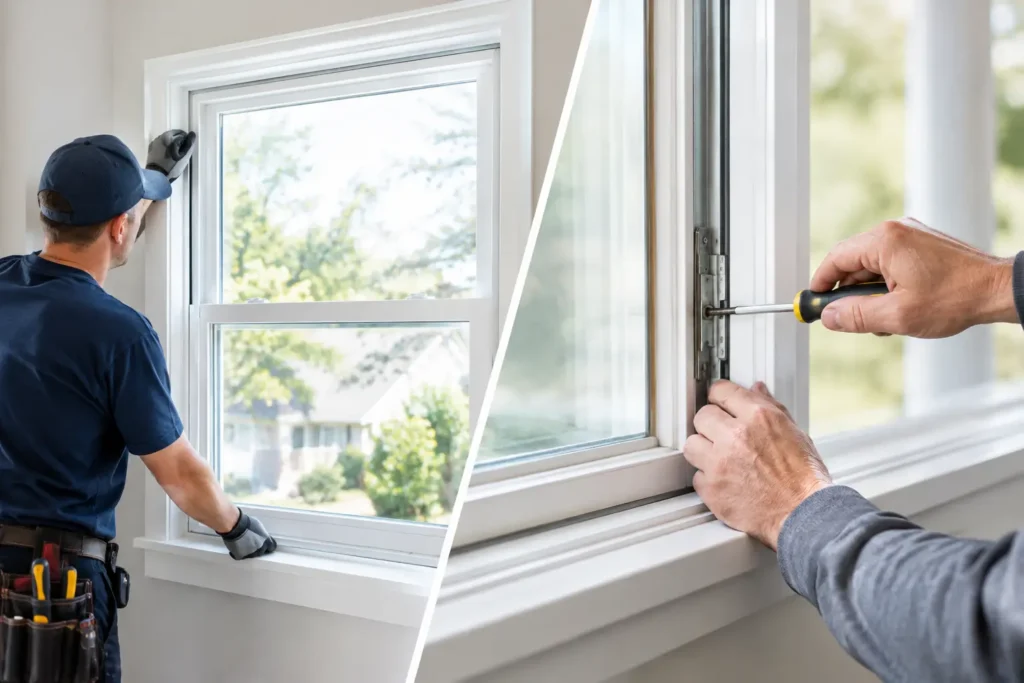
A window that whistles in a winter wind, sticks every time you open it, or gathers condensation between the panes can make a room feel neglected fast. But replacement windows versus window repair is not a one-answer decision. The right choice depends on what has actually failed, how much of the existing window is sound, and whether a repair will genuinely solve the problem instead of buying a little time.
For homeowners in Nassau and Suffolk County, that decision often comes up after years of coastal weather, heavy rain, hot summers, and cold drafts have taken their toll. A careful inspection can separate a repairable issue from a window that has reached the end of its useful life – and help you put your budget where it will do the most good.
Start With the Problem, Not the Product
It is easy to assume an uncomfortable room means you need a new window. Sometimes it does. Just as often, the trouble comes from worn weatherstripping, a loose latch, failed caulk around the exterior trim, or a sash that is no longer properly aligned.
Before deciding, look at the whole opening. Is air leaking around the window frame or through a gap between the frame and the wall? Is the glass cracked, or is the cloudy appearance trapped between two panes? Does the window operate poorly because of a broken balance, swollen wood, or layers of old paint? Each problem calls for a different solution.
A dependable contractor should inspect the sash, frame, exterior casing, sill, surrounding trim, glass, hardware, and the wall area around the opening. The goal is not to sell the biggest project. It is to identify the source of the problem and recommend work that holds up.
When Window Repair Is the Better Choice
Repair makes sense when the main structure of the window is still in good condition. Many solid wood windows, especially in older Long Island homes, were built with quality materials and can perform well for years with the right repairs and maintenance.
A repair may be the practical option if the issue is limited to worn weatherstripping, damaged screens, loose hardware, minor glazing failure, small areas of surface rot, cracked exterior caulk, or a sash that will not stay open. Replacing a single broken pane or repairing an insulated glass unit can also be more sensible than replacing an entire window when the frame and sash are sound.
Repair is especially worth considering when you want to preserve original details. Older homes can have wood windows with divided-light muntins, distinctive profiles, or interior trim that would be difficult to match. A skilled carpentry repair can address localized decay, rebuild a damaged sill section, tighten the fit of the sash, and restore the painted finish without changing the character of the room.
The budget advantage is real, but it should be viewed honestly. A small repair can be cost-effective. Repeated repairs to a window with widespread rot, failed seals, and ongoing drafts can become an expensive holding pattern. The question is not simply, “Can this be fixed?” It is, “Will fixing it give this window a reliable next chapter?”
Repairs That Usually Pay Off
Simple maintenance items often deliver noticeable improvements. New weatherstripping can reduce drafts. Proper exterior caulk can stop water from reaching vulnerable trim. Replacing a sash lock or balance can make a window secure and easy to use again.
Minor wood rot can also be repaired when it is caught early. The damaged material must be removed, the area properly rebuilt, and the repaired section sealed and painted. Covering soft wood with filler or paint alone does not solve the moisture issue that caused it.
Fogging between double-pane glass deserves a closer look. It usually means the seal on the insulated glass unit has failed. The window may still open and close normally, but insulation and appearance are compromised. In many cases, replacing the glass unit is possible. If the sash is worn out or the frame has problems too, full replacement may make more sense.
When Replacement Windows Are Worth It
Replacement becomes the stronger investment when the window is failing as a system, not just in one spot. Soft or rotted frames, recurring water intrusion, warped sashes, badly damaged tracks, and windows that cannot be secured are clear warning signs.
You should also consider replacement when multiple panes are fogged, several windows are drafty, or your windows have single-pane glass and provide little insulation. In that situation, repairing one component may improve the symptom without improving comfort, sound control, or energy performance in a meaningful way.
Modern replacement windows can offer tighter seals, insulated glass, low-emissivity coatings, and easier operation. They can also reduce outside noise, which matters on busy streets. For a family room, bedroom, or home office that is consistently too hot, cold, or loud, the day-to-day difference can be substantial.
Replacement is also a good time to improve function. A hard-to-reach double-hung window may be a better fit as a casement. A dated picture window may be redesigned to bring in more light. If you are remodeling a kitchen, adding a window over a sink, resizing an opening, or updating exterior siding and trim, coordinating the window work with the larger project usually creates a cleaner result.
Full-Frame Replacement or Insert Replacement?
Not all replacement projects are the same. Insert replacement windows fit within an existing frame. They can be a good solution when the frame is square, dry, and structurally sound. Installation is generally less invasive, but the new unit slightly reduces the glass area.
Full-frame replacement removes the existing window down to the rough opening. It is usually the better choice when there is rot, water damage, poor flashing, a compromised frame, or a need to change the size or style of the opening. It gives the installer access to the areas that must be properly sealed, insulated, flashed, and finished.
That added work costs more, but it can prevent a common mistake: installing a beautiful new window into an opening with hidden water damage. A replacement window is only as good as the preparation around it. Exterior trim, siding, flashing, insulation, and interior casing all need to be handled with care.
Comparing Cost, Comfort, and Long-Term Value
Window repair usually has the lower upfront cost. It is targeted work, often with less disruption to the home. For a single issue on an otherwise healthy window, that is exactly what homeowners should want.
Replacement costs more because it includes the unit, removal, installation, sealing, trim work, and disposal. Yet the value can be better when repairs would be frequent or when the existing windows are holding back the comfort and appearance of the home. New windows can support resale appeal, but the most immediate return is often a quieter, more comfortable room and fewer worries during a hard rain.
Energy savings should be part of the decision, not the entire decision. A new window can help reduce heat loss and solar gain, but results vary based on the size and number of windows, the home’s insulation, air sealing, orientation, and HVAC system. Do not replace windows based only on a broad savings promise. Replace them because the complete picture – condition, comfort, performance, and budget – supports it.
A Practical Way to Decide
If one window has a clear, isolated issue and the surrounding wood, frame, and glass are in good shape, repair is often the responsible choice. If damage is widespread, moisture has compromised the opening, or several windows are failing in the same ways, replacement is usually the smarter long-term plan.
It is also reasonable to do both. Homeowners often replace the most damaged or least efficient windows first, then repair sound original windows in other rooms. This phased approach protects the budget while addressing the problems that matter most.
Ask for an assessment that explains what is wrong, why it happened, and what each option will accomplish. You should know whether a proposed repair addresses the cause of the damage and whether replacement includes the flashing, trim, and finish work needed for a lasting installation.
A good window decision should leave you with more than cleaner glass. It should give you a home that feels more comfortable, looks cared for, and stands ready for the next season. Whether that means a precise repair or a carefully installed replacement, the best work starts with an honest look at what your home truly needs.