
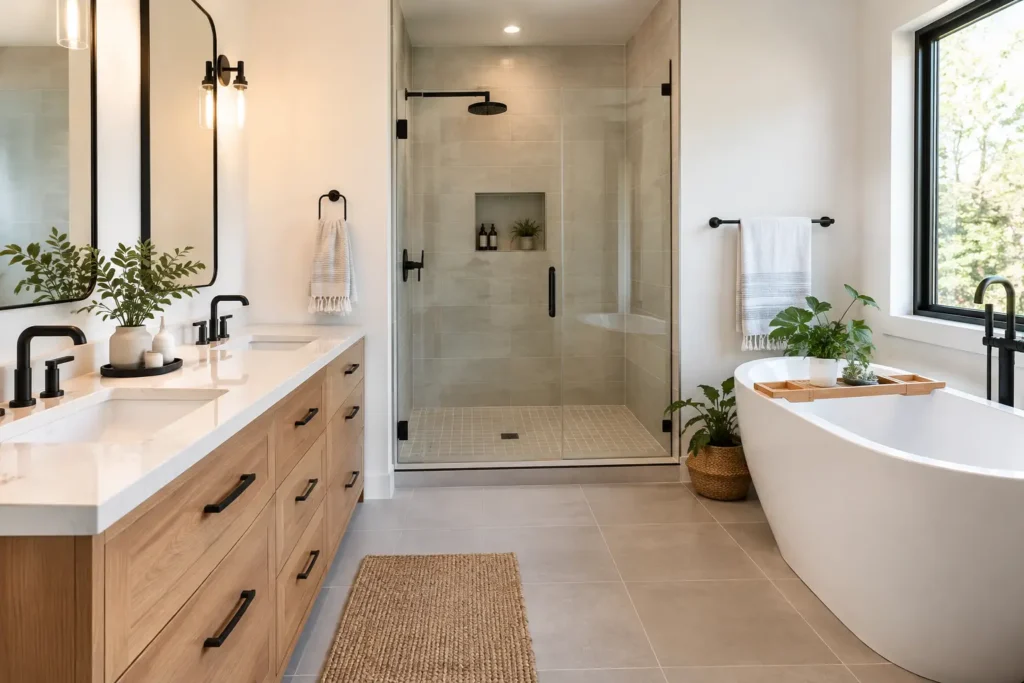
A bathroom can look beautiful in a showroom and still fall short at 7:15 on a weekday morning. The bathroom design trends homeowners are choosing now are less about chasing a photo-ready look and more about making the room calmer, easier to clean, and better suited to real routines. For Long Island families, that often means durable materials, better storage, warmer finishes, and layouts that make limited square footage work harder.
The best trend is the one that fits your home, your budget, and the way your household uses the space. A full renovation gives you the chance to correct awkward layouts and hidden issues behind the walls, but even a focused update can make a tired bathroom feel completely different.
Bathroom Design Trends With Staying Power
Some looks come and go quickly. Others earn their place because they improve the room’s function while bringing in personality. The following ideas are showing up in well-planned bathroom remodels for a reason.
Warm, grounded finishes
For years, bathrooms leaned heavily toward bright white tile, cool gray paint, and chrome fixtures. Clean white bathrooms still have a place, especially in smaller rooms, but many homeowners now want more warmth. Think soft beige, creamy white, muted green, dusty blue, natural oak tones, and brushed nickel or warm brass hardware.
This does not mean every surface needs to be tan or brown. The goal is balance. A light porcelain tile paired with a wood-tone vanity, for example, keeps the room open while making it feel less sterile. If you like the look of brass, use a quality finish and repeat it thoughtfully in the faucet, mirror frame, or lighting. Too many competing metals can make a small room feel busy.
Wood-tone vanities and custom storage
A vanity is no longer just a cabinet under the sink. It is a major design element and one of the best places to improve daily organization. Natural oak, walnut-inspired finishes, and painted vanities in deep blue or green add character without relying on trendy accessories that may feel dated in a few years.
Storage should be planned around what actually ends up on the counter. Deep drawers are often more useful than a large open cabinet because toiletries, hair tools, and cleaning supplies are easier to reach. A recessed medicine cabinet, a linen tower, or a custom-built niche can solve storage problems without crowding the floor.
This is where custom carpentry can make a noticeable difference. In an older home, walls are not always perfectly square and standard cabinets may waste valuable space. A tailored vanity or built-in can be designed around a tight corner, a radiator, or an unusual ceiling line while still looking intentional.
Larger showers with practical details
Homeowners are increasingly choosing spacious showers over rarely used tubs, particularly in primary bathrooms. A curbless or low-threshold entry, a fixed glass panel, and large-format wall tile can make the room feel more open. These choices can also improve accessibility as homeowners plan to stay in their homes longer.
Still, removing the only bathtub in a house is not always the right move. Families with young children and homeowners thinking about resale may want to keep at least one tub. In many cases, the best plan is a walk-in shower in the primary bath and a tub-shower combination in a hall bathroom.
The details inside the shower matter just as much as its footprint. A properly sloped floor, waterproofing behind the tile, a recessed niche for bottles, adequate lighting, and a quiet exhaust fan all support a bathroom that performs well for years. A beautiful tile pattern cannot make up for poor preparation underneath it.
Tile that adds texture, not clutter
Tile is moving beyond plain subway layouts, but the most successful designs use pattern with restraint. Vertical stack tile can make a low ceiling appear taller. Softly textured ceramic tile adds interest without overwhelming the room. Large-format porcelain creates a clean, continuous look with fewer grout lines to maintain.
A feature wall in the shower or a patterned floor can give a bathroom personality. Using both in a small room can be too much. Choose one focal point, then keep the surrounding surfaces quieter. This approach gives the finished space a custom feel while making future updates easier.
Porcelain remains a dependable choice for floors and shower walls because it is durable and low-maintenance. Natural stone offers a distinct look, but it generally requires more care and periodic sealing. The right material depends on how much upkeep you want, not just the initial appearance.
Better Lighting Is a Bathroom Essential
One ceiling fixture is rarely enough. Good bathroom lighting should support grooming, nighttime use, and the overall mood of the room. Wall sconces or well-placed fixtures beside the mirror reduce shadows on the face, while recessed lighting can brighten the shower and general floor area.
Layered lighting also lets you avoid an overly bright room first thing in the morning. Dimmers are a simple upgrade that make a bathroom more comfortable at different times of day. A softly lit vanity area is useful for early risers, while brighter light helps with shaving, makeup, and cleaning.
When choosing a mirror, consider how it will work with the lighting plan. A large framed mirror can add warmth and visual scale. A recessed or lighted mirror can be a smart option where wall space is limited. The right choice depends on the room’s style and the amount of functional light already in place.
Wellness Features That Feel Useful
The spa-inspired bathroom is still popular, but homeowners are choosing features that bring everyday comfort rather than unnecessary extras. Heated floors are especially welcome during New York winters. A heated towel bar, a hand shower, a built-in bench, or a deeper soaking tub can make a routine bathroom feel more relaxing.
Ventilation belongs in this conversation, too. A properly sized exhaust fan helps control moisture, protects paint and finishes, and reduces the chance of mildew. It may not be the feature guests notice first, but it is one of the most practical investments in the room.
If budget is a concern, prioritize the systems behind the walls before adding luxury features. Plumbing updates, electrical work, waterproofing, ventilation, and quality installation protect your investment. Decorative upgrades can often be adjusted to meet the budget without compromising the work that keeps the bathroom functioning properly.
Designing for the Home You Have
Not every bathroom needs a complete reconfiguration. Moving plumbing can create a major improvement, but it also adds cost and complexity. If the existing layout works, keeping the toilet, shower, and vanity in roughly the same locations may leave more room in the budget for better tile, storage, fixtures, and finish carpentry.
Older Long Island homes often present their own challenges, including uneven walls, outdated wiring, limited venting, and compact room sizes. A careful renovation plan accounts for these conditions early instead of treating them as surprises midway through the project. It also considers door swings, clearance around the toilet, where towels will hang, and whether multiple people need to use the room at once.
Before selecting finishes, make a short list of what frustrates you about the current bathroom. Maybe there is no counter space, the shower is dark, the vanity is too shallow, or storage is always overflowing. Those answers should guide the design more than a single image saved online.
Make Trends Work for Your Budget
A well-built bathroom does not have to include every current feature. One standout choice, such as a custom vanity, a thoughtfully tiled shower, or a warm wood-tone finish, can give the room a personal look. Pair it with reliable, timeless materials elsewhere.
That Guy Carpentry helps homeowners turn those priorities into a practical renovation plan, with attention to the layout, materials, and finish details that make the room feel complete. The goal is not to copy a trend exactly. It is to build a bathroom that feels right when the tile is new and still works beautifully years from now.
Start with the way you want the room to support your day, then choose the finishes that make that experience feel like home.