
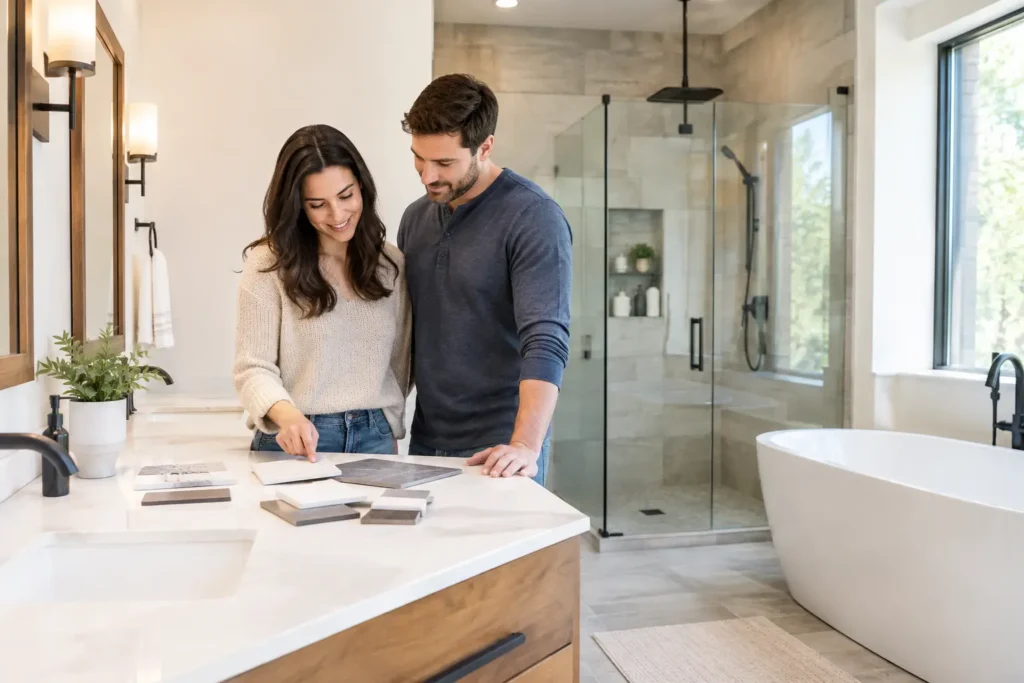
A bathroom renovation is often judged by the tile and fixtures, but the details that matter most show up on busy weekday mornings. Does the vanity give two people enough elbow room? Is there a place for towels, toiletries, and laundry? Does the shower stay warm, drain properly, and feel easy to clean? A successful project answers those questions before anyone picks a paint color.
For Long Island homeowners, a bathroom update can also be a smart way to make an older home more comfortable without taking on a whole-house remodel. The best results come from a clear plan, honest priorities, and workmanship that treats everything behind the walls with the same care as the finished surfaces.
Start a Bathroom Renovation With Daily Use
Before talking about finishes, take a close look at how the room works now. A beautiful bathroom that creates traffic jams or leaves storage on the floor will not feel like an improvement for long.
Think through who uses the space and when. A primary bathroom may need a double vanity, more drawer storage, a larger shower, or better lighting for getting ready. A hall bathroom may need durable surfaces, a deeper tub for children, and easy-to-reach storage. A guest bath can often make a strong impression with a well-designed vanity, updated lighting, and polished details without requiring a complete layout change.
Write down the frustrations you want to solve. Maybe the shower feels cramped, the medicine cabinet is too shallow, the old fan cannot control moisture, or there is never enough counter space. Those everyday issues should guide the design more than a photo saved online.
Know When Layout Changes Are Worth It
Keeping plumbing in the same locations usually helps control cost and keeps the project moving efficiently. Replacing a tub with a shower in the same footprint, for example, can create a major improvement without relocating every supply and drain line.
That said, some layout changes are worth the investment. Moving a wall, widening a doorway, or shifting a vanity can turn an awkward room into one that works for years. The trade-off is that structural work, plumbing changes, electrical updates, permits, and finish repairs can add time and expense. A contractor should explain those impacts clearly, not simply tell you that anything is possible.
If aging in place is part of the plan, consider a curbless or low-threshold shower, wider access, a handheld showerhead, and blocking behind walls for future grab bars. These features can be incorporated thoughtfully so the bathroom still feels personal rather than institutional.
Build the Budget Around What Cannot Be Seen
Bathroom projects have a reputation for surprises because bathrooms contain plumbing, electrical systems, ventilation, and moisture-prone materials in a compact space. Once old tile or a tub comes out, hidden water damage, outdated wiring, or subfloor problems may come to light.
A realistic bathroom renovation budget leaves room for necessary repairs behind the finished walls. It is tempting to put every dollar into a freestanding tub or premium tile, but waterproofing, proper ventilation, reliable plumbing connections, and a level floor protect the entire investment.
A useful way to set priorities is to separate decisions into three groups: must-have function, long-term durability, and visual upgrades. Fixing a leaking shower belongs in the first group. Quality waterproofing, a quiet exhaust fan, and solid vanity construction belong in the second. Specialty tile patterns, statement mirrors, and luxury fixtures belong in the third. All can have value, but the first two should not be sacrificed for the third.
Get a detailed estimate that explains the scope of work, included materials, allowances, and any conditions that could affect pricing. Honest prices do not mean a vague low number. They mean you understand what is being built and where choices can change the final cost.
Choose Materials for Real Life, Not Just the Showroom
Bathrooms need materials that handle water, cleaning, heat, and daily use. The right selection depends on the room, the household, and how much maintenance you want to take on.
Porcelain tile remains a practical choice for floors and shower walls because it is durable, water-resistant, and available in a wide range of looks. Larger tiles can create a cleaner appearance with fewer grout lines, though they may not fit every small room or detailed shower layout. Smaller mosaic tile can provide useful traction on a shower floor and allows the surface to slope toward the drain.
Natural stone can be beautiful, but it typically requires more care and sealing. If you want a low-maintenance family bathroom, porcelain that resembles stone may be the better fit. The same principle applies to countertops. Quartz is popular for its consistent look and easy upkeep, while natural materials can bring character if you are comfortable with their maintenance needs.
For a vanity, look beyond the door style. Check drawer construction, storage depth, hardware quality, and how the cabinet is protected from splashes. A well-built vanity with drawers often makes better use of space than a cabinet with one large open area. Custom carpentry can be especially useful in tight or unusual rooms where standard vanity sizes leave wasted gaps.
Give Lighting and Ventilation Equal Attention
One ceiling light is rarely enough for a bathroom. Good lighting should make the room feel comfortable while helping you shave, apply makeup, help a child get ready, or clean properly.
Use layered lighting whenever the layout allows. General overhead lighting brightens the room, while lighting at or near the mirror reduces shadows on the face. Accent lighting can add warmth in a primary bathroom, but it should not replace functional task lighting. Dimmers are a simple upgrade that make early mornings and late evenings more pleasant.
Ventilation is just as important, especially in bathrooms without windows. A properly sized exhaust fan helps manage humidity that can lead to peeling paint, mildew, and damage around trim and cabinetry. The fan should vent outdoors, not into an attic or another enclosed space. Choosing a quieter unit also makes it more likely that everyone will actually use it.
Plan Storage Before the Walls Close
Storage is where a bathroom either supports daily life or becomes a collection point for clutter. Start with the items that need a home: towels, extra toilet paper, cleaning supplies, hair tools, medications, and everyday toiletries.
A recessed medicine cabinet can add valuable storage without taking up room. Built-in niches in a shower keep bottles off the floor, but they need thoughtful placement so they do not interfere with plumbing or become a place where water sits. Linen storage, pull-out drawers, and narrow custom cabinets can make a modest-sized bathroom feel far more organized.
Avoid overbuilding storage at the expense of clear walking space. In a small bathroom, a shallower vanity or a strategically placed recessed cabinet may work better than forcing in a large piece that blocks the door or makes the toilet area feel tight.
Work With a Contractor Who Plans the Whole Room
A bathroom is not a collection of separate tasks. Demolition, framing, plumbing, electrical work, waterproofing, tile, cabinetry, paint, trim, and fixture installation all affect one another. Coordinating those pieces is what keeps small oversights from becoming expensive corrections.
Ask how the team handles the planning stage, protects the rest of the home during work, communicates schedule changes, and manages unexpected conditions. You should also ask who is responsible for each part of the project and how finish details are checked before completion. Clear answers are a sign that the contractor respects both your home and your budget.
At That Guy Carpentry, the goal is to turn your ideas into a bathroom that feels considered from the first layout conversation through the final trim detail. That may mean helping you choose practical materials, building custom storage, or coordinating a complete remodel so you are not left managing several separate trades.
Make the Final Choices With Confidence
A bathroom renovation does not need every trend or every premium feature to feel special. It needs a layout that makes sense, materials that suit your household, and careful work in the places you will never see once the project is complete.
Bring your wish list to the planning conversation, but be open about your budget, timeline, and daily routines. The best bathroom is not the one that looks perfect in a photo. It is the one that makes every morning easier, holds up to real life, and still feels like it belongs in your home years from now.