
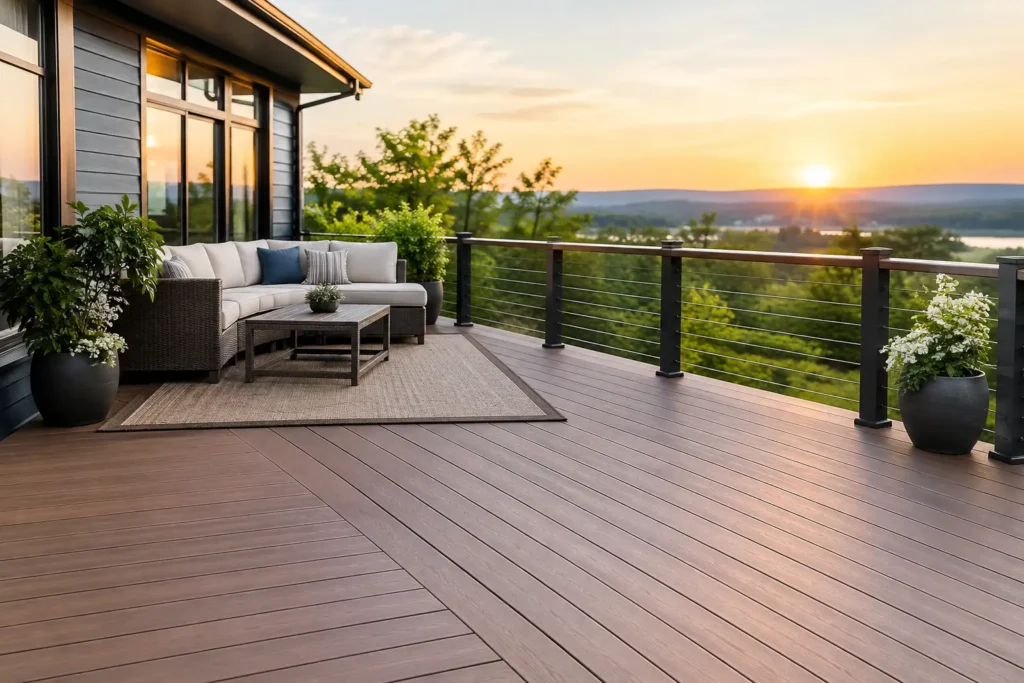
A deck should make it easier to enjoy your backyard, not give you another weekend chore. The best low maintenance deck materials hold up to sun, rain, foot traffic, and the occasional spilled drink without requiring yearly sanding, staining, or board replacement. For Long Island homeowners, the right choice also needs to stand up to humid summers, freeze-thaw cycles, coastal air in some areas, and plenty of seasonal debris.
The material with the lowest upkeep is not automatically the best fit for every home. Appearance, budget, heat underfoot, framing conditions, and how you plan to use the space all matter. A well-built deck starts with an honest conversation about those details, then pairs the right materials with careful installation.
What “Low Maintenance” Really Means
No outdoor deck is completely maintenance-free. Even premium materials need periodic cleaning, and every deck needs its fasteners, railings, stairs, and structure checked from time to time. Low maintenance means the surface does not need frequent refinishing to stay protected and presentable.
A practical low-maintenance deck material should resist moisture, fading, insects, splintering, and staining. It should also be easy to clean with a mild deck cleaner, water, and a soft brush. The more time you expect to spend outside instead of working on the deck, the more valuable those qualities become.
Best Low Maintenance Deck Materials Compared
Capped Composite Decking: The Best All-Around Choice
For many homeowners, capped composite is the strongest balance of appearance, durability, and reasonable upkeep. These boards are made from a mix of recycled wood fibers and plastic, then protected by a durable outer cap. That cap helps resist fading, moisture, stains, and surface scratches.
Composite does not require staining or sealing, and it will not splinter like traditional wood. It is available in colors and grain patterns that range from clean contemporary gray to warm, wood-inspired browns. Matching fascia, picture-frame borders, hidden fasteners, and coordinated railing systems can create a finished look that feels intentional rather than builder-basic.
There are trade-offs. Composite usually costs more upfront than pressure-treated lumber, and darker colors can become hot in direct summer sun. Some lower-quality boards may also show scratches or mold if debris and moisture sit on the surface for extended periods. Choosing a quality capped product and allowing proper airflow below the deck makes a real difference.
For a family deck used for grilling, dining, and everyday backyard time, composite is often the material we recommend first.
PVC Decking: Best for Wet and Shaded Areas
PVC decking is made entirely from plastic, without wood fibers. That gives it excellent resistance to moisture, mold, mildew, and insect damage. It is a smart option around pools, near the water, or on decks that stay damp because of shade, drainage issues, or limited sun exposure.
Like composite, PVC does not need paint, stain, or sealant. It is typically lightweight, easy to clean, and available in convincing wood-look finishes. Because it contains no organic material, it is less likely to absorb moisture or support mildew growth.
The higher price is the main consideration. PVC can also expand and contract more noticeably with temperature changes, so correct gapping and installation are essential. Some homeowners find that PVC has a slightly less natural feel than high-end composite. It depends on the product line and the look you want for your home.
Aluminum Decking: Best for Long-Term Durability
Aluminum decking is one of the most durable options available. It cannot rot, warp, splinter, or attract insects, and it performs exceptionally well in wet conditions. Many aluminum boards are designed with interlocking channels that direct water away below the deck, creating a dry area underneath for storage or a covered patio.
This material can be an excellent fit for an elevated deck where water management matters. It also stays relatively cool compared with some dark composite boards, which is helpful for sunny spaces and bare feet.
Aluminum has a distinct appearance and sound underfoot that is not right for every property. Color choices may be more limited, and the initial investment is significant. It also requires skilled installation to ensure a clean finish, proper drainage, and a solid connection to the home. When it suits the project, though, aluminum can provide decades of dependable performance.
Pressure-Treated Wood: Lowest Initial Cost, More Upkeep
Pressure-treated lumber remains common because it is affordable, widely available, and has a familiar natural look. It can be a good choice for homeowners with a limited budget or for a deck that will be painted or stained to match an existing exterior design.
It is not, however, one of the best low maintenance deck materials. Wood needs time to dry after installation and then benefits from regular sealing or staining. It can crack, warp, splinter, and fade as it weathers. Leaves, standing water, and poor ventilation can shorten its life even further.
A pressure-treated deck can still be built beautifully and last for years with attentive care. Just be realistic about the maintenance commitment. If annual cleaning and periodic refinishing sound frustrating, a composite or PVC surface may offer better value over time.
Hardwood Decking: Beautiful, but Not Truly Low Maintenance
Hardwoods such as ipe, cumaru, and mahogany create a rich, high-end deck surface. They are naturally dense and resistant to insects and decay, and their color and grain are difficult to duplicate.
Their upkeep is often misunderstood. Hardwood may not rot easily, but it still needs cleaning and oiling if you want to preserve its original color. Without maintenance, it generally weathers to a silvery gray. Installation can also be more labor-intensive because the boards are dense, heavy, and may require predrilling.
Hardwood works well for homeowners who love real wood and accept the care that comes with it. It is a premium appearance choice, not the easiest ownership choice.
Choosing the Right Deck Material for Your Yard
Start with how you live outside. A quiet front porch, a full backyard entertaining area, and a poolside deck all place different demands on the surface. If children, pets, and frequent gatherings are part of the plan, a slip-resistant capped composite in a mid-tone color is often a comfortable, forgiving choice.
Sun exposure deserves attention too. South-facing decks can get hot, especially with dark boards. Lighter colors may stay more comfortable, though they can show dirt more readily. Shade brings a different challenge: moisture and organic debris. In those areas, PVC or a quality capped composite with proper deck ventilation can reduce headaches.
Budget should include more than the cost of the boards. Consider railing, stairs, lighting, demolition of an existing deck, framing repairs, permits where required, and the long-term cost of staining and repairs. A material that costs more on day one may be the better financial choice if it eliminates years of refinishing work.
Installation Details Matter as Much as the Surface
Even the best decking material will disappoint if the structure beneath it is poorly built. Deck framing must be sound, properly flashed at the house, and designed to shed water. Joist spacing must match the manufacturer’s requirements, especially with composite and PVC boards. Proper gaps allow rainwater, snowmelt, and debris to move through instead of sitting on the deck.
A clean finish also comes down to details: straight board layout, secure railings, carefully built stairs, concealed fasteners where appropriate, and trim that protects exposed edges. These are the small decisions that make a deck look custom and stay safe over time.
For homeowners in Nassau and Suffolk County, That Guy Carpentry can help evaluate your existing structure, explain the real differences between material options, and build a deck around the way your family uses the space. The best choice is the one that fits your home, your budget, and your willingness to maintain it – then gets installed with the care it deserves.
Before selecting a color or board profile, step outside and picture a typical July evening on the finished deck. If the material makes that space easier to enjoy year after year, it is probably the right place to start.