
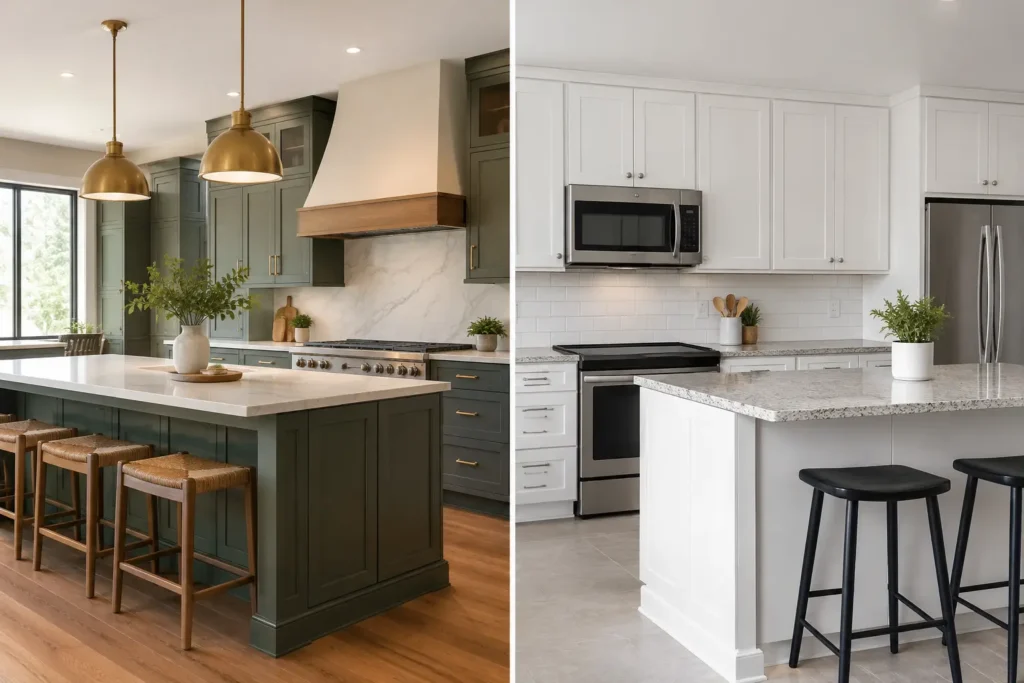
A cabinet that looks good in a showroom can become a daily frustration at home if it wastes a corner, blocks a walkway, or cannot hold what your family actually uses. When comparing custom cabinets versus stock cabinets, the right choice is not simply the one with the lower price tag. It is the one that gives your room the right balance of function, appearance, timing, and long-term value.
For many Long Island homeowners, cabinetry is a major decision during a kitchen remodel, bathroom update, mudroom build, or living room storage project. Cabinets shape how a space works every morning and how it feels when friends and family visit. Knowing where each option shines helps you spend confidently.
What Stock Cabinets Offer
Stock cabinets are pre-made cabinets built in standard widths, heights, styles, and finishes. They are sold through home improvement stores, cabinet retailers, and some kitchen suppliers. Because manufacturers produce them in volume, they are generally the most affordable cabinet option and may be available quickly.
That can make stock cabinetry a practical fit for a straightforward project. If your kitchen has a simple layout, standard ceiling height, and common appliance sizes, a stock line may cover most of your needs. A rental refresh, a quick resale update, or a bathroom vanity replacement can also be good candidates when speed and budget are the main priorities.
The trade-off is choice. You work within the sizes, door profiles, colors, and accessories the manufacturer offers. A cabinet may be close to the width you need but leave a filler strip beside a wall. A tall pantry may not reach the ceiling. You may also need to adjust the room layout around the available cabinet sizes rather than build the storage around your household.
Stock does not automatically mean poor quality. Some lines offer solid construction, reliable hardware, and attractive finishes. The important question is whether that particular cabinet line meets the needs of the room, not whether it carries a stock label.
How Custom Cabinets Change the Room
Custom cabinets are designed and built for a specific space. Instead of selecting from a fixed set of dimensions, you can determine the cabinet width, depth, height, interior layout, wood species, finish, door style, hardware, and specialized features.
This approach is especially valuable in older homes, where walls may not be square and room dimensions rarely match a catalog perfectly. A custom cabinetmaker can use an awkward alcove, frame storage around a radiator, build to the ceiling, or create a built-in that looks like it has always belonged in the house.
Custom work is also about the details you cannot always see from across the room. Deep drawers can replace hard-to-reach lower cabinets. A pullout pantry can make a narrow area useful. A coffee station can keep small appliances off the counter. In a family room, custom built-ins can hide wires, fit an exact television size, and provide closed storage for games, blankets, and everyday clutter.
With custom cabinetry, the homeowner is not forced to choose between a beautiful room and a practical one. Both can be planned together from the beginning.
Custom Cabinets Versus Stock Cabinets on Cost
Price is usually the first concern, and it should be. Stock cabinets generally cost less upfront because the design, production process, and material selections have already been standardized. They can be a responsible choice when the room is simple and the available styles meet your expectations.
Custom cabinets cost more because they involve design time, skilled labor, tailored materials, precise measurements, and a build process created around your project. The final number depends on cabinet size, wood type, finish, interior accessories, door design, and installation conditions. A detailed estimate matters because it separates the essentials from the upgrades that may be nice to have but are not necessary.
Still, upfront price does not tell the whole story. Stock cabinetry can require extra fillers, trim, modifications, or compromises that reduce usable storage. If you later add organizers, replace failing hardware, or live with a layout that never worked well, the initial savings may feel less meaningful.
Custom cabinetry can offer better value when it solves several problems at once: storage, layout, appearance, and durability. That does not mean every room needs a fully custom solution. It means the investment should match the role the cabinets play in your home.
Fit and Storage Matter More Than Most Homeowners Expect
Cabinet dimensions influence more than looks. They affect how easily you cook, clean, get ready for work, or put away groceries. In a compact kitchen, even a few inches can determine whether a corner is usable or dead space. In a bathroom, the right vanity depth can improve circulation without sacrificing drawer storage.
Stock cabinet sizes may require a designer or installer to use fillers along walls and between cabinet runs. Fillers are normal in many installations, but too many can make a room feel less intentional and reduce the amount of storage you receive for the space available.
Custom cabinets can be sized to make every wall work harder. That is particularly helpful in homes with sloped ceilings, uneven walls, small kitchens, narrow laundry rooms, or spaces with existing architectural features that must remain. The goal is not to cram cabinets into every inch. It is to create storage that feels natural and leaves the room comfortable to use.
Style, Materials, and Finish Options
Stock cabinets have come a long way. Many homeowners can find popular styles such as shaker doors, slab fronts, white finishes, warm wood tones, and classic gray or blue paint colors. If your design vision is simple and current, a stock collection may give you the look you want.
Custom work opens the door to a more personal result. You can match existing trim, choose a paint color that works with the rest of your home, select a specific wood grain, or create a door profile that suits a traditional, transitional, or modern space. Custom cabinetry also makes it easier to combine open shelving, glass doors, concealed storage, decorative panels, and furniture-style details without making the room look pieced together.
Material quality deserves a close look in either category. Ask what the cabinet boxes are made from, how drawers are joined, whether shelves are adjustable, and what kind of hinges and drawer slides are included. A well-built cabinet should feel solid, operate smoothly, and stand up to the moisture, weight, and daily use expected in its location.
Timing and Project Planning
Stock cabinets may be available sooner, but availability is not the same as project readiness. Your cabinets still need to be measured correctly, delivered without damage, installed level, and coordinated with flooring, countertops, plumbing, electrical work, appliances, and paint. A cabinet that arrives quickly can still create delays if the larger renovation plan is not organized.
Custom cabinets require more lead time because they are measured, designed, built, finished, and installed specifically for you. That schedule can be worthwhile when the room has unusual dimensions or when a tailored design prevents expensive changes later. The key is to make cabinet decisions early, especially if countertops and appliance locations depend on the final layout.
For a larger kitchen or whole-home renovation, working with one experienced team can simplify the process. That Guy Carpentry can coordinate custom woodworking with the surrounding remodeling work, helping ensure the finished cabinets fit the floor, walls, trim, lighting, and overall plan rather than feeling like a separate project.
When Stock Cabinets Make Sense
Stock cabinets are often the smart choice when you have a standard-sized room, a clear budget limit, and a style preference that fits an available collection. They can also work well for secondary spaces, including a basic laundry room, a guest bathroom, or a garage storage area where specialized design is less necessary.
Choose stock cabinets with care. Review a sample door and drawer, confirm the exact dimensions, and make sure the layout provides enough usable storage. The least expensive option is not always the best value if it comes with thin materials, weak hardware, or a finish that will not hold up.
When Custom Cabinets Are Worth It
Custom cabinetry is usually worth considering when the room has difficult dimensions, when storage is a major priority, or when you want the finished work to match the character of your home. It is also a strong choice for built-in bookcases, entertainment centers, window seats, home offices, mudrooms, and high-use kitchens where every cabinet should earn its place.
It may be the right investment if you have a specific vision that stock options cannot meet. Perhaps you need drawers sized for cookware, a hidden charging station, cabinetry around a fireplace, or a pantry that works for how your family shops. Those details turn a cabinet project into a solution built around real life.
Before choosing, stand in the room and think through an ordinary day. Consider what you reach for, where clutter collects, how many people use the space, and what has bothered you about the current layout. The best cabinets are not just attractive on installation day. They make home feel easier to live in for years to come.