
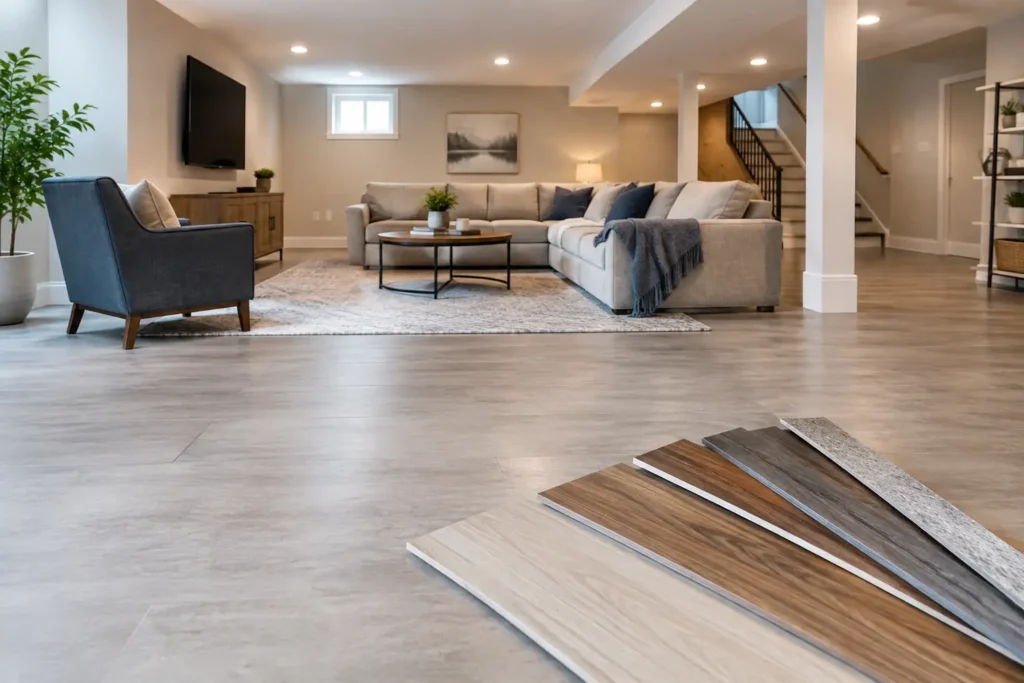
A finished basement can become the most flexible room in the house – a family room, play space, home office, gym, or guest area. But choosing the best basement flooring options takes more than finding a color or pattern you like. Below grade spaces have different rules. Moisture, concrete temperature, ceiling height, and the way your family will use the room all affect which floor will look good and hold up over time.
A floor that works beautifully in a sunny living room can fail in a basement if the slab has moisture issues or the room is prone to dampness. The right choice starts with a clear look at the conditions underfoot, then balances durability, comfort, appearance, and budget.
Start With the Basement, Not the Flooring Sample
Before selecting a material, inspect the concrete slab and the room around it. Look for water staining, visible cracks, musty odors, peeling paint at the bottom of foundation walls, or past flooding. Even a basement that feels dry most of the year can experience moisture changes after heavy rain, snowmelt, or a plumbing problem.
Concrete also stays cool. That matters if the basement will be a playroom, lounge, or bedroom where people regularly walk barefoot. A floor can be water-resistant and still feel uncomfortably cold without the right underlayment, insulation, or area rugs.
Address active water problems before installing any finished flooring. A new floor is not a fix for drainage, foundation leaks, or a failing sump pump. Correcting those issues first protects the investment and prevents the frustration of pulling up a newly finished room later.
Best Basement Flooring Options for Different Uses
No single material is right for every basement. The best choice depends on whether your priority is a finished appearance, easy cleanup, warmth, sound control, or maximum water resistance.
Luxury Vinyl Plank and Luxury Vinyl Tile
Luxury vinyl is one of the strongest all-around choices for finished basements. It is designed to resist water, comes in realistic wood and stone looks, and is easier on the feet than bare concrete or ceramic tile. Vinyl planks are especially popular when homeowners want the warmth of a wood-look floor without using solid hardwood below grade.
Quality makes a difference. A thicker product with a durable wear layer will better handle kids, pets, rolling chairs, and everyday traffic. Many vinyl floors float over an underlayment, which can help with comfort and minor imperfections in the slab. However, the concrete still needs to be reasonably flat and dry according to the manufacturer’s requirements.
Luxury vinyl works well in family rooms, offices, finished recreation spaces, and basement hallways. It is also a practical option when you want one continuous floor across several rooms.
Porcelain or Ceramic Tile
Tile is hard to beat for water resistance. Porcelain tile in particular performs very well in basements that may see dampness, wet shoes, pet bowls, or occasional water concerns. It is an excellent fit for a basement bathroom, laundry area, mudroom-style entrance, or bar space.
The trade-off is comfort. Tile is hard and can feel cold over concrete, particularly during a Long Island winter. Area rugs can soften the room, while radiant heat can make tile exceptionally comfortable if the project budget and floor height allow for it. Proper installation also matters because a cracked or uneven slab can eventually telegraph movement into the tile.
Choose a textured or slip-resistant finish for areas that may get wet. A glossy tile may look sharp in a showroom but is not always the best choice near a bathroom or exterior basement entry.
Engineered Hardwood
Homeowners who want a real-wood surface should consider engineered hardwood rather than solid hardwood. Engineered boards have a hardwood veneer over a layered core that is more stable than a solid plank when humidity changes. The result can bring genuine warmth and character to a basement family room, office, or finished entertaining space.
That said, engineered hardwood is not waterproof. It is best for a consistently dry basement with proper moisture testing and preparation. If the room has a history of seepage, high humidity, or frequent spills, luxury vinyl will usually be the safer choice. Engineered wood also costs more than many vinyl products, and repairs can be more involved if water damage occurs.
For the right dry basement, though, it delivers a finished, furniture-ready look that connects naturally with hardwood on the upper floors.
Carpet and Carpet Tiles
Carpet remains one of the most comfortable choices for a basement lounge, playroom, media room, or bedroom. It adds warmth, softens sound, and makes concrete floors feel much more inviting. Low-pile, synthetic carpet with a moisture-resistant pad is generally a more practical basement choice than natural fiber carpeting.
The downside is obvious if water enters the space. Wall-to-wall carpet can trap moisture, odors, and mold if it gets soaked. Carpet tiles offer a more flexible alternative because individual damaged sections can be removed and replaced. They are particularly useful in playrooms, workout rooms, and casual multipurpose spaces.
Carpet makes the most sense when the basement has a reliable history of staying dry and comfort is the main goal. If there is uncertainty about water, consider using durable vinyl or tile as the main floor and adding large area rugs for softness.
Sealed or Epoxy-Coated Concrete
For a workshop, utility area, home gym, or modern industrial-style basement, finished concrete can be the most practical answer. A professionally sealed or epoxy-coated slab is durable, easy to clean, and does not require building up the floor height with additional materials. This can be especially helpful in basements with low ceilings.
Epoxy coatings can add color and a polished appearance, while concrete stains offer a more natural variation. The floor will still be hard and cool, so rubber mats or rugs may be welcome in exercise areas and work zones. Surface preparation is critical. Coatings will not perform well over a damp, contaminated, or deteriorating slab.
Flooring Choices to Approach Carefully
Solid hardwood is generally not recommended for basements. Moisture and humidity changes can cause boards to cup, gap, or buckle, even in a basement that appears dry. Traditional laminate also deserves careful consideration. Some newer waterproof laminate products perform better than older versions, but many laminates can swell at the edges if water gets beneath the surface.
Natural materials such as bamboo and cork can be appealing, but they require the right moisture conditions and a knowledgeable installation plan. Cork provides warmth and cushioning, yet it is not the first choice for a basement with a history of dampness. In any below-grade project, product warranties and installation instructions matter as much as the material itself.
Do Not Skip Moisture Protection and Subfloor Planning
The floor beneath the floor is often what determines whether a basement renovation lasts. Depending on the material and slab conditions, your project may need a vapor barrier, moisture-blocking coating, underlayment, or a raised subfloor system. These layers can improve comfort, protect finish materials, and create separation between the concrete and your new floor.
A raised subfloor is especially valuable when homeowners want carpet or engineered hardwood but do not want those materials directly against cold concrete. It can make the basement feel more like the rest of the home. The trade-off is added cost and a slight loss of ceiling height, so it needs to be planned alongside doors, stairs, built-ins, and mechanical equipment.
Choose for How You Actually Live
A basement floor should support the room you are building, not just the look you saw online. For a busy family room, luxury vinyl is often the best balance of durability, comfort, and style. For a bathroom or laundry area, porcelain tile is a dependable choice. For a dry, finished office or entertaining space, engineered hardwood can add a more elevated feel. For a workshop or gym, sealed concrete may be exactly what the room needs.
The smartest basement projects begin with honest answers about moisture, budget, and daily use. A skilled renovation team can assess the slab, explain the trade-offs clearly, and install the right system from the ground up. That Guy Carpentry helps Nassau and Suffolk County homeowners turn underused basements into finished spaces built for real life – with quality materials, careful preparation, and workmanship that respects your home.
Your basement should feel like part of the house, not an afterthought. Choose a floor that gives the room the comfort, durability, and confidence to be used every day.