
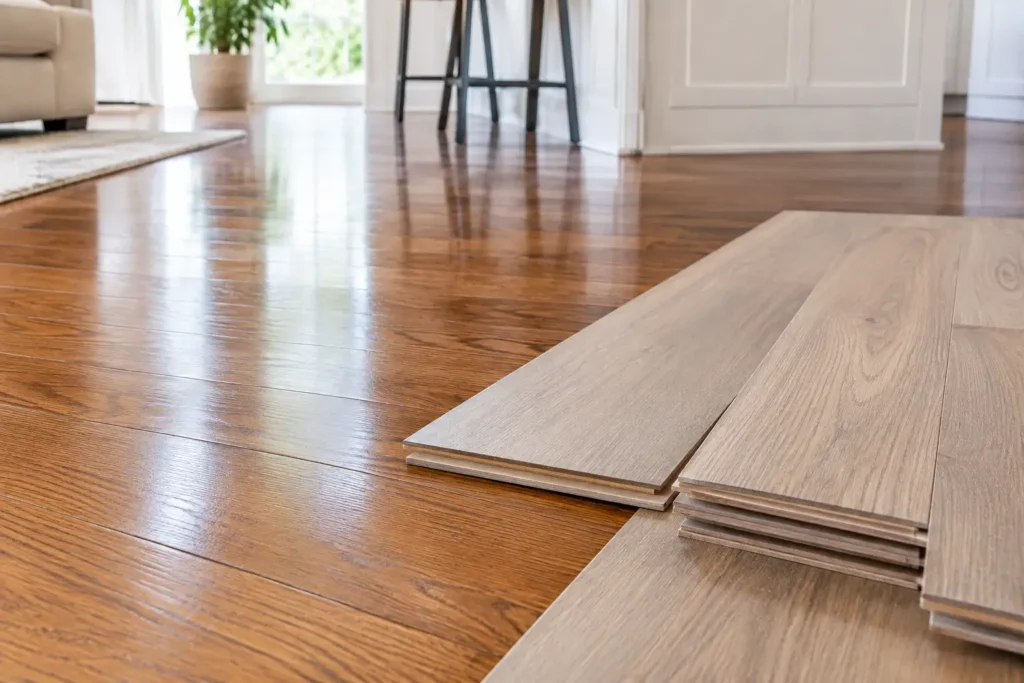
A new floor should not make the rest of your home look like an afterthought. Homeowners often ask, “can new flooring match existing” floors closely enough that an addition, repaired area, or renovated room feels like it has always belonged? In many cases, yes. But a successful match depends on more than choosing a similar color sample at the store.
Wood species, board width, finish sheen, sunlight, wear, subfloor height, and the direction of the existing planks all affect the final result. The right approach starts with an honest look at what is already in your home and what you want the finished space to feel like.
Can New Flooring Match Existing Floors?
New flooring can often match existing flooring very well, especially when the original material is still available or when solid hardwood can be sanded and refinished throughout adjoining rooms. An exact match is not always realistic, though, particularly with older floors that have changed color over decades of sunlight, foot traffic, and cleaning products.
The goal is usually a cohesive transition rather than a perfect copy. A skilled installer can help new flooring look intentional by matching the wood species, plank size, stain family, finish level, and layout. When those details line up, a slight variation in grain or tone tends to disappear once the room is furnished and lived in.
For Long Island homes with original oak floors, this is especially common. Many older homes have red oak or white oak under carpeting or in rooms that were updated at different times. Those floors can often be repaired, extended, or blended with new unfinished hardwood before the entire connected area is refinished.
Why Flooring Matches Are Harder Than They Look
A small sample board can be misleading. Flooring has natural variation from board to board, even when it comes from the same manufacturer and product line. Existing floors have their own history, too. A spot beneath a rug may be lighter than the exposed area near a sunny window, while hallways and entryways may have deeper wear patterns.
Wood type makes a major difference. Red oak has a pronounced grain and warm undertone. White oak has a cleaner, more neutral look and is commonly used for lighter stains. Maple, hickory, walnut, and pine each reflect stain differently. Trying to stain one species to imitate another can get close in color, but the grain will still reveal the difference.
Board dimensions matter just as much. A new 5-inch plank beside an older 2 1/4-inch strip floor will look like a deliberate change, not a continuous floor. That is not necessarily a problem. It simply means the rooms may need a thoughtful transition or a design choice that makes the difference feel purposeful.
Finish is another detail homeowners sometimes overlook. Matte, satin, semi-gloss, and high-gloss finishes reflect light differently. Two floors with nearly identical stain colors can look noticeably different when one has a soft matte finish and the other has a shinier surface.
The Best Way to Match Existing Hardwood
For solid hardwood, the strongest option is often to install unfinished new boards, lace them into the existing floor where possible, then sand and finish the connected areas together. “Lacing in” means removing selected existing boards and weaving new boards among them instead of creating a straight line where old and new meet. This helps break up the transition and creates a more natural appearance.
Refinishing the old and new flooring at the same time gives the stain and topcoat the best chance of looking consistent. It will not make every board identical, because natural wood is not identical, but it creates one overall color and sheen across the space.
This approach works best when the existing floor has enough thickness left for sanding and is in generally good condition. Deep damage, water stains, major cupping, or very thin remaining wood may limit the options. Before planning around refinishing, a flooring professional should inspect the existing material rather than make assumptions based on a photo.
When a close match is the smarter goal
Sometimes refinishing every connected room is not practical. Maybe the existing hardwood is in excellent shape, furniture and daily routines make a larger project difficult, or the renovation is limited to one bedroom. In that case, finding the closest available prefinished product may be the better fit for the budget and schedule.
A close match should consider species first, then width, stain tone, and finish sheen. Bringing an actual flooring piece or an extra board to a supplier is more reliable than matching from a phone photo. Photos shift color based on lighting, camera settings, and screen brightness.
If the match is slightly off, a clean transition at a doorway can make it feel intentional. A threshold, a border detail, or a change in plank direction can separate the rooms neatly without pretending the floors are exactly the same.
Matching Engineered Wood, Laminate, Vinyl, and Tile
Not every floor can be sanded and blended like solid hardwood. Engineered wood has a real wood surface, but the veneer may be too thin for significant sanding. Some products can be lightly refinished, while others cannot. The manufacturer, age, and condition of the floor need to be checked before selecting a repair or extension strategy.
With laminate and luxury vinyl plank, an exact match is most likely when the original product name, color, and batch are known. Even then, discontinued lines are common. A replacement plank may also look brighter than the installed floor because the old material has aged and collected everyday wear.
Tile introduces another challenge: dye lots. Tile from a new production run can vary in shade, pattern, and texture from tile made years earlier. If matching tile cannot be found, a contrasting border, inset pattern, or intentional transition into the adjoining room may produce a better result than forcing a near match.
Check These Details Before Choosing New Flooring
A careful site visit prevents costly surprises. Before ordering materials, your contractor should look at more than color. The most useful checks include:
- The flooring material, species, manufacturer, and approximate age
- Plank or tile dimensions, edge profile, and installation pattern
- The existing floor’s condition, including moisture damage, movement, and remaining thickness
- Finished floor height, especially where the new floor meets halls, doors, cabinets, and stairs
- Natural light and the way the existing color changes from room to room
Floor height deserves special attention. New flooring laid over an existing surface can create an awkward step at a doorway, interfere with door clearance, or leave gaps below baseboards. In some projects, removing the old floor is the cleanest solution. In others, a properly planned transition strip handles the difference without disrupting the rest of the home.
When You Should Embrace a Deliberate Change
There are times when matching is not worth chasing. If your existing floor is heavily worn, discontinued, structurally compromised, or a style you no longer like, a coordinated contrast can look better than an almost-match.
For example, warm original oak in a living room can work beautifully beside a more neutral wide-plank floor in a renovated kitchen, provided the transition is clean and the overall colors complement each other. The same idea applies to tile in a mudroom or waterproof vinyl in a bathroom. Different rooms have different demands, and practical materials do not need to look identical to belong in the same home.
The key is repetition. Carry a shared color tone, trim color, hardware finish, or cabinetry detail through the rooms so the change feels connected. A home does not need one flooring product from front door to back door to feel well designed.
A Better Result Starts With a Real Sample
The best flooring decisions are made in the actual room, under the home’s own daylight and evening lighting. A sample that looks perfect in a showroom may pull too yellow, gray, red, or dark once it is next to your existing floor. Test boards, inspect them at different times of day, and compare them beside trim, cabinets, and furniture if those elements are staying.
That Guy Carpentry helps homeowners weigh these choices before materials are ordered, from hardwood repairs and new installations to transitions, trim work, and full-room renovations. The right answer may be a close match, a refinished continuous floor, or a purposeful change that better suits the room.
A floor is one of the largest visual surfaces in your home. Give the match the same care you would give a kitchen cabinet color or a custom built-in finish, and the new work will feel considered rather than simply added on.