
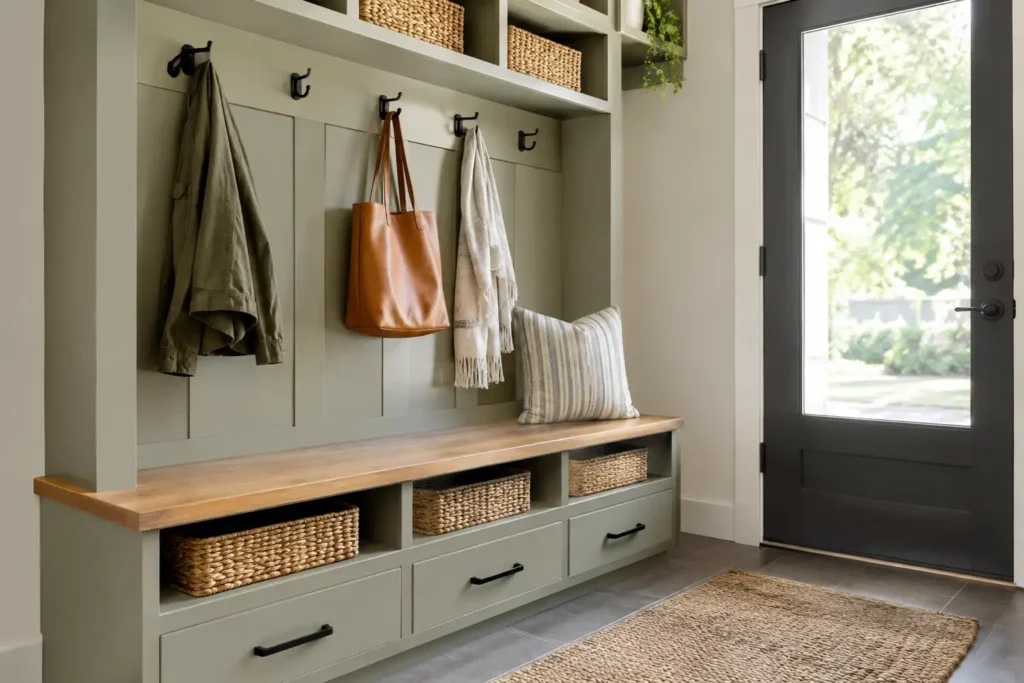
A mudroom bench earns its place fast. It is where wet boots come off, backpacks land after school, grocery bags pause, and everyone gets out the door with a little less searching. The best mudroom bench features are not about adding one more piece of furniture. They are about creating a dependable landing zone that fits the way your household actually moves through the home.
For Long Island homeowners, that often means planning for sandy shoes, rain gear, winter coats, sports equipment, and the everyday clutter that can take over an entryway. A well-built custom bench brings order to that traffic without making the space feel cramped or overly formal.
Start With a Bench That Is Comfortable to Use
A bench has to work as seating first. If it is too narrow, too low, or too high, people will avoid sitting on it while tying shoes. A comfortable finished seat height is usually around 18 inches, though the right dimension can vary based on the people using it and whether you plan to add a thick cushion.
Seat depth matters just as much. Around 16 to 20 inches gives most adults enough room to sit securely, while still keeping the walkway clear. In a tight hallway, every inch has a job. A custom layout lets the bench provide real comfort without blocking doors, stairs, or the natural path through the room.
Build for the Weight It Will Carry
Mudroom benches take more abuse than many homeowners expect. Kids climb on them. Adults sit down hard after a long day. Storage compartments get loaded with boots, bags, and seasonal gear. The bench needs a sturdy frame, secure fastening, and materials that will not sag or loosen over time.
This is one area where quality carpentry makes a visible difference. A built-in bench can be anchored to wall framing and finished as part of the room, rather than relying on a lightweight furniture-style base. The result feels solid, intentional, and ready for daily use.
Best Mudroom Bench Features for Organized Storage
Storage should match the items that pile up at your door, not a generic design photo. Before choosing drawers, cubbies, or lift-up seats, take inventory of what needs a home. A family with young children may need easy-access bins for shoes and school supplies. A household with dogs may want room for leashes, towels, and muddy-paw cleanup supplies.
Drawers Keep Small Items Out of Sight
Deep drawers below the bench are one of the most useful choices for a clean look. They can hold shoes, hats, gloves, pet accessories, and extra bags while keeping everything behind a finished cabinet front. Full-extension drawer hardware is worth considering because it lets you reach the back of the drawer without pulling everything out.
Drawers are especially helpful when the mudroom opens directly into a kitchen or main living area. You get the convenience of storage without the visual clutter of open baskets and loose footwear.
Cubbies Make Daily Routines Easier
Open cubbies are practical when everyone needs to grab their own things quickly. Assigning one cubby per family member can cut down on the morning rush, particularly when paired with hooks above for coats and backpacks.
The trade-off is that cubbies show what is inside them. They work best for families who prefer easy access and do not mind a more lived-in appearance. Baskets can soften the look while keeping smaller items contained.
Lift-Up Seats Offer Hidden Capacity
A hinged bench top creates a large storage compartment without adding visible drawer fronts. It is a smart solution for bulkier seasonal items, like snow pants, beach towels, or backup supplies. For safety and convenience, the lid should use proper support hardware so it stays open while you load or unload it.
This design works well in smaller mudrooms, but it is not always the best choice for everyday shoes. Opening the entire seat to find one pair can become inconvenient. Many custom builds combine a lift-up section for seasonal storage with drawers or cubbies for the items used every day.
Choose Materials That Can Handle Real Life
A mudroom is a hardworking space, so finishes need to be chosen with cleanup in mind. Painted cabinetry can look crisp and welcoming, but the paint should be durable enough to stand up to scuffs, damp coats, and frequent wiping. A darker bench seat or a wood top can be a practical option where shoes are likely to hit the surface.
For the seat itself, solid wood or quality plywood with a durable finish generally holds up better than thin materials that can chip at the edges. If you are adding a cushion, select a removable cover in a performance fabric that can handle moisture and everyday messes. White upholstery can look beautiful, but a family with active kids or pets may be happier with a textured neutral or deeper color.
Flooring around the bench deserves the same attention. Tile, luxury vinyl plank, and other water-resistant surfaces make sense in an entry that sees wet boots and umbrellas. The bench should complement that flooring while leaving enough clearance for simple cleaning.
Add Vertical Storage Above the Seat
The space above a mudroom bench often determines whether the room stays organized. A row of hooks gives coats, bags, and umbrellas a place to go immediately. Individual hook sections can help each family member keep belongings together, while a continuous rail gives you flexibility as needs change.
Upper cabinets are useful for items you want nearby but do not use every day, such as extra paper goods, seasonal accessories, or cleaning supplies. Open shelves can provide a lighter, more casual look, but they require regular tidying. If visual calm is a priority, closed cabinetry may be the better fit.
A finished back panel, often called a shiplap or board-and-batten feature wall, can protect the wall from scuffs and give the bench a more built-in appearance. It is not required, but it turns a practical storage area into a finished part of the home.
Plan the Layout Around Doors, Traffic, and Light
The most attractive bench will still frustrate you if it interferes with the way the room functions. Door swings, radiator locations, windows, outlets, vents, and nearby stairs should all be considered before construction begins. A bench that looks modest on paper can feel oversized once coats, bags, and people are moving through the space.
Measure the clear walking path with the bench in place. Consider where someone will stand to remove shoes, where a door opens, and whether a stroller, walker, or laundry basket needs to pass through. In a narrow entry, a shallower bench with vertical storage may be more useful than a deep cabinet run.
Lighting also matters. A mudroom without natural light can feel closed in quickly, especially when tall cabinetry is involved. Under-cabinet lighting, a wall sconce, or a properly placed ceiling fixture can make the space safer and more welcoming during early mornings and darker winter afternoons.
Make the Design Feel Like Part of Your Home
A mudroom bench does not need to match every cabinet in the house, but it should feel connected to the home around it. The trim profile, hardware finish, paint color, and wood tone can pull the design together. A traditional Long Island home may suit detailed trim and warm painted cabinetry, while a more contemporary space may call for clean lines, simple pulls, and a natural oak seat.
Custom work also gives you the freedom to build around an awkward wall, a sloped ceiling, or a compact entry that cannot accept a standard cabinet size. That is often where a tailored build provides the most value. Instead of forcing your routine to fit the furniture, the bench is built to fit your routine.
At That Guy Carpentry, the goal is to listen to how your family uses the space, then build storage that looks finished and performs every day. A thoughtful mudroom bench can make the first few feet inside your home feel calmer, cleaner, and far more useful.