
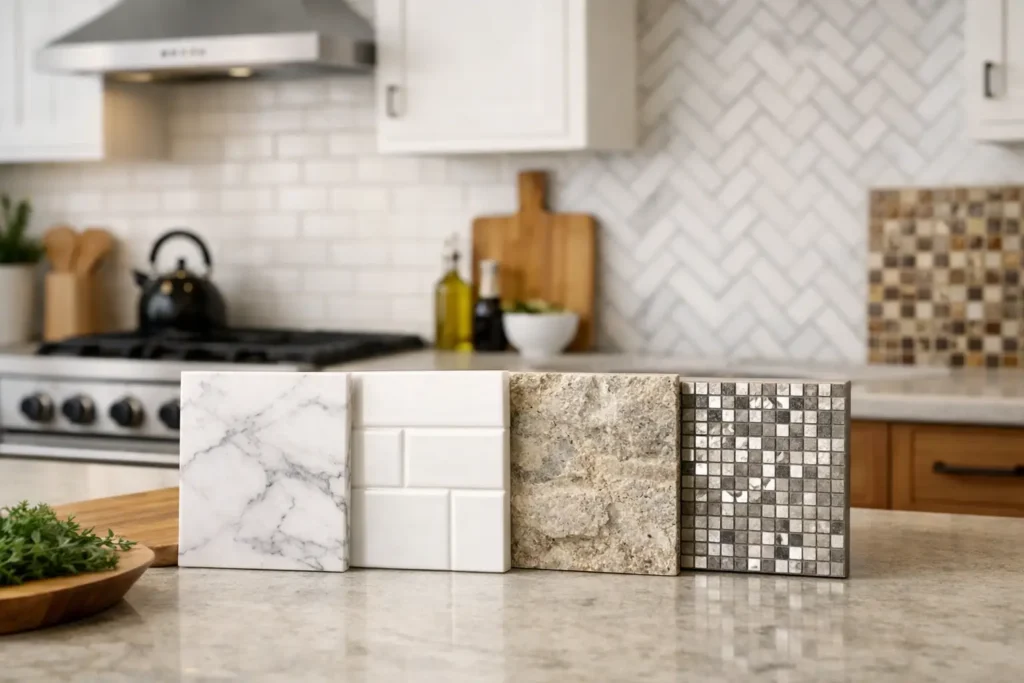
A backsplash takes up a relatively small amount of wall space, but it can change the entire feel of a kitchen. It also has a real job to do: protect the wall behind the range and sink from water, cooking splatter, grease, and daily cleanup. The best kitchen backsplash materials balance that protection with the look of your cabinets, countertops, lighting, and the way your family actually uses the room.
For a busy Long Island household, the right choice is rarely just the most dramatic tile in the showroom. It is the material that fits your budget, holds up to your routine, and can be installed with the care needed for clean lines, well-planned edges, and a finished appearance that feels intentional.
How to Choose the Best Kitchen Backsplash Materials
Start with the parts of the kitchen that are harder and more expensive to change. Countertops, cabinetry, and flooring should usually lead the decision. A backsplash can support those elements, add contrast, or become a focal point, but it should not compete with everything else in the room.
Maintenance matters just as much as color. A family that cooks every night may prefer a smooth, low-maintenance surface with minimal grout. A homeowner building a more custom, traditional kitchen may be happy to give natural stone a little extra care in exchange for its depth and character. There is no single right answer, but there is a right fit for the project.
Also consider the installation details before choosing a material. Outlet placement, the range hood, windows, open shelves, and the transition where the tile meets the countertop all affect the finished result. Small-format tile, for example, can look great around obstacles but requires more cuts and more grout. Large-format material creates a cleaner visual field, though walls need to be properly prepared so the installation stays flat and aligned.
Ceramic and Porcelain Tile: The Most Versatile Choice
Ceramic tile remains one of the most reliable backsplash options for good reason. It comes in a wide range of colors, sizes, shapes, and price points, making it easy to create anything from a simple white subway tile wall to a patterned focal area behind the range. It is also easy to clean and handles normal kitchen moisture well.
Porcelain tile offers many of the same advantages, often with greater density and durability. For a backsplash, that extra durability is usually less important than it would be on a floor, but porcelain can be an excellent choice when you want a specific look, such as marble, concrete, or natural stone without the maintenance of the real material.
The key decision is often grout. White grout paired with white tile creates a quiet, blended look, while darker grout makes each tile shape stand out. Grout needs occasional cleaning and sealing depending on the product used, especially near a range. Choosing a stain-resistant grout from the start can make day-to-day upkeep easier.
Subway tile is a classic option, but the layout makes a difference. A traditional running bond feels familiar and timeless. A stacked layout is cleaner and more contemporary. Herringbone adds movement, although it involves more labor and material waste. The tile may be inexpensive, but a detailed pattern can raise installation costs.
Natural Stone: Warmth and One-of-a-Kind Character
Marble, travertine, slate, and other natural stones bring variation that manufactured materials cannot fully copy. Each piece has its own veining, texture, and color movement. In the right kitchen, stone can make painted cabinetry, wood accents, and custom millwork feel more established and personal.
That character comes with trade-offs. Natural stone is porous to varying degrees and should be properly sealed. Some stones can darken or stain if cooking oils, sauces, or acidic cleaners are left on the surface. A honed marble backsplash may show etching over time, particularly in a kitchen used heavily for cooking.
Stone is a strong option for homeowners who appreciate a lived-in finish rather than expecting a perfectly uniform surface. It works especially well when the countertop has a quieter pattern and the kitchen needs texture. If you want the look of marble but prefer less maintenance, a marble-look porcelain tile can be a practical alternative.
Glass Tile: Light-Reflecting and Easy to Wipe Down
Glass tile is a good fit for kitchens that need brightness. It reflects light beautifully, which can help a smaller or darker kitchen feel more open. Glass mosaics and elongated glass tiles are available in a wide variety of colors, from soft neutrals to bold blue and green tones.
The surface itself is nonporous and easy to wipe clean. The challenge is installation. Glass can show adhesive behind it, and cuts need to be made carefully to avoid chipping. This is not a material where shortcuts pay off. Proper preparation and the right setting materials help prevent visible imperfections in the finished wall.
Glass tile can be especially effective as an accent behind the range or in a bar area. For an entire kitchen, consider whether its shine works with your countertop and cabinet finish. A glossy backsplash paired with high-gloss cabinetry may feel too reflective, while glass can add welcome contrast to matte painted cabinets or natural wood.
Metal Backsplashes: Practical for a Modern or Industrial Look
Stainless steel, tin-style panels, and other metal backsplash options are durable, heat-resistant, and simple to clean. Stainless steel is a natural choice behind a range, particularly in kitchens with professional-style appliances. It creates a crisp, functional appearance and does not require grout.
The downside is that metal can show fingerprints, water spots, and scratches. It also has a distinct look that will not suit every home. Decorative metal panels can work well in a farmhouse, vintage, or industrial-style kitchen, but the pattern should be chosen carefully. A highly detailed panel may compete with busy granite or heavily veined quartz.
For homeowners who want a metal accent without covering every wall, a stainless panel directly behind the cooktop is often enough. It protects the wall in the highest-splash area while allowing tile or another material to carry through the rest of the kitchen.
Quartz and Solid-Slab Backsplashes
Using the same quartz or stone from the countertop as the backsplash creates a clean, upscale look. With fewer seams and no grout lines, a slab backsplash is one of the easiest options to wipe down. It is especially appealing in modern kitchens, where a continuous material can make the room feel larger and more tailored.
Quartz is nonporous and generally low maintenance, making it a practical choice for families who do not want to fuss over sealing. Natural stone slabs offer more variation and can create a striking focal point, but they require the care appropriate to the particular stone.
Cost is the main consideration. Slab fabrication, templating, transport, and installation typically cost more than standard tile. A full-height slab also needs careful coordination with outlets, cabinets, and range hoods. Still, for a kitchen remodel where the countertop is already a major design feature, extending it up the wall can be worth the investment.
Budget, Durability, and Installation Should Work Together
Material price is only one part of the backsplash budget. Tile size, pattern, wall condition, edge trim, grout choice, demolition, and the number of cuts all affect the final cost. A modestly priced mosaic can require more installation time than a larger, higher-priced tile. A simple subway tile installation may be more economical than a specialty product, even when both materials look equally polished.
Before making a final selection, bring home samples and view them in your actual kitchen. Natural daylight, under-cabinet lighting, countertop undertones, and cabinet color can change how a material reads. Look at samples next to the range and sink, not just in the middle of the room.
A well-built backsplash should feel like part of the kitchen, not an afterthought added at the end. That Guy Carpentry helps homeowners coordinate the details that make that happen, from cabinetry and countertops to tile layout, trim, and finishing work. The best choice is the one that supports the way you live now while giving you a kitchen you will still be glad to walk into years from now.