
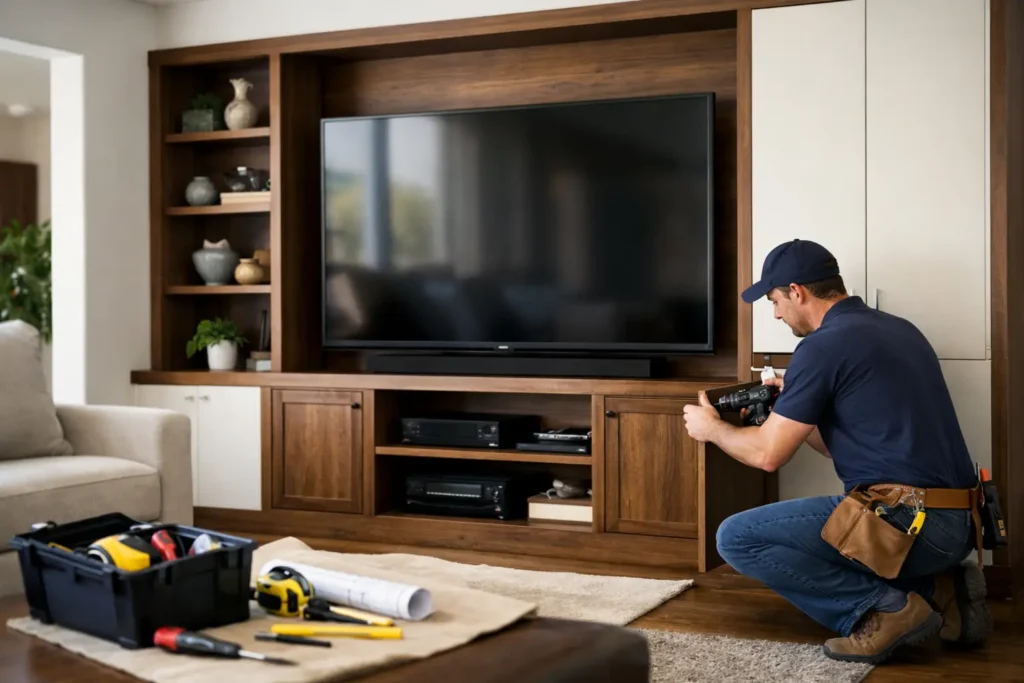
A television on a stand can work, but it rarely solves the real problem: where do the cables, game systems, remotes, speakers, books, and everyday clutter go? A custom entertainment center installation turns one busy wall into an organized, finished part of the room. When it is planned around how your family actually watches, stores, and lives, it can make a den, living room, basement, or bedroom feel larger and far more useful.
For Long Island homeowners, the right built-in is not about copying a showroom display. It is about fitting the room, the home’s style, and the budget while creating a strong, durable installation that looks like it has always been there.
Start With the Room, Not the Television
The television size matters, but it should not dictate every decision. First, consider the wall itself. Is it the room’s focal point? Does it sit between windows, near a fireplace, or beside a doorway? Are there baseboard heaters, radiators, return vents, or outlets that need to remain accessible? These details determine what a practical design can be.
A good entertainment center gives the TV enough visual space without making it look undersized or crowded. In a smaller room, a low console with a wall-mounted television and a few balanced cabinets may be the best answer. In a larger family room, full-height cabinetry, open shelving, and a centered TV wall can create a more substantial focal point.
Viewing height deserves the same attention. Mounting a screen too high can make everyday viewing uncomfortable, especially in rooms where people sit for long stretches. The center of the screen should generally land near seated eye level, though furniture height, room layout, and the screen’s size can change the ideal placement. A television above a fireplace may be necessary in some homes, but it comes with trade-offs: the viewing angle may be high, and heat must be managed carefully.
Before selecting finishes, think through what needs to live in the unit. A family that uses streaming devices and one soundbar needs a different setup than a household with a receiver, gaming consoles, multiple controllers, vinyl records, and board games. Designing storage around the actual equipment prevents the common mistake of building beautiful cabinets that do not fit the things they are meant to hold.
What a Custom Entertainment Center Installation Should Solve
The strongest built-ins solve more than one problem at a time. They create a clean place for technology, add storage, and give the room a more intentional appearance. They can also correct an awkward wall, make use of an underused alcove, or bring balance to a room with a large fireplace or expansive blank space.
Wires and ventilation need a real plan
Visible cords can take away from even the best-looking television wall. During a custom entertainment center installation, wiring should be planned before cabinetry is secured in place. That may include a recessed power location behind the TV, conduit for future cable changes, and concealed routes to components in a cabinet below.
Equipment also produces heat. Receivers, cable boxes, gaming systems, and media servers should not be packed tightly into closed cabinets without airflow. Open backs, ventilation slots, properly sized cabinet openings, or quiet ventilation options can protect equipment and help it perform as intended. This is one area where appearance and function must work together.
If new electrical work is needed, it should be handled correctly and coordinated with the build. A custom carpenter can plan the openings and layout, while qualified electrical professionals address power requirements where appropriate. That coordination helps avoid cutouts, patchwork, and last-minute changes after the cabinetry is finished.
Storage should match your habits
Open shelving is useful for books, framed photos, and a few favorite decorative pieces. It is less useful for the collection of charging cables, controllers, kids’ games, and remotes that tends to build up over time. A balanced design often combines open shelves with closed lower cabinets or drawers.
Doors keep visual clutter out of sight, while drawers offer easy access to smaller items. Adjustable shelves give the unit flexibility when technology changes. Soft-close hinges and quality drawer hardware may seem like small upgrades, but they make a noticeable difference in a piece that gets used every day.
Choose Materials for the Way You Live
Material choices affect the price, durability, and final look of the entertainment center. Painted cabinetry can match existing trim, brighten a dark room, and suit traditional, coastal, or transitional homes. Natural wood brings warmth and character, especially when it connects with hardwood floors, ceiling beams, or nearby furniture.
There is no single best choice. A painted built-in can offer a clean, tailored look and may be easier to coordinate with changing decor. Wood veneer and solid wood details can create a richer finish but may add cost. Laminate interiors can be a practical choice for hard-working storage areas. The right approach depends on the room, the desired style, and where the budget will have the most impact.
Hardware is another decision worth making early. Knobs, pulls, and hinges influence the overall style, but they also determine how cabinets feel in daily use. A clean modern design may call for minimal pulls or touch-latch doors. A more traditional room may benefit from classic hardware that matches nearby cabinetry or interior doors.
Build Around Architectural Details
A built-in should respect the details that make a home feel like home. Existing crown molding, baseboards, window trim, flooring, and wall color all affect the finished result. The goal is not always an exact match, but the new unit should look connected to the room rather than dropped into it.
In older Long Island homes, walls and floors are not always perfectly level or square. Custom work allows the cabinetry to be scribed and fitted to the actual conditions of the room. That attention to detail is what creates tight joints, even reveals, and a finished appearance around uneven walls or existing trim.
Fireplaces require extra planning. Combustible clearances, heat exposure, mantel dimensions, and access to fireplace components should all be considered before building cabinets on either side. A well-designed installation can frame a fireplace beautifully, but it should never interfere with safety, maintenance, or proper operation.
Know Where to Spend and Where to Simplify
A custom entertainment center can range from a straightforward TV wall and base cabinets to a full room-wide built-in with lighting, specialty finishes, and integrated audio. The budget is driven by size, materials, cabinet construction, electrical needs, finish level, and how much site work is required.
If you are prioritizing value, spend first on solid construction, proper mounting, well-planned storage, and clean wire management. These are the parts that make the installation work well for years. Decorative features such as glass doors, accent lighting, detailed paneling, and premium hardware can be added when they support the room’s goals and budget.
It also helps to plan for future changes. TVs get larger, components come and go, and families collect more storage needs over time. Leaving room for a larger screen, adding adjustable shelves, and creating accessible cable paths can save money and frustration later.
A Better Process Means a Better Finished Wall
The best custom projects begin with a conversation in the room itself. Measurements matter, but so do the questions behind them: How do you use this space? What needs to be hidden? What should stay within reach? What style fits the rest of your home? Those answers guide a design that is personal instead of generic.
From there, the work should move in a clear order: confirm the layout, address electrical or wall preparation, build and install the cabinetry, finish the details, and make sure doors, drawers, and equipment locations function properly. Protecting adjacent surfaces and keeping the work area organized matters just as much as the final coat of paint.
That Guy Carpentry approaches custom built-ins as part of the home, not as a piece of furniture pushed against a wall. With thoughtful planning, quality materials, and exceptional workmanship, an entertainment center can give your family a place to gather without making the room feel taken over by technology.
A well-built media wall should make the room easier to enjoy on an ordinary Tuesday night. When every component has a place and the design fits the home, the screen becomes only one part of a space made for living.
1 Comment