
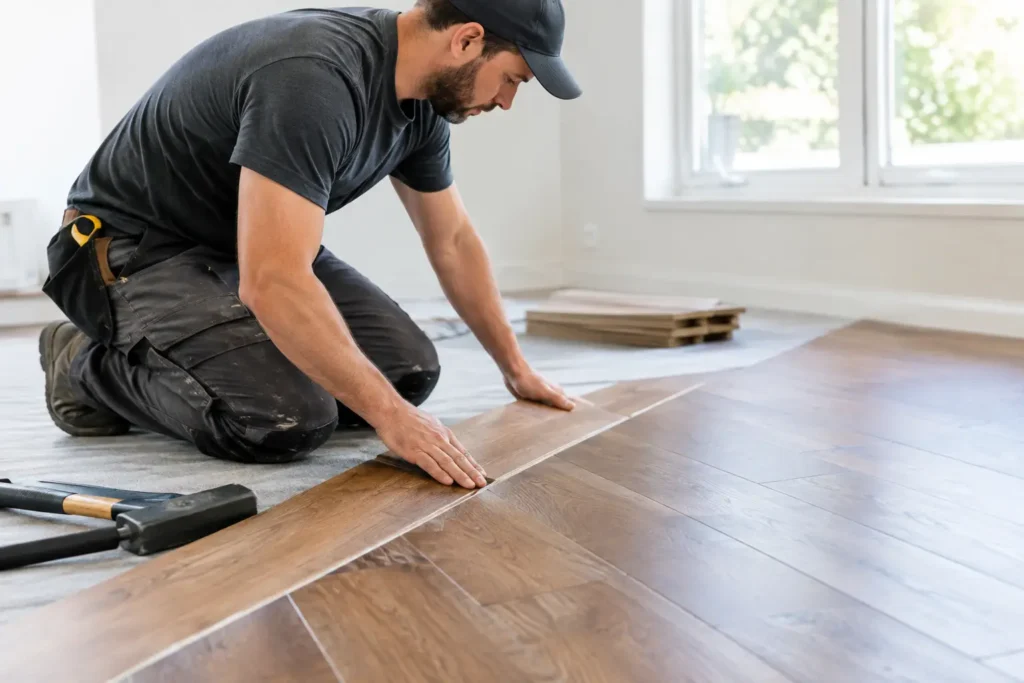
A beautiful hardwood floor can make an entire room feel finished, but the material is only part of the result. Hardwood flooring installer reviews can tell you far more than whether a contractor showed up on time. Read closely, and they reveal how a crew protects the home, handles unexpected subfloor issues, communicates during dusty work, and stands behind the details once the furniture is back in place.
For homeowners, the goal is not simply to find the contractor with the most five-star ratings. It is to find a professional whose past work and customer experience match the kind of project you have in mind. A small bedroom installation, a whole-home flooring update, and a hardwood floor tied into a kitchen renovation each bring different demands.
What Hardwood Flooring Installer Reviews Should Tell You
The most useful reviews are specific. “Great job” is nice to see, but it does not help you understand what the installer actually did. Look for homeowners who describe the condition of their floors before and after the work, the scope of the project, and how the contractor handled the process.
For hardwood, details matter. Did the crew prepare the subfloor correctly? Did they explain why a repair, leveling step, or moisture test was needed? Were boards laid out with care so the grain, color variation, and seams looked natural across the room? Those are the kinds of decisions that separate a floor that looks good on installation day from one that continues to perform well through changing seasons.
Reviews are also valuable when they mention the parts of a job homeowners tend to remember: clear estimates, respectful workers, protected furniture and adjacent rooms, cleanup, and honest answers when the original plan needed adjustment. These points are not extras. They are signs of a contractor who manages the project rather than just installs boards.
Look for Patterns, Not One Perfect Review
Every established contractor may have an occasional less-than-perfect review. Remodeling work happens in lived-in homes, and schedules, product availability, hidden damage, and homeowner preferences can all affect an experience. What matters most is the pattern across many reviews.
If multiple customers mention careful preparation, good communication, and a clean finished space, that is meaningful. If several people describe the contractor as responsive after the project is complete, that is even more useful. Hardwood flooring is an investment, and homeowners deserve a team that does not disappear once the final board is installed.
Pay attention to how recent reviews are, too. A contractor’s crew, workload, and standards can change over time. Reviews from the last year or two are usually the best reflection of how the business operates now. Older reviews still have value, especially when they mention floors holding up well years later, but they should not be the only information guiding your choice.
A mix of project types can be reassuring when you are planning a larger renovation. If reviews mention flooring alongside trim work, painting, kitchen updates, or custom carpentry, that may indicate the contractor can coordinate work cleanly across connected spaces. This can reduce the stress of managing several separate trades in your home.
Reviews That Describe Preparation Are Especially Valuable
Hardwood does not forgive shortcuts underneath the surface. A floor can look attractive at first and still develop squeaks, gaps, cupping, or uneven areas if the subfloor was not properly evaluated. That is why reviews mentioning preparation deserve extra attention.
Look for comments about removing old flooring, addressing damaged plywood, leveling uneven areas, checking moisture, or allowing materials to acclimate before installation. Not every project requires every step, and a professional should explain what your particular home needs. But a review that shows the installer took time to investigate conditions instead of rushing toward the finish line is a strong sign.
This is particularly relevant in Nassau and Suffolk County homes, where older construction, additions, basements, and seasonal humidity can create very different conditions from room to room. The right installation approach depends on the subfloor, the hardwood product, the layout, and how the space is used.
Know the Difference Between Style Praise and Craftsmanship Praise
Homeowners often write reviews about how much they love the color or overall look of a new floor. That feedback matters, but it may say more about the flooring selection than the installation itself. Try to find comments that address craftsmanship.
Useful craftsmanship praise may mention straight, consistent lines; smooth transitions between rooms; carefully fitted boards around doorways and vents; properly installed baseboards or shoe molding; and thoughtful protection of nearby walls and cabinets. If a floor meets tile, carpeting, or another wood surface, the transition should look intentional and feel safe underfoot.
You should also consider whether the contractor helped the homeowner make decisions before work began. Solid hardwood, engineered hardwood, plank width, finish sheen, and stain color all come with trade-offs. A wide plank may create a more open look, for example, but it may not be the best choice for every setting. Good reviews often describe a contractor who offered practical guidance rather than pushing one product or one price point.
Red Flags to Read Carefully
One negative comment is not always a reason to rule out a contractor. Still, repeated concerns should not be ignored. Be cautious when reviews regularly point to any of the following:
- Vague or changing prices with no clear explanation of added work
- Missed calls, unanswered questions, or long gaps in communication
- Damage to walls, trim, furniture, or adjacent rooms with no effort to make it right
- Complaints about rushed installation, loose boards, squeaks, gaps, or unfinished edges
- A pattern of delayed starts or abandoned jobs without a realistic schedule update
Read the contractor’s response to criticism as well. A professional response does not need to argue every detail. It should be respectful, factual, and focused on resolving the issue. Defensive replies, blame directed at every customer, or no response at all can tell you something about how concerns may be handled on your project.
Use Reviews to Ask Better Questions
Reviews should narrow your list, not replace a conversation. Once you have found a few contractors with a consistent reputation, use what you learned to ask direct questions about your home.
Ask how the existing floor or subfloor will be inspected, what the estimate includes, and what conditions could change the cost. Discuss how the crew will manage dust, furniture, access to rooms, pets, and daily cleanup. If you are matching an existing hardwood floor, ask how they will approach board direction, stain variation, trim, and transitions so the new work feels like it belongs.
It is also fair to ask about scheduling and who will be on site. The lowest estimate is not automatically the best value if it leaves out preparation, uses unclear allowances, or creates uncertainty about the final finish work. A dependable contractor explains the scope in plain language and gives you a realistic picture of what will happen in your home.
Photos can support reviews, but ask to see examples that resemble your project. A flawless photo of an empty room does not show how a crew handled a furnished home, tied flooring into an existing hallway, or finished around a fireplace, island, or built-in. The closer the example is to your own situation, the more useful it becomes.
Choose a Contractor Who Sees the Whole Project
Flooring is often connected to other decisions. New hardwood may require removal and reinstallation of baseboards, adjustment of doors, repairs to subflooring, fresh paint, or new custom trim. When those details are planned together, the finished room feels complete instead of pieced together.
That Guy Carpentry approaches flooring as part of the home you actually live in, not as an isolated square-footage calculation. The right plan starts with listening to your goals, evaluating the space honestly, and recommending work that fits your style, budget, and timeline.
Before you choose, read beyond the star rating and picture the experience behind the words. The strongest reviews should leave you confident that your contractor will respect your home, explain the work, and take pride in every board that stays under your feet for years to come.