
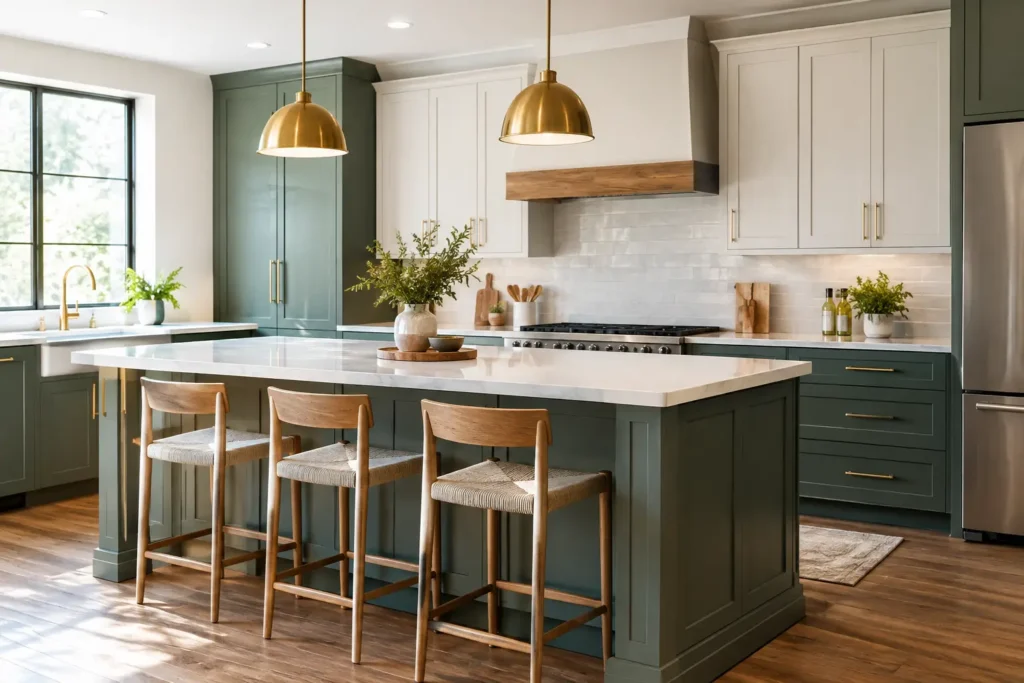
The fastest way to make an older kitchen feel dated is often not the countertop or the appliances. It is the cabinet color. Current kitchen cabinet color trends favor finishes that feel warm, grounded, and personal rather than stark or overly matched. For homeowners planning a refresh or a full remodel, the goal is not to chase a short-lived look. It is to choose colors and materials that work with the way your family lives, the light in your home, and the value of the investment.
A cabinet color looks very different under showroom lighting than it does beside your own windows at 8 a.m. or under recessed lights at dinner. That is why color selection should be part of the renovation plan, not an afterthought once the cabinets are installed.
Kitchen Cabinet Color Trends Are Getting Warmer
Cool gray kitchens had a long run, but many homeowners are now choosing colors with more warmth and depth. This does not mean every kitchen needs to be brown or beige. It means colors are becoming less icy and more connected to natural materials, including wood floors, stone counters, handmade tile, and aged metal hardware.
Warm whites are leading the shift. Instead of a bright, blue-white cabinet finish, look for creamy white, soft ivory, putty, or pale mushroom tones. These colors keep a kitchen light and open without creating the clinical feeling that pure white can sometimes bring. They also pair well with the warmer LED lighting commonly used in homes today.
Greige remains a practical middle ground for homeowners who want more contrast than white but are not ready for a bold color. A good greige can read as soft gray in cooler daylight and warm taupe at night. The trade-off is that undertones matter a great deal. A greige that looks perfect against one countertop may appear pink, green, or muddy against another. Always test large samples beside the backsplash, flooring, and countertop materials before making a final decision.
Natural Wood Is Back, With a Cleaner Look
Painted cabinets are still popular, but natural wood is one of the strongest kitchen cabinet color trends for homeowners who want a more lasting, custom look. The difference from kitchens of past decades is in the finish and the profile. Today’s wood cabinets tend to have a lighter stain, lower shine, and simpler door style that lets the grain do the work.
White oak is especially common because it brings texture without making the room feel dark. Its grain works well in both modern and traditional homes, and it complements warm white uppers, stone counters, and matte black or brushed brass hardware. Walnut is also making a statement, particularly on islands or lower cabinets, where its deep color adds richness without taking over the room.
Wood is not automatically the right answer for every kitchen. In a small room with limited natural light, full-height dark wood cabinetry can feel heavy. A balanced approach often works better: wood base cabinets with light upper cabinets, a wood island in an otherwise painted kitchen, or open shelving that brings in warmth without covering every wall.
Two-Tone Cabinets Still Work When the Contrast Has a Purpose
Two-tone kitchens are no longer limited to a navy island surrounded by white perimeter cabinets. The more refined version uses contrast to organize the room. Darker lower cabinets can make a large kitchen feel anchored, while light upper cabinets keep the eye level open. A wood island can distinguish the gathering space from the cooking zone.
The key is restraint. Choose one main cabinet finish and one supporting finish rather than introducing several colors, a heavily patterned backsplash, and competing hardware all at once. If the countertop has dramatic veining, quieter cabinets usually make the better partner. If the countertop is simple, the cabinetry can carry more of the visual interest.
For a Long Island home with an open kitchen and living area, two-tone cabinetry can also help the kitchen relate to surrounding furniture and flooring. A warm painted island, for example, may connect to a wood dining table or built-in shelving nearby. Thoughtful coordination makes an open layout feel planned rather than pieced together.
Earthy Greens and Blues Have More Staying Power
Green has earned its place beyond the trend cycle because it works like a neutral when the shade is right. Muted olive, sage, moss, and deep forest green bring a calm, tailored look to kitchen cabinetry. They pair naturally with white oak, warm brass, black hardware, and creamy stone. A medium sage is often forgiving in a busy family kitchen because it has enough depth to hide small marks better than a pale white finish.
Blue is still a solid choice, but the brighter coastal blues of previous years are giving way to dustier and more complex shades. Consider slate blue, softened navy, blue-gray, or a deep ink color. These finishes can make an island feel substantial and attractive, especially with lighter perimeter cabinets.
Bold cabinet colors work best when the kitchen has a clear source of balance. That might be a quiet countertop, warm wood floors, simple backsplash tile, or plenty of natural light. If your room is already full of strong finishes, a saturated cabinet color may make it feel crowded. In that case, use color on an island, pantry wall, or built-in bar instead of every cabinet box.
Black and Charcoal Need the Right Conditions
Black cabinets can be striking, but they are not a universal solution. They show dust, fingerprints, and smudges more readily than many mid-tone finishes, particularly on flat-panel doors. In a kitchen with limited sunlight, black can also absorb the light that makes the space feel usable and welcoming.
Still, charcoal, soft black, and near-black green can be excellent choices for a large, bright kitchen. They look especially strong on a center island, a beverage station, or lower cabinets beneath a run of bright windows. Matte finishes tend to feel more current and are often more forgiving than high-gloss surfaces.
Match the Color to How You Use the Kitchen
A beautiful cabinet color has to hold up to real life. Families who cook often, host friends, or have young children should think about maintenance before selecting a finish. White cabinets make crumbs and food splatters visible, but they also make it easy to see what needs cleaning. Dark cabinets can hide some messes while showing dust and handprints. Mid-tone colors, wood grains, and low-sheen finishes are often the most forgiving day to day.
Cabinet construction and finish quality matter just as much as color. A poorly prepared paint job can chip at corners and around handles, no matter how fashionable the shade is. Proper surface preparation, durable materials, quality primers, and careful finishing are what help a cabinet color look good after years of opening drawers, moving chairs, and cleaning up meals.
Hardware should be considered early, too. Brushed nickel is dependable and flexible. Warm brass adds contrast to greens, blues, and dark woods. Matte black offers a clean, tailored look, but it can feel harsh against a very cool gray cabinet. Bring samples together before ordering. A few minutes spent comparing a door sample, hardware pull, countertop piece, and backsplash tile can prevent an expensive mismatch.
Choose a Color That Fits the Home, Not Just the Feed
The best cabinet color for your kitchen may not be the color you see most often online. A historic home, a bright coastal-style space, and a compact galley kitchen each call for a different approach. Existing floors, window direction, ceiling height, and adjacent rooms all influence whether a color feels inviting or out of place.
When planning a kitchen renovation, start with the elements that are hardest or most expensive to change: flooring, countertop, cabinet layout, and natural light. Then build the cabinet color around those decisions. This approach gives you more flexibility and makes the finished room feel intentional from every angle.
At That Guy Carpentry, we believe a kitchen should reflect your taste while delivering the everyday function your household needs. Bring your inspiration photos, material samples, and practical concerns to the planning conversation. The right cabinet color is the one that still feels like home after the trends have moved on.